
Research in the Centre is highly interdisciplinary and is supported through a variety of national and international funders.
CURRENT FUNDED PROJECTS
The Animal Research Nexus: Changing Constitutions of Science, Health and Welfare
(Welcome Trust, 2017 - 2022)
This major grant awarded to Dr Pru Hobson-West is led by Professor Gail Davies (University of Exeter) with Dr Beth Greenhough (Oxford University), Dr Rob Kirk (University of Manchester) and Dr Emma Roe (University of Southampton). Dr Kate Millar is a member of the programme advisory panel.
Using animals in scientific research has been critical to the development of modern medicine and is contingent upon a complex, entangled network of relations and obligations across science and society. These entanglements can best be understood as the Animal Research Nexus. This major award has three main aims: 1) to understand the historical interrelations between science, health and animal welfare 2) to identify challenges to animal research raised by scientific and social shifts around species and supply, professional roles, and patient engagements and 3) to facilitate dialogue with stakeholders, scientists and publics across the Animal Research Nexus. The overall programme seeks to identify what is required to remake the social contract around animal use in 21st century science and medicine. Dr Hobson-West will lead a project on professionals in the lab. This project involves work to explore the roles of veterinarians in the laboratory, with Dr Vanessa Ashall, Senior Research Fellow - see https://www.nottingham.ac.uk/vet/people/vanessa.ashall. Pru is also primary supervisor for Renelle McGlacken, whose PhD will explore the question of animal research and public engagement. This follows a new Mass Observation Archive directive on animal research (funded through the Leverhulme Making Science Public Programme). Please contact Renelle on svxrm2@nottingham.ac.uk for more details.
Novel Food Technologies and Deliberative Technology Assessment
(Leverhulme Trust, 2013-2017)
Following political debate in the 1990s surrounding the development and application of novel biotechnologies, such as genetically modified (GM) crops, regulatory bodies adopted new approaches to engage with publics. However, the application of these approaches is still at quite an early stage and it is unclear how these deliberative approaches will contribute to the appraisal and governance of emerging biotechnologies. To what extent do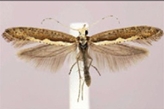 new forms of public engagement provide both a holistic appraisal and political space for an informed debate of alternative scenarios? Using the case studies of GM animals, the research will identify changes in the technology assessment process since the mid-1990s and analyse how key stakeholders perceive the ‘suitability’ of the process. The study will examine these issues in the context of global food security and environmental risk governance. The research questions will be explored through documentary analysis and semi-structured interviews conducted with a range of stakeholders. (Please contact kate.millar@nottingham.ac.uk)
Animals and the making of scientific knowledge
(Leverhulme Trust, 2013-2015)
Using animals as laboratory models is a key route through which scientific knowledge is produced. Concerns over public accountability have resulted in innovations in governance, such as the use of lay members in local Ethical Review Processes, and the online publication of research abstracts by the Home Office (HO). However, a new European Directive recently came into force which has the potential to reopen some aspects of the UK animal research debate. This project will focus on the public consultation launched by the Home Office in 2011 to explore: To what extent does legislative change and democratic consultation open up the black box of animal research, and how are definitions of ‘science’, ‘politics’ (and ethics) reconfigured in this process? This project is part of a larger programme of research entitled ‘Making Science Public: Challenges and Opportunities’.
(Please contact Carmen.Mcleod@nottingham.ac.uk or Pru.Hobson-West@nottingham.ac.uk)
COMPLETED PROJECTS
The UK veterinary profession and management of the social and ethical implications of the clinical use of donated companion animal blood and tissue
(Welcome Trust, 2013 - 2016)
This project combines empirical social scientific research with normative ethical analysis; focussing on the social and ethical implications of companion animal blood and organ donation. Normative questions will include; what is the ethical justification for using donated companion animal blood and tissue in the treatment of animal disease, and to what extent does this justification differ from the case of human blood and tissue donation? Semi structured interviews will be used to collect empirical data which explores the values and expectations of companion animal owners, veterinarians and wider stakeholders. The project aims to produce policy recommendations for this growing clinical area which are based on sound ethical justifications and which are relevant to the social and cultural context within which such practices take place (Please contact Vanessa.Ashall@nottingham.ac.uk or Pru.Hobson-West@nottingham.ac.uk).
Social and ethical issues raised by the use of agricultural biomass in energy: the cases of perennial energy crops and crop residues.
(Danish Research Council 2011-2015)
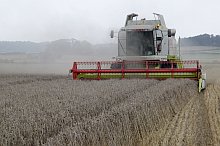
The project comes out of an interest in how and why we value land and explores the ethical issues raised by burning crops and straw for energy and how these issues are framed by key stakeholders. The research focuses on how stakeholders frame the ethical issues raised by production of energy crops and crop residues for energy production and what assumptions underpin these framings. It is a comparative study between the UK and Denmark using qualitative social science methods involving interviews and document analysis (Contact Orla Shortall at stxos4@nottingham.ac.uk or Kate.Millar@nottingham.ac.uk)
Project Title: Constructing Ethical Biofuels Research in UK Bioscience: EST FRAME This project considers different ideas about the place and role of ethics in the research process. It examines the ways in which different constructions of ethics might impact on the production of ‘socially responsible’ bioscience research. The work uses UK biofuels research as a context and focuses primarily on the positions of NGOs, Research Funders, and Scientists in the field. It uses documentary analysis and qualitative interviews to explore these actors’ experiences, rationales and concerns when addressing ethical dimensions of the research process. For more information, please contact Kate.Millar@nottingham.ac.uk |
 |
Biofuels
(BBSRC 2009-2014)
The University of Nottingham is to lead the way in the development of sustainable bioenergy fuels which use non-food crops, such as willow, industrial and agricultural waste products and inedible parts of crops, such as straw, so do not take products out of the food chain. The CAB and the Institute for Science and Society will lead the social and ethical theme of two of six research projects being run by the University of Nottingham for the national £27m BBSRC Sustainable Bioenergy Centre. This is the biggest ever single UK public investment in bioenergy research. (Please contact kate.millar@nottingham.ac.uk or Barbara.Ribeiro@nottingham.ac.uk)
The Use of Primates in Biomedical Science
(FRAME 2007-2015)
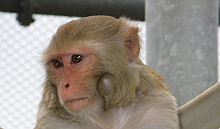
This project investigates the issue of primate use in the UK and explores the question of whether and how a reduction in primate use is feasible. It focuses on two disease case studies and utilises qualitative interviews with laboratory scientists. For more details please contact Michelle Hudson at lbxmh@exmail.nottingham.ac.uk or pru.hobson-west@nottingham.ac.uk
Inclusion of Transgenic Animals in the food chain: Science, Utility and Society (PEGASUS)
(EU 2009-2012)
PEGASUS is examining the development, implementation and commercialisation of GM animals, and derivative foods and pharmaceutical products. The outcomes of this project are intended to provide policy support to regulators and other policy makers. The Centre team is running a workpackage on the ethical issues raised by the development and use of transgenic animals. This work will include organising a number of stakeholder workshops in 2011. For more information please contact Kate.Millar@nottingham.ac.uk
| Animal disease (NADIR) EU funding (2009-2013) The Network of Animal Disease Infectiology Research Facilities (NADIR) brings together 14 European laboratories in order to, amongst other things, optimise their investigation and diagnostic/validation tools, achieve economies of scale and use the resources saved to modernise existing facilities in a coordinated manner. Researchers at the Centre are contributing to work packages designed to strengthen the sharing of knowledge, map best practice and embed consideration of ethical issues. (Please contact kate.millar@nottingham.ac.uk) |
 |
Dog Genomics (LUPA)
EU funding (2008-2012)
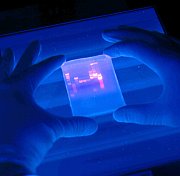
The EU project LUPA uses the dog genome to piece together the puzzle of human genetic disorders. The project, named after the she-wolf that according to Roman mythology cared for the twin founders of Rome is backed by EUR 12 million, involves scientists in 12 countries and will run until 2012. The CAB is employing the Ethical Matrix to encourage systematic consideration of the ethical issues raised for different stakeholders by the research. (Please contact kate.millar@nottingham.ac.uk or pru.hobson-west@nottingham.ac.uk)
Research frontiers in animals and society
School of Biosciences and SVMS (2010-2011)
This project involves scoping of the current literature on animals and society and is supported by two Schools. Please contact pru.hobson-west@nottingham.ac.uk for more details
Ethical Review Processes in biomedical research using animals
(Wellcome Trust 2007-2010)
This project involves a study of ERPs in the UK. More specifically, it explores the role of lay members involved in this process. The project involves qualitative interviews and observation. For more information please contact Kathleen Job or Pru Hobson-West for more information.
Stem cells
EU (2006-2010)- Advisory Role
Dr Kate Millar sits on the advisory board of the European project called ESTOOLS. This project seeks to advance our understanding of the fundamental science of human embryonic and induced pluripotent stems cells.
(Please contact kate.millar@nottingham.ac.uk)
| Ethics and extremism: The use of animals in biomedical science Wellcome Trust (2006-2009) This project investigated the use of ethical and other arguments by stakeholders in the UK animal research debate. The empirical work involved interviews with researchers who use animals, and with funders, supporters, and critical groups. Publications from this work contribute to debates about animals and society, empirical ethics, and the role of public opinion (please contact pru.hobson-west@nottingham.ac.uk for a 2 page project summary) |
 |
Genomics, animal health and food safety
(EU 2007-2008)
The European Disease Genomics Network of Excellence for Animal Health and Food Safety (EADGENE) aims to coordinate a genomics approach to the unravelling of the host-pathogen interactions in domestic livestock. EADGENE allows groups of Network participants to engage in structured discussion about EADGENE related ethical and societal issues based on the use of a modified Ethical Matrix first developed in Nottingham by Professor Mepham. (Please contact kate.millar@nottingham.ac.uk)
 |
Companion animal obesity: People, parks and pets Masterfoods Bursary (2007) A project team from School of Veterinary Medicine and Science, Biosciences and the Institute for Science and Society ran an explorative study examining the relationship between dog ownership, obesity, physical activity levels and perceived access and quality of open space. This work was involved interviews with owners of obese and non-obese dogs. (Please contact kate.millar@nottingham.ac.uk or pru.hobson-west@nottingham.ac.uk) for more details |
Ethical biotechnology tools
EU FP7 (2003-2005)
Project to develop ethical frameworks to aid public and private decision-making relating to agriculture and food. This website presents the results of the project Ethical Bio-TA Tools which was part of the Quality of Life Programme. (Please contact kate.millar@nottingham.ac.uk).