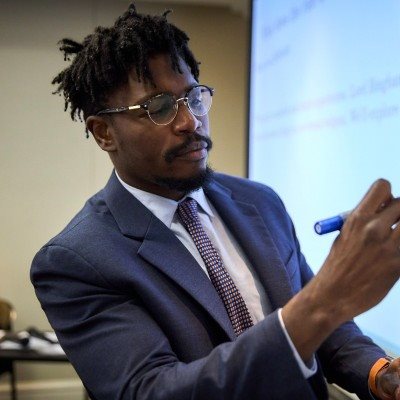
Abiodun Michael
As part of our Authenticity in the Workplace project, we invited students to submit questions to professionals from a wide range of sectors and backgrounds, including individuals who identify with diverse communities. These conversations offer valuable insights into what authenticity means in different contexts.
By Abiodun Michael Olatokun FRSA LLM, Barrister.
I want to work for a company that values people for who they are. All places say they are inclusive, but how do you really know? What signs could I look out for?
The question is an astute one because it would be very rare to find an employer who would openly say that they are a discriminatory workplace. Many companies provide the opportunity for an informal discussion with a manager when they are recruiting for a role. That is a valuable chance to see how you would interact with someone who might be responsible for a considerable portion of your life. That is potentially prone to some of the same dynamics as trying to understand company culture through their adverts, so I would also try to sound out someone in the company at a similar level to that at which you want to join.
At the bar I tend to look at the last 5-6 people that they have recruited most recently to see if they have recruited people who are like me in social, demographic and educational background. I also look to see who the company has not kept on to see if there are any patterns that cause me concern. Did they let go of talented young minority lawyers? Were they able to make reasonable adjustments for colleagues with additional needs? Those sorts of things tell me a lot about whether I would be supported to thrive there.
What steps can individuals take to educate themselves and become better allies to marginalised groups, both inside and outside of work?
There is a lot that can be done to become a better ally in the workplace. I think the most important thing that anyone can do when they don’t have direct experience of the problems that another person faces is to listen to them authentically. In a previous role where I was the institution’s diversity officer I thought it was immensely important to collect data about how people identified and how they felt. The information we got back was really insightful.
Another initiative that I implemented in a previous job was ‘Cultural Conversations’ where members of staff would lead a lunchtime seminar to talk about their background. I spoke about the Yoruba people of Nigeria, the tribe from which I originate. This was really empowering because it provided me with a platform to talk about things that really matter to me to my colleagues, the people with whom I spend the most time. I got great feedback from that session, and it inspired other colleagues to do the same in the coming months.
How do you think microaggressions can be dealt with in a workplace environment?
I think it’s always important to let people know that their actions have hurt you in the most immediate and proportionate way that you can. Microaggressions are what I would class as ‘indirect discrimination’ a lot of the time- a comment or decision that may have been neutrally applied in the mind of the actor which is particularly coarse or hurtful when applied to someone from a particular group. Educating the microaggressor is an important thing to do. Firstly, it may prevent the actor from acting in the same way in the future, and secondly it is sometimes necessary to obtain legal protection against harassment or discrimination.
If something happens, keep a record. Preferably an electronic one. Tell someone who can later corroborate what happened (perhaps a trusted colleague) and follow official channels if you think that there needs to be formal action. If you don’t want to take formal action, let the person know in an informal context about why their action or comment was hurtful. It might be a difficult or awkward thing to do at the time, but you will feel better for having that conversation than if you didn’t do it.
Why is authenticity important for you in the workplace?
It’s important for me because I know that when I feel empowered I can do my best work. In my work as a barrister I have to be a vessel for realising the legal rights of my client. If I’m uncertain or if I waver, that hesitation might lead to a really negative outcome in the life of another person. When I am comfortable in my own identity I become a more persuasive and effective advocate in the lives of those that I support. Authenticity is a crucial pillar of me being able to stand up for others and I pride myself on the fact that I have continued to become more authentically myself as I have progressed in my career!
Find out more about authenticity in the workplace and the experiences of professionals from a wide range of sectors and backgrounds.
Posted on Wednesday 28th January 2026