School of Geography: Environmental Change
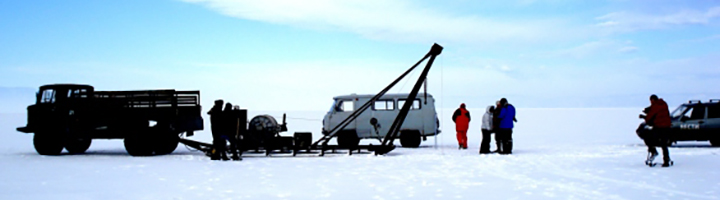
The Environmental Change Research Theme has a strong focus on environmental reconstruction, climate- and human-landscape interactions, ecosystem restoration and climate change impact modelling.
Our research activity encompasses research on the mechanisms and dynamics of past, current and future environmental change, spanning a variety of spatial and temporal scales, as well as disentangling human impacts from natural drivers of environmental change. Our research group includes leading palynologists, diatom ecologists, stable isotope geochemists, climate change impact modellers and glacial geomorphologists.
The Environmental Change Research Theme is supported by state-of-the-art laboratories (with Inductively Coupled Plasma - Optical Emission Spectroscopy and X-Ray Fluorescence), including one of the few algal pigment biomarker laboratories in the UK (High-Performance Liquid Chromatography). The Nottingham pollen lab is also linked with this Theme, which is affiliated with the N-MESH laboratories based in Archaeology. We have active research links with the British Geological Survey, where several of our staff are appointed as Visiting Research Associates via the Centre for Environmental Geochemistry.
The application of Pliocene and Quaternary Science
The use of sediments from terrestrial, lake and ocean settings, along with documentary records, to reconstruct past climates, and human- climate – environment interactions. We particularly investigate these changes over Pliocene, late Pleistocene and Holocene timescales using lake sediments (for example, from Mexico, Australasia and Turkey) and marine cores in high latitude regions.
Method development surrounding environmental reconstruction
The calibration, validation and development of novel proxies from lake and ocean sediments for environmental reconstruction is an important strand of our research, including the application of novel isotope approaches (including silicon, nitrate and phosphate stable isotopes) and pollen modelling.
Glacial landscape dynamics
We also use novel and multi-method approaches, including drone-based photogrammetry and ground-penetrating radar, to investigate the responses of glaciers and glacial landscapes to environmental change.
Climate change impact modelling and assessment
To understand how drivers like future climate change and management affect the environment and society (for example, flood risk, human health, water scarcity, ecosystem functioning), and to inform effective climate mitigation and adaptation policies.