
Important dates
| 25th September 2024 | First Announcement; Pre-registration |
|---|---|
| 13th January 2025 | Second Announcement; Abstract Submission Opens |
| 13th February 2025 | Third Announcement; Registration Opens |
| 28th February 2025 | Abstract Submission Deadline |
| 15th April 2025 | Conference Programme Announced |
| 16th May 2025 | Registration Deadline (Early Rate) |
| 27th June 2025 | Registration Deadline (Regular Rate) |
| 10th August 2025 | Conference Starts |
| 15th August 2025 | Conference Ends |
Announcements
- 25/09/2024 - First Announcement: Pre-registration is now open!
- 13/01/2025 - Second Announcement: Abstract submission is now open!
- 13/02/2025 - Third Announcement: Registration is now open!
- 28/02/2025 - Abstract submission is now closed!
- 15/04/2025 - Conference programme now available!
- 24/04/2025 - Registration: Credit card payments are now available!
- 11/09/2025 - Talk slides now available: see conference programme!
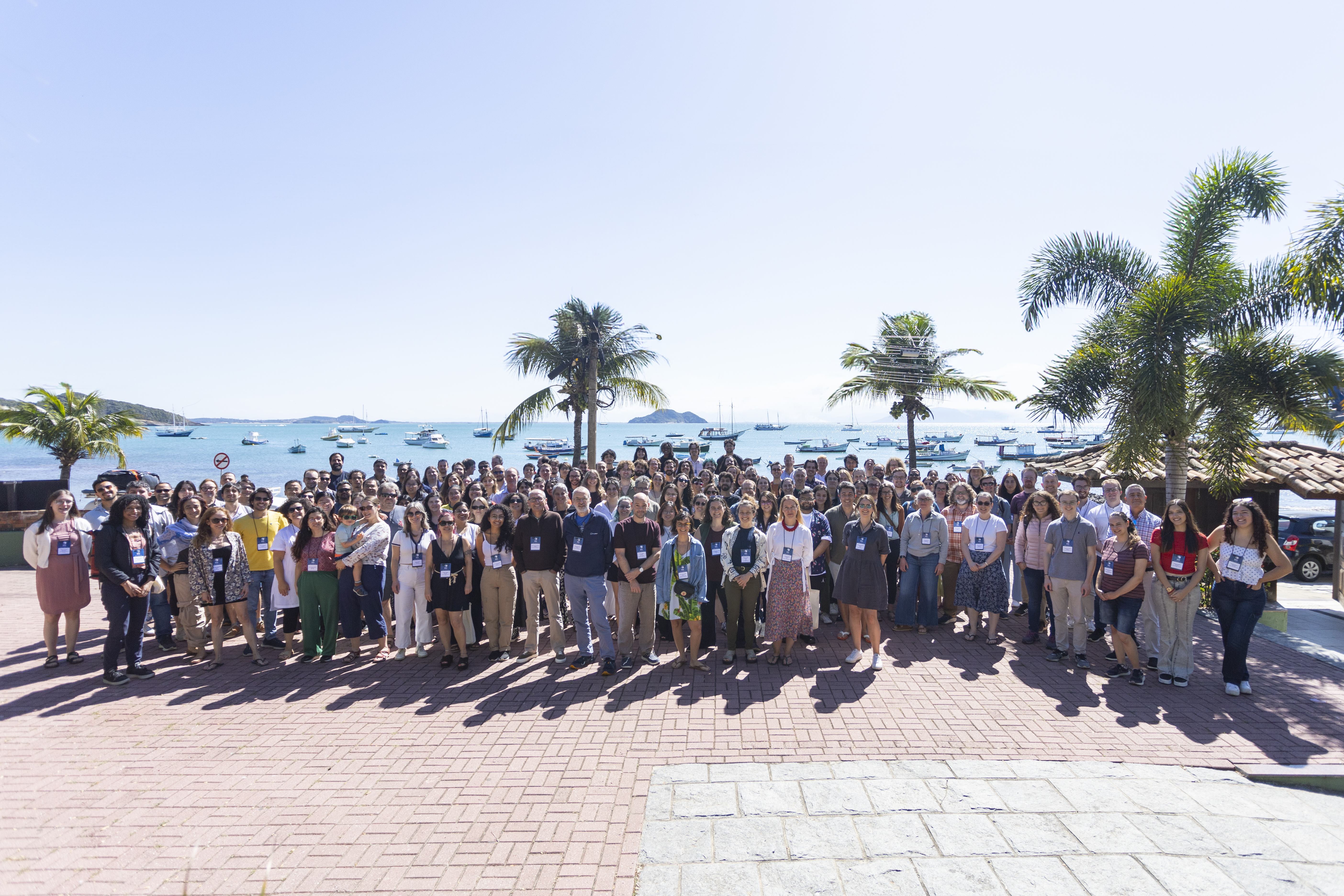
- 11/09/2025 - Official photo gallery now available!
Conference venue
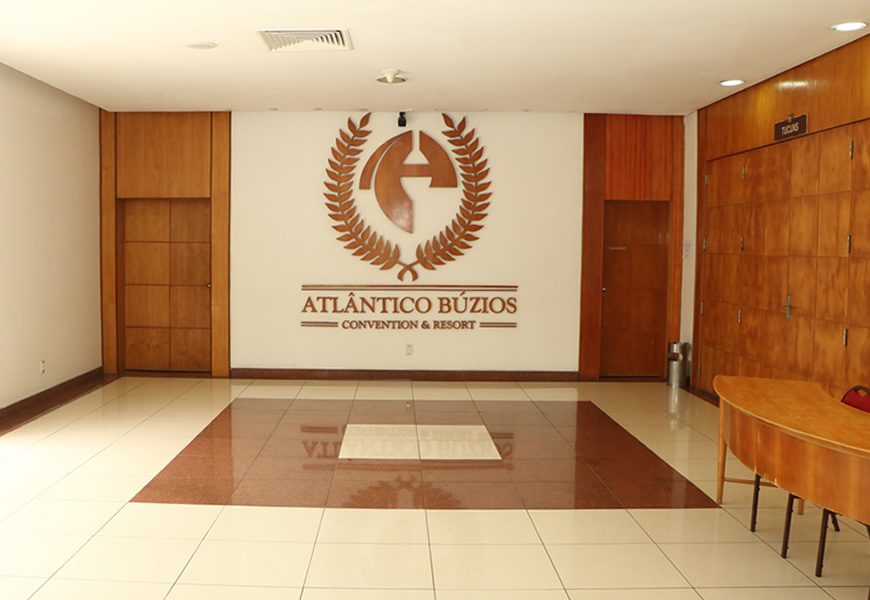
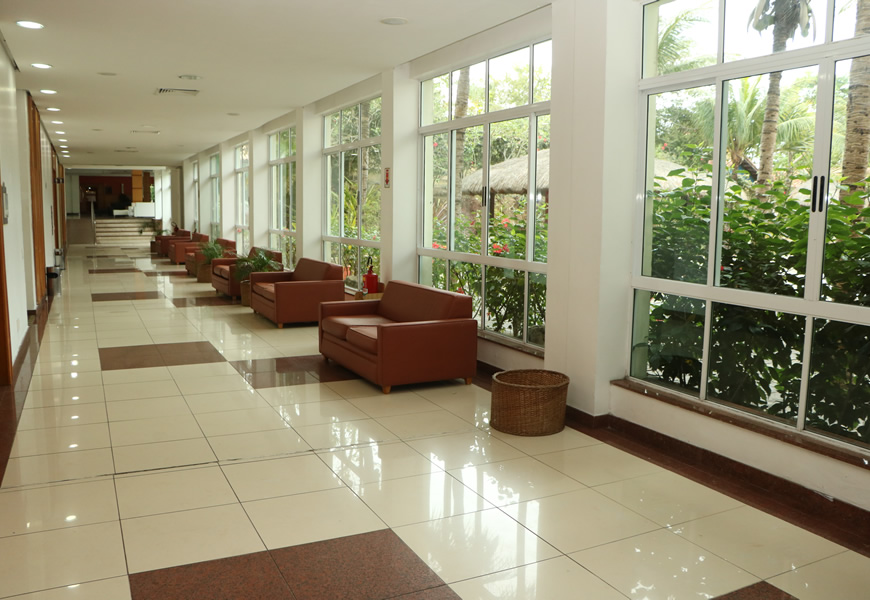
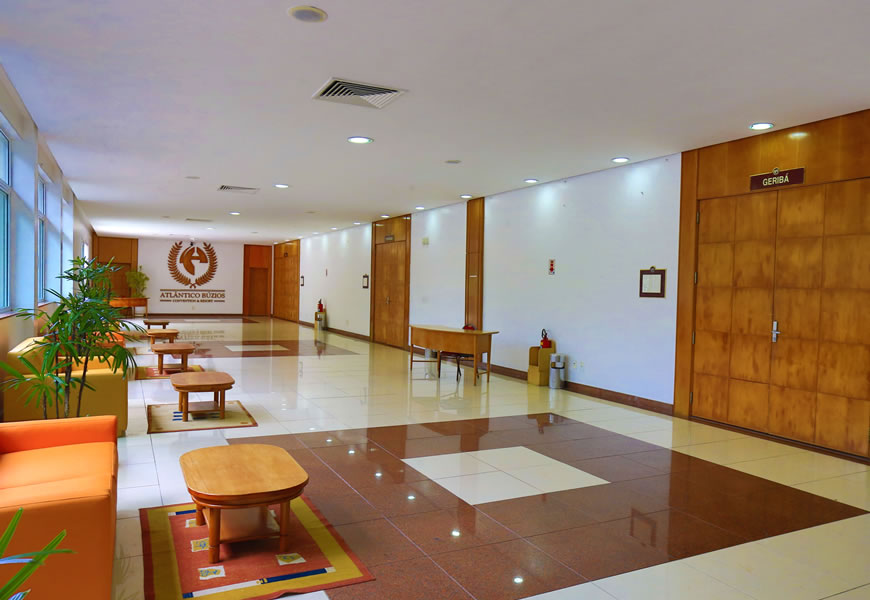
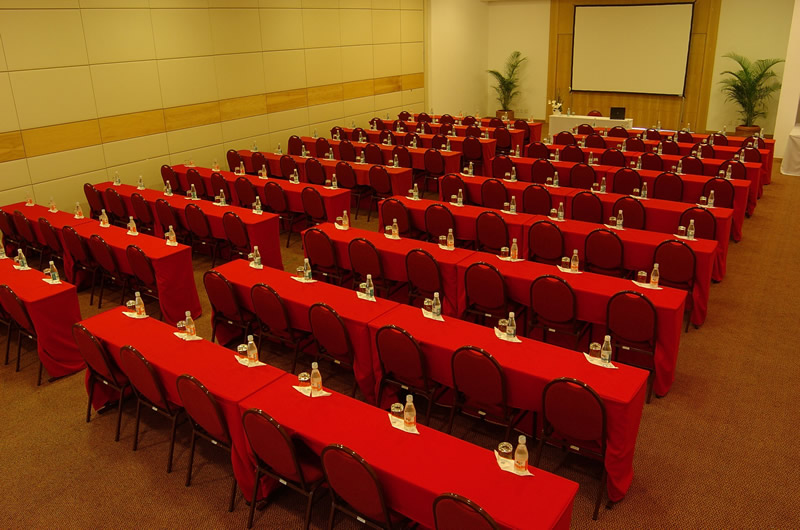
The conference will take place at the Atlântico Búzios Convention & Resort (🇧🇷 | 🇬🇧), a hotel and convention complex near the centre of Armação dos Búzios, Brazil. Armação dos Búzios (or just Búzios) is a coastal resort town ~170 km east of the city of Rio de Janeiero.
Address
Atlântico Búzios Convention
Estrada da Usina 294
Morro do Humaitá
Armação dos Búzios
Estado do Rio de Janeiro
28950-000
Brasil
[Link to Google Maps]
Programme
The final conference programme is now available!

,
Click for further information about each talk.Click to view talk slides (🔒 password required)
Sunday 10th August
| 18:00–19:30 | Registration |
| Welcome event Session Chair: Arianna Cortesi | |
| 19:30–20:00 | Eduardo Montfardini Penteado (IAU/OAE)(Special talk) The art of astronomy |
| 20:00-22:00 | Welcome cocktail |
Monday 11th August
| 08:00–09:00 | Registration |
| Conference opening Session Chair: Evelyn Johnston | |
| 09:00–09:10 | Ana Chies Santos (UFRGS, Brazil)Co-Chair SOC/LOC David Maltby (University of Nottingham, UK)Co-Chair LOC Welcome to Galaxy Memoirs and Búzios! |
| 09:10–09:20 | Lucimara Martins (Vice President, SAB) Welcome on behalf of the Brazilian Astronomical Society (SAB) |
| 09:20–09:35 | Reynier Peletier (University of Groningen, The Netherlands) The origins of the Nottingham Astronomy Group |
| 09:35–09:45 | Michael Merrifield (University of Nottingham, UK) Alfonso Aragón-Salamanca (University of Nottingham, UK) Opening remarks |
| Session 1: The morpho-kinematic properties of galaxies Session Chair: Evelyn Johnston | |
| 09:45–10:15 | Fabricio Ferrari (FURG, Brazil) (Review talk) Galaxy Morphometry and the Limits of the Hubble Paradigm |
| 10:15–10:30 | Callum Bellhouse (University of Nottingham, UK) Morpho-Kinematic Decomposition of the Intracluster Light with MUSE IFU |
| 10:30–10:45 | Dimitri Gadotti (Durham University, UK) The BANG Survey: Bulge Assembly in Nearby Galaxies |
| 10:45–11:00 | Rafael S. de Souza (University of Hertfordshire, UK) Capivara: A Spectral-Based Segmentation Code for Multicomponent Galaxy Decomposition in IFU Data |
| 11:00–11:30 | Coffee break |
| Session 2: The morpho-kinematic properties of galaxies (cont.) Session Chair: Evelyn Johnston | |
| 11:30–11:45 | Meng Yang (SHAO / CAS, China) Exploring dark matter in galaxies with HI kinematics |
| 11:45–12:00 | Laura Scholz-Diaz (INAF-OAA, Arcetri, Italy) Dynamical evidence connecting baryonic properties of galaxies and their host dark matter halos |
| 12:00–12:15 | Karín Menéndez-Delmestre (OV / UFRJ, Brazil) Bar properties and bar stellar populations - A Local Reference For Bar Studies In The Distant Universe |
| 12:15–12:30 | Camila de Sá-Freitas (ESO, Chile) Bar ages derived for the first time in nearby galaxies: Insights on secular evolution from TIMER |
| 12:30–12:45 | Francesca Fragkoudi (Durham University, UK) Which galaxies form bars and why? |
| 12:45–13:00 | Poster flash talks |
| 13:00–14:30 | Lunch break |
| Session 3: The morpho-kinematic properties of galaxies (cont.) Session Chair: Daria Zakharova | |
| 14:30–15:00 | Caroline Foster (UNSW, Australia) (Invited talk) Extragalactic globular clusters as dynamical tracers of the evolution of spiral galaxies |
| 15:00–15:15 | Amelia Fraser-McKelvie (ESO, Germany) What's at the beating heart of a GECKO? Inferring galaxy evolutionary histories from kinematic structural analysis |
| 15:15–15:30 | Damir Gasymov (ARI, Germany) Deciphering Galaxy Disk Assembly through Stellar Counter-Rotation |
| 15:30–15:45 | Stefania Barsanti (University of Sydney, Australia) Galaxy angular momentum within the cosmic web: the memory of spin-filament alignments to unravel the formation of galaxies, bulges and discs |
| 15:45–16:00 | Andressa Wille (UFRGS, Brazil) Warps in galactic disks: the effect of satellite galaxies on barred and non-barred models |
| 16:00–16:30 | Coffee break |
| Session 4: The morpho-kinematic properties of galaxies (cont.) Session Chair: Daria Zakharova | |
| 16:30–16:45 | Elizaveta Sazonova (University of Waterloo, Canada) Structural evolution of galaxies: from disks to disks?? |
| 16:45–17:00 | Pablo Manuel Sánchez Alarcón (IAC, Spain) Unveiling Disk Break Evolution in Galaxies with Euclid |
| 17:00–17:15 | Alina Boecker (University of Vienna, Austria) Merger memoirs across the galaxy population with millions of observed and simulated spectra |
| 17:15–17:30 | Takafumi Tsukui (ANU, Australia) Disk Galaxy Formation and Evolution Across Cosmic Time with JWST and ALMA |
Tuesday 12th August
| Session 5: Stellar populations, the ISM and their chemical evolution Session Chair: Steven Bamford | |
| 09:00–09:30 | Anna Ferré-Mateu (IAC, Spain) (Invited talk) Cosmic Misfits: probing galaxy evolution through the stellar populations of galaxies at the extremes |
| 09:30–09:45 | Boris Häußler (ESO, Chile) Two component stellar assembly histories in local elliptical galaxies via MUSE |
| 09:45–10:00 | Nicholas Boardman (University of St Andrews, UK) The competing effects of recent and long-term star formation histories on oxygen, nitrogen, and stellar metallicities |
| 10:00–10:15 | Allan Schnorr-Müller (UFRGS, Brazil) The formation of Massive Compact Quiescent Galaxies: clues from stellar populations, kinematics and morphology |
| 10:15–10:30 | David Setton (Princeton University, USA) Studying quenching as it occurs: molecular gas along the quenching sequence with post-starburst galaxies |
| 10:30–10:45 | Thomas de Lisle (University of Nottingham, UK) Investigating the rapid quenching of galaxies using JWST |
| 10:45–11:00 | Daniela Barrientos Acevedo (PUC, Chile) "Mind the Gap: Mock Spectra as a Bridge Between Cosmological Simulations and Observations in Galaxy Evolution" |
| 11:00–11:30 | Coffee break |
| Session 6: Stellar populations, the ISM and their chemical evolution (cont.) Session Chair: Steven Bamford | |
| 11:30–11:45 | Rogério Monteiro-Oliveira (ON/MCTI, Brazil) Revisiting Elliptical Galaxies: No Evidence for a Dichotomy |
| 11:45–12:00 | Saskia Schlagenhauf (Armargh Observatory, UK) Tracing Environmental Effects In Clusters Using Star Formation Histories of Fornax Galaxies |
| 12:00–12:15 | Luis Diaz-Garcia (IAA-CSIC, Spain) Formation and evolution of the stellar content of galaxies in the J-PAS era |
| 12:15–12:30 | James Garland (University of Toronto, Canada) Stirring the Pot: Spiral-Arm-Induced Star Formation and ISM Enrichment in NGC 628 |
| 12:30–13:00 | Poster flash talks |
| 13:00–14:30 | Lunch break |
| Session 7: Stellar populations, the ISM and their chemical evolution (cont.) Session Chair: Ignacio del Moral-Castro | |
| 14:30–14:45 | Nancy Yang (University of Oxford, UK) Science from the SIGNALS planetary nebula survey: stellar populations, PNLF distances and dark matter |
| 14:45–15:00 | Martin Bureau (University of Oxford, UK) WISDOM: Molecular Cloud Properties and Star-formation Quenching in Spheroids |
| 15:00–15:15 | Micheli Trindade Moura (UFRGS, Brazil) Tracing the Assembly of Relic Galaxies: Insights from Simulations |
| 15:15–15:30 | Steven Bamford (University of Nottingham, UK) Intracluster light as seen by Euclid |
| 15:30–15:45 | Yifan Mai (Macquarie University, Australia) Forward modelled metallicity gradients in galaxies at z~0.3 |
| 15:45–16:00 | Yasna Ordenes Briceño (UDP, Chile) Extending BUDDI for Globular Clusters: Methodology and Characterization of the globular cluster systems in S0 galaxies observed with MUSE |
| 16:00–16:30 | Coffee break |
| Session 8: Round table discussion (morpho-kinematics & stellar populations) Session Chair: Ignacio del Moral-Castro | |
| 16:30–17:30 | Discussion panel: Lodovico Coccato (ESO) - CHAIR Alina Boecker (Vienna) Fabricio Ferrari (FURG) Anna Ferré-Mateu (IAC) Caroline Foster (UNSW) Boris Häußler (ESO/Chile) Rogério Riffel (UFRGS) |
Wednesday 13th August
| Session 9: The effect of the galaxy environment Session Chair: Ulrike Kuchner | |
| 09:00–09:30 | Benedetta Vulcani (INAF-OAPd, Padova, Italy) (Review talk) Galaxies under pressure: Environmental transformations from clusters to the cosmic web |
| 09:30–09:45 | Ignacio del Moral-Castro (PUC, Chile) Nuclear activity in Cosmic Voids: A Unique Window into Galaxy Evolution |
| 09:45–10:00 | Larissa Okiyama (UFRJ, Brazil) The effect of the extragalactic environment on the evolution of S0-type galaxies |
| 10:00–10:15 | Guillaume Hewitt (University of Nottingham, UK) The many roads to quenching: Extending galaxy mass functions across environment and redshift at 0.8 < z < 1.5 |
| 10:15–10:30 | Angela Krabbe (USP, Brazil) Identifying Disturbed Galaxies and Environmental Effects Using Non-Parametric Morphology and Machine Learning |
| 10:30–10:45 | Lauren Foster (McMaster University, Canada) Effect of Ram Pressure on Star Formation in Satellite Galaxies |
| 10:45–11:00 | Franco Piraino-Cerda (Universidad de Valparaíso, Chile) The impact of local and global environment on galaxies with the CHANCES survey |
| 11:00–11:30 | Coffee break |
| Session 10: The effect of the galaxy environment (cont.) Session Chair: Ulrike Kuchner | |
| 11:30–11:45 | Diego Pallero (Universidad de Valparaíso, Chile) The role of pre-processing in galaxy evolution: Upcoming science with SPLUS and CHANCES-4MOST |
| 11:45–12:00 | Amanda Lopes (UNLP, Argentina) Comparative Morphology of Galaxies in the Fornax Cluster and Dorado Group: Unveiling Environmental Transformation Processes |
| 12:00–12:15 | Analía Smith Castelli (UNLP, Argentina) A comprehensive study of the Fornax cluster using S-PLUS data |
| 12:15–12:30 | Daria Zakharova (INAF-OAT, Trieste, Italy) Environmental history of galaxies: the role of filaments |
| 12:30–12:45 | Poster flash talks |
| 12:45–13:00 | Conference photo |
| 13:00–17:30 | Free afternoon |
| Outreach event: Ciência sob o céu de BúziosScience under the sky of Búzios(in Portuguese 🇧🇷) | |
| 18:00–18:30 | Arianna Cortesi (UFRJ, Brazil)(Public talk) Giovanna Liberato (UFRJ, Brazil) Mariana Rubet (UFRJ, Brazil) O lado obscuro do Universo: matéria escura e buracos negrosThe dark side of the Universe: dark matter and black holes |
| 18:30–19:00 | Rafael S. de Souza (University of Hertfordshire, UK)(Public talk) A mente mova da ciência: IA, astrofísica e alémThe new mind of science: AI, astrophysics and beyond |
| 19:00–21:00 |  Observação do céuSky observation Observação do céuSky observation |
Thursday 14th August
| Session 11: The effect of the galaxy environment (cont.) Session Chair: Diego Pallero | |
| 09:00–09:15 | Marco Antonio Canossa Gosteinski (Kapteyn, Netherlands) Unveiling Fossil Remnants of Galaxy Mergers: Automated Merger Stream Detection and Analysis in Voids |
| 09:15–09:30 | Eirini Angeloudi (IAC, Spain) Constraining in-situ vs. ex-situ stellar mass in nearby galaxies with machine learning |
| 09:30–09:45 | Rhys Jordan (University of Nottingham, UK) Identifying galaxy groups merging with massive clusters using machine learning |
| 09:45–10:00 | Alex_Pigarelli (Arizona State University, USA) Stacking z~1.6 Cluster Members on ALMA CO Maps Reveals a Lack of Gas Deficiencies |
| 10:00–10:15 | María del Carmen Argudo-Fernández (Universidad de Granada, Spain) Nature vs Nurture: Disentangling the effects of local and large-scale environments on star formation and nuclear activity in nearby galaxies |
| 10:15–10:30 | Nicholas Foo (Arizona State University, USA) A strongly-lensed DSFG-rich protocluster core |
| 10:30–10:45 | Thavisha Dharmawardena (New York University, USA) Simultaneously mapping the multiscale dust and gas distribution of the Milky Way ISM in 3D |
| 10:45–11:00 | Maria Luiza Linhares Dantas (PUC, Chile) Tracing stellar migration in the Milky Way: estimating birth radii and chemo-dynamical trends of Gaia-ESO stars |
| 11:00–11:30 | Coffee break |
| Session 12: Linking galaxy evolution from high-z to low-z Session Chair: Diego Pallero | |
| 11:30–12:00 | Angela Adamo (Stockholm University, Sweden) (Review talk) Young star clusters near and far: the sparks that drive galaxy evolution |
| 12:00–12:15 | Ayan Acharyya (INAF-OAPd, Padova, Italy) Unraveling past physical processes using present chemical abundance maps of galaxies: do simulations and observations agree? |
| 12:15–12:30 | Tomas Rutherford (University of Sydney, Australia) The Limits of Memory: Linking Mergers, Environment, and the Dynamical Evolution of Massive Galaxies |
| 12:30–12:45 | Arianna Dolfi (Universidad de La Serena, Chile) Global morphological perturbations as a probe of galaxy formation, evolution and environment |
| 12:45–13:00 | Rosa María Mérida González (Saint Mary's University, Canada) Possible environmental quenching in an interacting LRD pair at z ~ 7 |
| 13:00–14:30 | Lunch break |
| Session 13: Linking galaxy evolution from high-z to low-z (cont.) Session Chair: Ana Chies Santos | |
| 14:30–15:00 | Emily Wisnioski (UWA, Australia) (Invited talk) A multiphase perspective on the origin of the thin/thick disc dichotomy in galaxies |
| 15:00–15:15 | Carla Cornil-Baïotto (Universidad de Valparaíso, Chile) ALMA Imaging Through a 30x Magnifying Glass: Resolving the Physical Properties of a Typical Star-Forming Galaxy at z~2.8 |
| 15:15–15:30 | Allison Noble (Arizona State University, USA) Spatially-Resolved Molecular Gas and Dust within High-redshift Cluster Galaxies |
| 15:30–15:45 | Tobias Looser (Harvard University, USA) Galaxy assembly in the first billion years: Mini-quenching, lulling galaxies and more evidence for bursty SFHs |
| 15:45–16:00 | Augusto Lassen (INAF-OAPd, Padova, Italy) Unveiling clump formation and stellar feedback in two local low-mass galaxies: Insights from MUSE and HST observations |
| 16:00–16:30 | Coffee break |
| Session 14: Round table discussion (environment & linking high-z to low-z) Session Chair: Ana Chies Santos | |
| 16:30–17:30 | Discussion panel: Kate Rowlands (STScI) - CHAIR Angela Adamo (Stockholm) Rachel Bezanson (Pittsburgh) Bruno Rodríguez Del Pino (CAB/CSIC-INTA) Gregory Rudnick (Kansas) Benedetta Vulcani (INAF-OAPd) Emily Wisnioski (ANU) |
| 19:00–22:00 | Conference dinner: TAWA beach club |
Friday 15th August
Session 15: Current/future surveys and facilities Session Chair: Amelia Fraser-McKelvie | |
| 09:30–10:00 | Koen Kuijken (Leiden Observatory, Netherlands) (Review talk) Galaxies with Mike and KiDS |
| 10:00–10:15 | Borja Anguiano (CEFCA, Spain) J-ATLAS: Javalambre Andromeda and Triangulum Legacy Astrophysical Survey |
| 10:15–10:30 | Gregory Rudnick (University of Kansas, USA) Disruptions of the Baryon Cycle in the Extended Regions around the Virgo Cluster |
| 10:30–10:45 | Shiyin Shen (SHAO / CAS, China) The integral field spectrograph of China Space Station Telescope |
| 10:45–11:00 | Marc Verheijen (Kapteyn Astronomical Institute, Netherlands) HIperEDGE : an HI perspective on Environment-Driven Galaxy Evolution |
| 11:00–11:30 | Coffee break |
| Session 16: Current/future surveys and facilities (cont.) Session Chair: Amelia Fraser-McKelvie | |
| 11:30–12:00 | Rachel Bezanson (University of Pittsburgh, USA) (Invited talk) How it started . . . How it’s going: tracing the formation and evolution of massive galaxies through cosmic time with large spectroscopic surveys |
| 12:00–12:15 | Ulrike Kuchner (University of Nottingham, UK) A multi-faceted approach to advancing galaxy-cosmic web studies |
| 12:15–13:00 | Conference summary Patricia Sánchez-Blázquez (UCM, Spain) Yara Jaffé (UTFSM, Chile) |
| 13:00 | Conference ends |
Posters
Click for further information about each poster.
| No. | Name | Institution | Country | Title | |
|---|---|---|---|---|---|
| 1 | Abhner de Almeida | IAG / Universidade de São Paulo (USP) | 🇧🇷 Brazil | Pathways towards dwarf galaxies: Insights from TNG50 | |
| 2 | Amanda Evelyn de Araujo Carvalho | Observatório do Valongo / Universidade Federal do Rio de Janiero (OV / UFRJ) | 🇧🇷 Brazil | Gas Kinematics at intermediate redshift galaxies | |
| 3 | Ana Carolina Santiago Menezes | Universidade Federal do Rio Grande do Sul (UFRGS) | 🇧🇷 Brazil | A Trip Through the Green Valley: Morphological Transformations and the Journey to Quiescence | |
| 4 | André Luiz de Amorim | Universidade Federal de Santa Catarina (UFSC) | 🇧🇷 Brazil | BaySeAGal: a baysean parametric stellar population synthesis code | |
| 5 | Andreea Varasteanu | University of Oxford | 🇬🇧 UK | The radial acceleration relation with resolved stellar mass measurements over 1 Gyr | |
| 6 | Andressa Wille | Universidade Federal do Rio Grande do Sul (UFRGS) | 🇧🇷 Brazil | Tracing clumpy star formation in the stripped tails of a jellyfish galaxy in Abell 2744 | |
| 7 | Arianna Cortesi | Instituto de Física / Universidade Federal do Rio de Janiero (IF / UFRJ) | 🇧🇷 Brazil | Closer to the sky: co-creating astronomical knowledge in the favela complex of Cantagalo Pavão Pavãozinho (PPG) in Rio de Janeiro | |
| 8 | Augusto Lassen | Osservatorio Astronomico di Padova (INAF-OAPd) | 🇮🇹 Italy | Distinguishing ram pressure from gravitational interactions: Applying the Size-Shape Difference method to real galaxies | |
| 9 | Basilio Santiago | Universidade Federal do Rio Grande do Sul (UFRGS) | 🇧🇷 Brazil | LSST forecast on orbits of ultra-faint dwarf spheroidal Galaxy satellites | |
| 10 | Boris Häußler | European Southern Observatory (ESO) / Chile | 🇨🇱 Chile | Two component stellar assembly histories in local elliptical galaxies via MUSE | |
| 11 | Bruno Rodríguez Del Pino | Centro de Astrobiología (CAB) / CSIC-INTA | 🇪🇸 Spain | Exploring the close environment of high redshift galaxies with the GA-NIFS survey | |
| 12 | Callum O'Kane | University of Nottingham | 🇬🇧 UK | Cosmic web filaments and galaxy evolution: Insights from star formation and chemical enrichment histories | |
| 13 | Carlos Carneiro | Universidade Federal do Rio Grande do Sul (UFRGS) | 🇧🇷 Brazil | A 36 Billion Solar Mass Black Hole at the centre of the Cosmic Horseshoe Gravitational Lens | |
| 14 | Carolina Dulcien | Universidad de Concepción (UdeC) | 🇨🇱 Chile | Mergers across the cosmic web | |
| 15 | Clecio Roque De Bom in absentia | Centro Brasileiro de Pesquisas Físicas (CBPF) | 🇧🇷 Brazil | Investigating the host galaxy of the kilonova candidate GRB 230307A | |
| 16 | Constanza Muñoz López | Leibniz Institute for Astrophysics Potsdam (AIP) | 🇩🇪 Germany | Stellar angular momentum, star-forming episodes and star formation history of intermediate-redshift galaxies | |
| 17 | Cristina Furlanetto | Universidade Federal do Rio Grande do Sul (UFRGS) | 🇧🇷 Brazil | Probing Group-Scale Halo Assembly with Strong Lensing and Kinematics | |
| 18 | Danielle de Brito Silva | Uppsala University | 🇸🇪 Sweden | Understanding the evolutionary history of dwarf galaxies with chemical evolution models | |
| 19 | Davi Rodrigues | Universidade Federal do Espírito Santo (UFES) | 🇧🇷 Brazil | Using line-of-sight acceleration to test dark matter models in the Milky Way | |
| 20 | David Maltby | University of Nottingham | 🇬🇧 UK | The multiwavelength structure of post-starburst galaxies: insights from JWST/PRIMER & implications for quenching at high-z | |
| 21 | Débora Brandão | Observatório do Valongo / Universidade Federal do Rio de Janiero (OV / UFRJ) | 🇧🇷 Brazil | Blue Elliptical Galaxies in the Fornax Cluster through S-PLUS Data | |
| 22 | Dylan Lazarus | McMaster University | 🇨🇦 Canada | Disentangling SFR Timescales: An Updated Identification Method for Rejuvenating Galaxies | |
| 23 | Eduardo A. Hartmann | Instituto de Astrofísica de Canarias (IAC) | 🇪🇸 Spain | ZF-UDS-7329: Connecting a high redshift quiescent galaxy with local massive analogues | |
| 24 | Elvis Armandio de Mello Terencio dos Santos | Universidade Tecnólogica Federal do Paraná (UTFPR) | 🇧🇷 Brazil | Sloshing Spirals in the Evolution of Jellyfish Galaxies | |
| 25 | Evelyn Johnston | Universidad Diego Portales (UDP) | 🇨🇱 Chile | The SDSS-V Local Volume Mapper Survey | |
| 26 | Felicia Palacios | Universidade Federal do Rio Grande do Sul (UFRGS) | 🇧🇷 Brazil | Kinematics and star formation in the green valley with integral field spectroscopy | |
| 27 | Felipe Albanez | Universidade Federal de Santa Maria (UFSM) | 🇧🇷 Brazil | Exploring the Relationship Between Stellar Populations and Nuclear Activity in Hydrodynamical Simulations: An Analysis of the iMaNGA Sample in the IllustrisTNG Simulation | |
| 28 | Felipe Schmidt Lohmann | European Southern Observatory (ESO) | 🇩🇪 Germany | The Mass Assembly of the Hydra I Cluster Constrained by Intracluster Globular Clusters | |
| 29 | Fiorella Guerra | Universidad Técnica Federico Santa María (UTFSM) | 🇨🇱 Chile | A study of jellyfish galaxies in cosmological simulations | |
| 30 | Gabriel Azevedo in absentia | Universidade Federal do Rio Grande do Sul (UFRGS) | 🇧🇷 Brazil | Substructure in Voids: Stellar Populations and Kinematics of Two Galaxy Triplets with CAVITY | |
| 31 | Giovanna Liberato | Observatório do Valongo / Universidade Federal do Rio de Janiero (OV / UFRJ) | 🇧🇷 Brazil | Planetary nebulae as tracers of the dynamical and chemical evolution of nearby spiral galaxies | |
| 32 | Guilherme Limberg | University of Chicago | 🇺🇸 USA | The emerging class of "extremely-diffuse" satellites in the Local Group: tidal disruption and implications to the stellar mass-metallicity relation of dwarf galaxies | |
| 33 | Guillaume Hewitt | University of Nottingham | 🇬🇧 UK | No hidden monsters: Probing recently-quenched galaxies for obscured AGN with JWST | |
| 34 | Gustavo Gonçalves | Universidade Tecnólogica Federal do Paraná (UTFPR) | 🇧🇷 Brazil | Reconciling bar length discrepancies between JWST and IllustrisTNG in high-redshift galaxies | |
| 35 | Ilia V. Chugunov | Central Astronomical Observatory at Pulkovo / Russian Academy of Sciences (RAS) | 🇷🇺 Russia | Less Wound and More Asymmetric: JWST Confirms the Evolution of Spiral Structure in Galaxies at z < 3 | |
| 36 | José Ibarra | Observatório do Valongo / Universidade Federal do Rio de Janiero (OV / UFRJ) | 🇧🇷 Brazil | Quantifying the importance of tidal effect and ram pressure stripping in the morphological transformation of dwarf galaxies in cluster environments | |
| 37 | Júlia Thainá Batista | Universidade Federal de Santa Catarina (UFSC) | 🇧🇷 Brazil | Spatially resolved stellar populations and emission lines properties in nearby galaxies with J-PLUS | |
| 38 | Kate Rowlands | Space Telescope Science Institute (STScI) | 🇺🇸 USA | Resolving the quenching of star formation in post-starburst galaxies | |
| 39 | Katia Slodkowski Clerici | Universidade Federal do Rio Grande do Sul (UFRGS) | 🇧🇷 Brazil | Insights into the Formation and Evolution of Massive Compact Quiescent Galaxies at z ~ 0: A Multi-Component Photometric Decomposition Perspective | |
| 40 | Kelen Tonet | Universidade Federal do Rio Grande do Sul (UFRGS) | 🇧🇷 Brazil | Interaction between galaxies: study of integrated photometric properties | |
| 41 | Liana Li | IAG / Universidade de São Paulo (USP) | 🇧🇷 Brazil | Study of the morphology and star formation rates of galaxies in the MKW4 cluster | |
| 42 | Lodovico Coccato | European Southern Observatory (ESO) | 🇩🇪 Germany | The role of environment in the formation of lenticular galaxies | |
| 43 | Luca Béchade | Observatório do Valongo / Universidade Federal do Rio de Janiero (OV / UFRJ) | 🇧🇷 Brazil | Simulated Observations of Stellar Populations in Galaxies at Cosmic Noon with the Mosaic Spectrograph for the Extremely Large Telescope | |
| 44 | Lucas Zenocratti in absentia | IALP / FCAG / UNNOBA | 🇦🇷 Argentina | Study of Fornax-like clusters in cosmological simulations | |
| 45 | Lucimara Martins | Universidade Cidade de São Paulo (UNICID) | 🇧🇷 Brazil | XshootU: A Stellar Spectral Library for Young Stellar Population Modelling | |
| 46 | Luis Angel Gutiérrez Soto | Instituto de Astrofísica de La Plata (IALP) / CONICET-UNLP | 🇦🇷 Argentina | Probing the Low-Surface-Brightness Universe with S-PLUS: Can a Small Telescope Compete? | |
| 47 | Luis Fernando Lomeli Nuñez | Universidade Federal do Rio de Janiero (UFRJ) | 🇧🇷 Brazil | The S-PLUS Fornax Project (S+FP): Mapping globular clusters systems within 5 virial radii around NGC 1399 | |
| 48 | Maiara Carvalho | IAG / Universidade de São Paulo (USP) | 🇧🇷 Brazil | Exploring evolutionary scenarios of five gas-stripped galaxies in Fornax with S-PLUS | |
| 49 | Marco Mirabile | European Southern Observatory (ESO) / INAF | 🇩🇪 Germany | Globular Clusters as Probes of Galaxy Evolution: Insights from Ultra-Diffuse Galaxies | |
| 50 | Maria Clara Cavalcante Siviero | Centro Brasileiro de Pesquisas Físicas (CBPF) | 🇧🇷 Brazil | The Universality of the Dark Matter Density Profile for Milky Way Analog Galaxies | |
| 51 | Mariana Rubet | Universidade Federal do Rio de Janiero (UFRJ) | 🇧🇷 Brazil | Probing a protocluster candidate at z ~ 4, 5 in the COSMOS field | |
| 52 | Marina Trevisan | Universidade Federal do Rio Grande do Sul (UFRGS) | 🇧🇷 Brazil | The impact of galaxy interactions within groups on the properties of Compact Starburst Galaxies | |
| 53 | Agenor Da Costa | Universidade Estadual Paulista (UNESP) | 🇧🇷 Brazil | Comparison of dark matter profiles in HSB and LSB galaxies with Bayesian Inference | |
| 54 | Megan Oxland | McMaster University | 🇨🇦 Canada | The role of gas stripping in quenching satellite galaxies | |
| 55 | Mi Chen in absentia | Kapteyn Astronomical Institute / University of Groningen | 🇳🇱 Netherlands | Galmoss: A package for GPU-accelerated Galaxy Profile Fitting | |
| 56 | Michele Bertoldo Coelho | Universidade de São Paulo (USP) | 🇧🇷 Brazil | SMARTY: The MILES moderate resolution near-infrared stellar library | |
| 57 | Miguel de Loreto Neto | Universidade de São Paulo (USP) | 🇧🇷 Brazil | Uncovering the properties of galactic disks in GECKOS | |
| 58 | Mirley Mesquita Coelho Nunes | Universidade Federal de Santa Catarina (UFSC) | 🇧🇷 Brazil | Analysis of stellar populations and the interstellar medium in 42 MUSE cubes | |
| 59 | Naadiyah Jagga | York University | 🇨🇦 Canada | Stellar mass growth of galaxies over time with JWST: Spatially Resolved vs Unresolved Photometry | |
| 60 | Navyasree Kovakkuni | Universidad de Antofagasta (UA) | 🇨🇱 Chile | Star Formation in the Ram Pressure Stripped Tail of a Virgo Cluster Galaxy: IC 3418 | |
| 61 | Nelvy Choque-Challapa | Universidad Técnica Federico Santa María (UTFSM) | 🇨🇱 Chile | Spatial distribution of dwarf and giant galaxies in and around Virgo cluster | |
| 62 | Nicholas Schweder-Souza | Universidade Tecnólogica Federal do Paraná (UTFPR) | 🇧🇷 Brazil | Developing a robust methodology to extract clean samples of extragalactic globular clusters in the LSST-era: the Fornax Cluster as a case-study | |
| 63 | Osbaldo Sánchez García | Observatório do Valongo / Universidade Federal do Rio de Janiero (OV / UFRJ) | 🇧🇷 Brazil | Stellar Bars in Jellyfish Galaxies | |
| 64 | Patricio Olivares Valdés | Universidad Técnica Federico Santa María (UTFSM) | 🇨🇱 Chile | Characterizing the dynamical state of CHANCES Low-z clusters | |
| 65 | Paula Coelho | Universidade de São Paulo (USP) | 🇧🇷 Brazil | Synthetic or Empirical Stellar Libraries? Testing Stellar Population Models with Star Clusters | |
| 66 | Pedro dos Santos Lopes | Universidade Federal do Rio Grande do Sul (UFRGS) | 🇧🇷 Brazil | The memories of late-type galaxies through their globular cluster systems: systematic search and characterisation for the current generation of multi-band surveys | |
| 67 | Pedro Ribeiro Floriano | Universidade Federal do Rio Grande do Sul (UFRGS) | 🇧🇷 Brazil | The memories of spiral galaxies through the build up of their globular cluster systems: systematic search and characterisation for the current generation of multi-band surveys | |
| 68 | Rafael Merib Dias | Universidade Federal do Rio Grande do Sul (UFRGS) | 🇧🇷 Brazil | The IMF and elemental abundances of massive compact galaxies and what they can teach us about the quenching of star formation at high redshifts | |
| 69 | Raimundo Ferreira | Observatório do Valongo / Universidade Federal do Rio de Janiero (OV / UFRJ) | 🇧🇷 Brazil | A Multi-band Study of Globular Cluster Systems in Dwarf Galaxies: From Dark Matter to Star Formation Histories | |
| 70 | Rasha Samir in absentia | National Research Institute of Astronomy and Geophysics | 🇪🇬 Egypt | The color-magnitude relation of the Fornax cluster as seen by S-PLUS | |
| 71 | Renu Devi | Indian Institute of Astrophysics (IIA) | 🇮🇳 India | Stellar Bars quench star formation in the central regions of massive galaxies: New insights from UV-optical color maps | |
| 72 | Roan Haggar | University of Waterloo | 🇨🇦 Canada | Identifying backsplash galaxies with machine learning | |
| 73 | Rodrigo Facundo Haack | Instituto de Astrofísica de La Plata (IALP) / CONICET/UNLP | 🇦🇷 Argentina | Estimation of photometric redshifts in the direction of Fornax cluster with S-PLUS + LePhare. Initial steps of the study of the Doradus-Fornax-Eridanus Filament | |
| 74 | Rogério Riffel | Universidade Federal do Rio Grande do Sul (UFRGS) | 🇧🇷 Brazil | The role of the stellar recycled gas in active galactic nuclei feeding | |
| 75 | Sabrina Dopico | Universidade Federal do Rio Grande do Sul (UFRGS) | 🇧🇷 Brazil | The effects of interactions and mergers on the formation and properties of Compact Starburst Galaxies | |
| 76 | Shuang Zhou | Osservatorio Astronomico di Brera (INAF-OAB) | 🇮🇹 Italy | Chemical Evolution of Galaxies from Local to Intermediate Redshifts and the Role of Environment | |
| 77 | Simon Mork | Arizona State University | 🇺🇸 USA | A dusty tail of star formation: ALMA imaging of an AGN-hosting BCG at z=0.808 | |
| 78 | Sofia Zayas | FCAGLP / Universidad Nacional de La Plata (UNLP) | 🇦🇷 Argentina | Multiband S-PLUS Structural Analysis of Galaxies in the Antlia Cluster using SourceXtractor++ | |
| 79 | Suresh Parekh | Universidade Federal do Rio Grande do Sul (UFRGS) | 🇧🇷 Brazil | Extragalactic globular cluster near-infrared spectroscopy: Full spectral fitting of Centaurus A (NGC 5128) | |
| 80 | Taísa Oliveira de Jesus | Universidade de São Paulo (USP) | 🇧🇷 Brazil | Constraining how dependent bar ages are on different stellar population models | |
| 81 | Tatiana Sandford | Indiana University | 🇺🇸 USA | Scaling Relations for Globular Cluster Systems in Giant Galaxies | |
| 82 | Thiago Dalpiaz | Centro Brasileiro de Pesquisas Físicas (CBPF) | 🇧🇷 Brazil | Multiband characterization of simulated bars using Illustris TNG-50 | |
| 83 | Tutku Kolcu | University of Nottingham | 🇬🇧 UK | MUSE search for kinematic signatures of gas inflows in nearby galaxies: Connections to Nuclear Activity and Central Morphology | |
| 84 | Vasiliki Fragkou | Observatório do Valongo / Universidade Federal do Rio de Janiero (OV / UFRJ) | 🇧🇷 Brazil | Extragalactic Planetary Nebulae and Modern Multi-wavelength Surveys | |
| 85 | Vicente Estrada-Carpenter | Arizona State University | 🇺🇸 USA | The Spatially Resolved Metallicities of Clumpy Galaxies | |
| 86 | Victor Hugo Sasse | Universidade Federal de Santa Catarina (UFSC) | 🇧🇷 Brazil | The SCUBES project | |
| 87 | Vitor Medeiros Sampaio | Universidad Técnica Federico Santa María (UTFSM) | 🇨🇱 Chile | Unveiling the Evolution of Disk and Spheroidal Galaxies Over Cosmic Time | |
| 88 | Vitor Hugo Lopes da Silva | Observatório do Valongo / Universidade Federal do Rio de Janiero (OV / UFRJ) | 🇧🇷 Brazil | The environment and morphology of local analogues to cosmic noon star forming galaxies | |
| 89 | Yamila Daniela Burrafato | Instituto de Astronomía y Física del Espacio (IAFE) | 🇦🇷 Argentina | Stellar metallicities as fossils of the formation histories of galaxies |
🔔 Congratulations goes to Marco Mirabile (ESO/INAF) for winning the poster prize with Globular Clusters as Probes of Galaxy Evolution: Insights from Ultra-Diffuse Galaxies
Social events
Various social events have been organised throughout the week during the conference. These include:
| Sunday Evening | Welcome Cocktail |
|---|---|
| Wednesday Afternoon | Boat Trip (Optional) |
| Thursday Evening | Conference Dinner (Optional) Tawa Beach Club, Búzios |


image credit: rawpixels
Registration
Registration is now closed!
Registration fee and payment
The registration fee includes access to all conference sessions, coffee breaks and the Welcome Cocktail. Reduced fees are available for astronomers and students from less privileged countries.
| Registration fee | Early fee (until 16th May) | Regular fee (until 27th June) | Late fee (after 27th June) |
| High-income countries | 1735 BRL (USD $300) | 2020 BRL (USD $350) | 2310 BRL (USD $400) |
| Latin America and other low-/middle-income countries | 1385 BRL (USD $240) | 1615 BRL (USD $280) | 1900 BLR (USD $330) |
| Students from Latin America and other low-/middle-income countries | 1000 BRL (USD $175) | 1240 BRL (USD $215) | 1500 BRL (USD $260) |
IMPORTANT: payment of the registration fee is required upon registration for the conference (or as soon as possible thereafter). Payment is either via PIX (for Brazilian residents), SWIFT transfer (for international participants) or by credit card . All methods of payment are available through our FUPAI course website (link to payment ). Note, in order to pay through this forum, you are first required to create a FUPAI account and to login. Only then will options for payment appear on the course webpages. The FUPAI website contains components that are only available in Portuguese 🇧🇷, so for those that need it, we provide step-by-step instructions of how set up an account and pay the registration fee (Payment Instructions ). For separate details of payment via PIX or SWIFT transfer, see below under 'Expand payment details' for further information.
Furthermore, once payment has been made, participants are required to email the receipt to 📧 GalaxyMemoirs2025@nottingham.ac.uk, using the subject 'Galaxy Memoirs 2025: fee payment' and the email template provided upon registration (confirmation webpage). Note that failure to do so, will mean the conference organisers will have no record of your payment and your registration will not be confirmed.
Refund Policy: if you need to cancel, a 70% refund is available until 10 July 2025. Regrettably, we’re unable to offer refunds after this date. To request a refund, simply email us at GalaxyMemoirs2025@nottingham.ac.uk by the deadline.
Guidelines for talks and posters
Guidelines for talks and posters are provided below.
Guidelines for talks
- Invited/Review talks: 30 minutes total (25 minutes + 5 minutes for Q&A).
- Contributed talks: 15 minutes total (12 minutes + 3 minutes for Q&A).
To help sessions run efficiently and avoid delays, we kindly ask that presentation files be submitted well in advance.
SLIDE FORMAT & UPLOAD INSTRUCTIONS: please upload your presentation by 8:30 AM on the day of your presentation to this GoogleDrive folder, using the subfolder corresponding to your session’s date and time. You can find the timing of your session in the conference programme.
You may upload your slides in one of the following formats:
1) PDF file (preferred)
- Format your slides as a PDF to avoid formatting issues.
- Name your file using the format: firstname_lastname.pdf
- Upload it directly into the relevant subfolder.
2) Google Slides or Canva link
- Create a Google Doc inside the relevant subfolder.
- Paste the viewable link to your Google Slides or Canva presentation inside the Google Doc.
- Rename the Google Doc using: firstname_lastname
Unfortunately, we cannot support Keynote or Power Point presentations.
Guidelines for posters
Conference posters should be A0 size (841 x 1189 mm), in portrait orientation. There should be a top bar and rope (not provided) to enable hanging from the poster stands (see images below). Please ensure high resolution for printing.

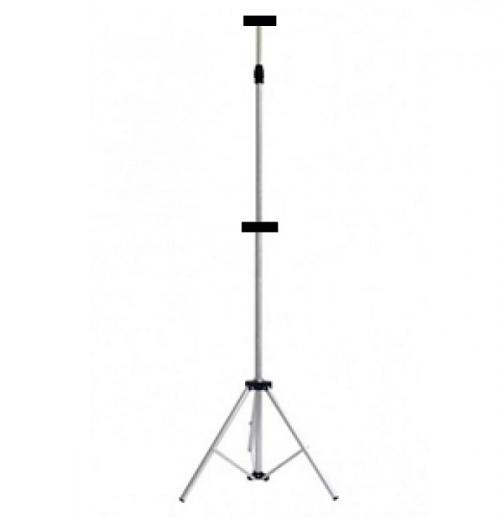
LOCAL PRINTING OPTION: we understand that the poster format used for this conference may be unfamiliar to participants from outside Brazil 🇧🇷. To assist with this, a local printing service is available that can print your poster in the correct format — including wooden tubes and a cord for hanging (tubetes e cordãlo para pendurar).
Recommended local printer: Gráfica Finalize (contact via WhatsApp : +55 22 99741-8273)
- Price: 110 BRL per poster (payable by credit card link)
- Request: A0 size with tubetes e cordão para pendurar
- Mention this is for the Galaxy Memoirs conference at Atlántico Búzios
- Deadline to submit your file: 3 August 2025
- Posters will be delivered to Atlántico Búzios for the conference (on Sunday 10th August)
If you wish to use their service, please contact the local poster printing service directly.
IMPORTANT UPDATE: if you are printing your poster with Gráfica Finalize and have experienced issues with credit card payment , please note that you will be able to complete your payment on-site during registration at 18:00 on Sunday. Gráfica Finalize will be present at the hotel next to the registration desk with a credit card machine to process any outstanding payments.
Code of conduct (CoC)
The organisers are committed to making Galaxy Memoirs 2025 a safe, inclusive and enjoyable experience for everyone.
Consequently, all participants are required to read and agree to abide by the following Code of Conduct (CoC).
Galaxy Memoirs 2025: Code of Conduct (CoC)
We are committed to creating a work environment that is safe, professional and of mutual trust where diversity and inclusion are valued, and where everyone is entitled to be treated with courtesy and respect. The organisers commit to making the conference, and all associated activities productive and enjoyable for everyone. We will not tolerate harassment of participants in any form.
Please follow these guidelines:
1. Behave professionally. Harassment and sexist, racist, or exclusionary comments or jokes are not appropriate. Harassment includes sustained disruption of talks or other events, inappropriate physical contact, sexual attention or innuendo, deliberate intimidation, stalking, and photography or recording of an individual without consent. It also includes offensive comments related to individual characteristics, for example: age, gender, sexual orientation, disability, physical appearance, race, nationality or religion.
2. All communication should be appropriate for a professional audience including people of many different backgrounds. Sexual or sexist language and imagery is not appropriate.
3. Be respectful and do not insult or put down other attendees or facilitators of the event. Critique ideas not people.
4. Should a participant witness events of bullying, harassment or aggression, we recommend that they approach the affected person to show support and check how they are. The witness may also wish to suggest that the person report the inappropriate behaviour. However, it is up to the affected person alone whether or not they wish to report it.
5. If participants wish to share photos of a speaker on social media, we strongly recommend that they first get the speaker’s permission. Participants may also share the contents of talks/slides via social media unless speakers have asked that specific details/slides not be shared.
Participants can report any violations of these guidelines to any member of the Local Organising Committee (LOC) in confidence. If a participant is asked to stop inappropriate behaviour, they are expected to comply immediately. In serious cases, individuals may be asked to leave the event without a refund. Retaliation against anyone who reports a violation of this Code of Conduct will not be tolerated.
Thank you for helping to make this conference welcoming for all.
Acknowledgments: This code of conduct is based on the Code of Conduct for ESO Workshops & Conferences, and aligns with the 'The ESO Way' and the 'EAS Ethics Statement and Guidelines for Good Practice' (January 2018). It was originally adapted from the London Code of Conduct (by A. Pontzen and H. Peiris), which itself was derived from original Creative Commons documents by PyCon and Geek Feminism. This document is released under a CC0 (Creative Commons Zero) license, allowing unrestricted reuse and modification. To support the sharing of improvements and best practices, please retain this acknowledgment and log any reuse or modifications at https://github.com/apontzen/london_cc.
Galaxy Memoirs 2025: Guidelines for Session Chairs
In addition to adhering to the above Code of Conduct, compliance with the following Chair guidelines is strongly recommended.
Session Chairs play a vital role in creating a welcoming and professional environment, helping ensure the conference is an enjoyable and productive experience for all participants. Chairs are primarily responsible for:
- Maintaining a respectful and inclusive atmosphere
- Keeping speakers to their allotted time slots
- Facilitating effective and fair question-and-answer sessions
To support these responsibilities, Chairs are encouraged to familiarise themselves with the conference Code of Conduct (CoC) and the scheduled duration of each talk in their session. Members of the Local Organising Committee (LOC) will be available to assist with technical issues and help ensure presentations run smoothly.
Please also note these recommendations and best practice tips for Chairs:
1. Introduce yourself at the start of the session.
2. Introduce yourself to the speakers in your session beforehand (where possible), and ensure you know how to pronounce their names to introduce them appropriately.
3. All questions should be asked and answered using a microphone to ensure that all participants can benefit from the question and answer.
4. If you deem a question inappropriate or unprofessional, you are expected to intervene or take another question.
5. Chairs are encouraged to be conscious of their biases and avoid preferentially selecting some people and/or paying attention to only some parts of the room. Please also make sure that online participants have a chance to ask questions.
6. After the talk ends, wait a few seconds longer than you usually would before choosing the first question. This gives time for more people to formulate their questions and can encourage more questions from early career scientists. For example, if someone is being very active and asks questions after each talk, feel free to skip their hand and choose someone else sometimes.
7. Letting the questions run for the full time is preferable to allowing the speaker to run over their time.
Acknowledgments: These Chair guidelines were adapted from the Code of Conduct for ESO Workshops & Conferences.