Earliest Communication
Infants' earliest communications take place during interactions with their first care-givers where they will engage with a kind of dialogue of sounds, movements, smiles and facial expressions. Smiles in particular seem important in helping infants to coordinate vocalisations and translate expressions into communication.
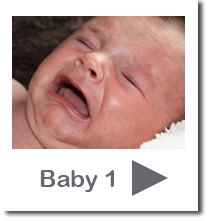
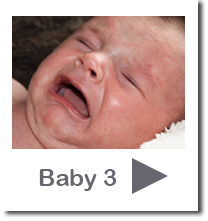
Crying is one of the infant's earliest means of communicating needs to care-givers. Three different patterns of crying have been identified. These are basic crying, angry crying and pain.
Basic crying starts arhythmically, and at a low intensity, It gradually becomes louder and more rhythmic in a sequence of cry-rest-inhale-rest.
Angry crying is similar to the basic pattern, except that segments of crying, resting and inhaling vary in length and crying segments are longer.
Pain is accompanied by crying with a sudden onset, loud from the start, and made up of a long cry followed by a long silence that includes holding the breath and then a series of short gasping inhalations.