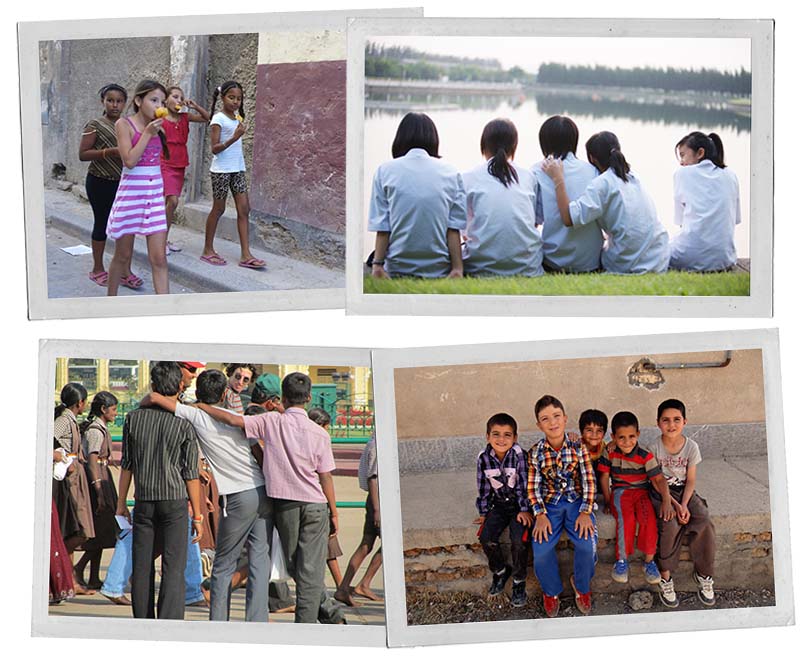
Gender self-segregation
Perhaps one of the most striking features about peer group interactions in this age group is how gender-segregated they can be. This pattern of behaviour appears to occur in cultures throughout the world and is commonly evident in children as young as 3 or 4 years of age. As a rule, boys play with boys and girls play with girls. For 5 to 11 year olds and even into early adolescence gender appears to be the most important variable in the selection of friends and the preference for same sex friendships actually increases as the child moves through these middle childhood years.
In the early years of middle childhood, shared interests are an important part of friendship, for example rough and tumble play is common in boy to boy interactions, but is typically avoided by girls. As a result of these activity preferences boys tend to gravitate to boys when in social situations. As a consequence they learn how to socialise with other boys, but do not learn many of the skills used by girls in their friendships, such as self-disclosure. For girls, gender segregation also starts with shared activity preferences, but in these circumstances it leads to the development of social skills that are more helpful when interacting with other girls rather than boys.