Skeletal growth
Between 2 and 5 years old, the rate of skeletal growth settles to around 5 to 6 centimetres or 2.5 inches per year. At this point, there is usually little difference between boys and girls in how they grow. Individual differences reflect the child’s birth weight and length, heredity and environmental influences. Each child typically follows a specific growth centile, so a child born whose length at birth is on the 90th centile is likely to grow taller more quickly than a child whose birth length is on the 5th centile. A different starting point usually means the child typically grows at a different rate. The effects of the child’s environment and their nutrition can mean that the rate of growth changes and the child’s height, when plotted, can cross the centiles. The sequence of normal development is predictable but the rate can vary between individual children.
The initial growth of the brain and the head in infancy means that a child of 2 has a large head in proportion to their body. By 5 years old, they have lost their top heavy look and the body takes on more adult proportions. During this age range a number of body systems continue the process of maturation.
Assessing a child’s growth throughout this age range remains important and is used as part of assessing a number of different issues, to assess the child’s health, well-being and their nutrition.
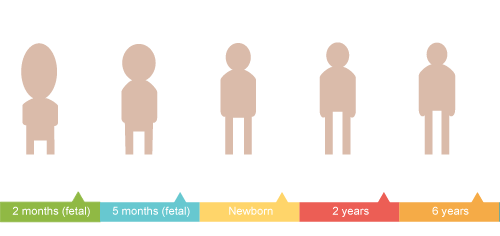
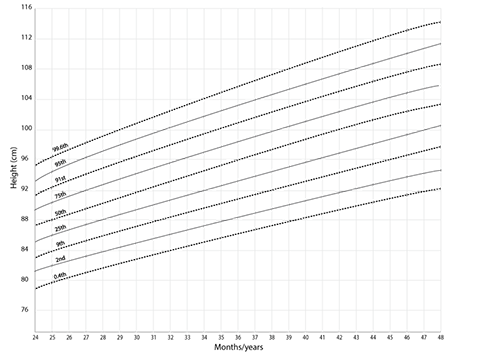
Early years growth charts. Adapted from: Royal College of Paediatrics and Child Health (2009).