The MASLFOX Study looks to investigate the optimal exercise intensity that helps the body burn the most fat in adult men with early metabolic dysfunction-associated steatotic liver disease (MASLD).
Metabolic diseases are rapidly rising in the UK, with over 60% of the population classified as obese. One-third of these individuals have a liver condition called metabolic dysfunction-associated steatotic liver disease (MASLD), which results from fat build-up in the liver. This condition can lead to serious liver damage and may soon become the top reason for liver transplants.
Currently, there’s no medication available to treat MASLD – only lifestyle changes like diet and exercise. However, for people with MASLD, the right exercise intensity for people to help protect the liver remains unclear.
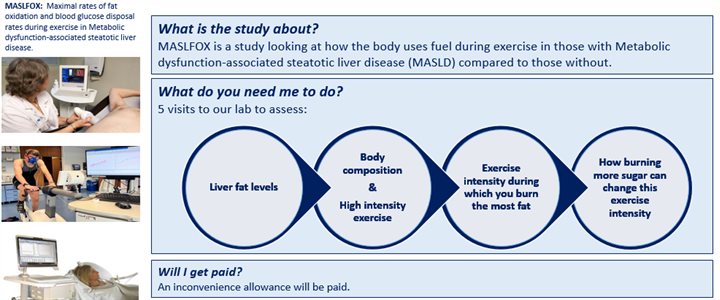
Further Study Information:
|
Summary
|
20 men – 10 with MASLD and 10 healthy but matched by age and BMI – will take part in tests at our lab across five visits. These include consent, liver scan, health fitness assessments, body composition scan, monitored exercise tests at high and moderate intensities, and cannulated arm in warming unit during exercise following a sugary drink.
|
|
Requirements
|
- Male
- Aged 18-65 years
- Non-smoker, including electronic cigarettes
|
|
What is involved
|
Attend the University of Nottingham Medical School at the Queen's Medical Centre for five separate study visits:
- Visit 1: Medical screening including liver fat levels
- Visit 2: Body composition scan and high intensity exercise test
- Visit 3: Exercise test to find the intensity during which you burn more fat
- Visit 4&5: Exercise tests to identify how this exercise intensity changes if you burn more sugars.
|