Society and communities
Pioneering place-based research
Professor Paul Grainge says the ‘radical energy’ of Nottingham and the East Midlands offers exciting opportunities for partnership between universities and the communities we serve
Last year, the new East Midlands Combined County Authority (EMCCA) appointed a high-profile Inclusive Growth Commission to gather evidence and make recommendations for regional development. Chaired by Andy Haldane, the Commission recently published its final report after a 12-month period of engagement with local businesses, communities and institutions. The report is brimming with maps, stats, case stories, aspirational photos and a proposed framework for inclusive growth: ‘the opportunity escalator’. Whatever the ups and downs of this metaphor, the report provides a timely moment to reflect on some of the place-based, community engaged research being pioneered in Nottingham and the East Midlands.
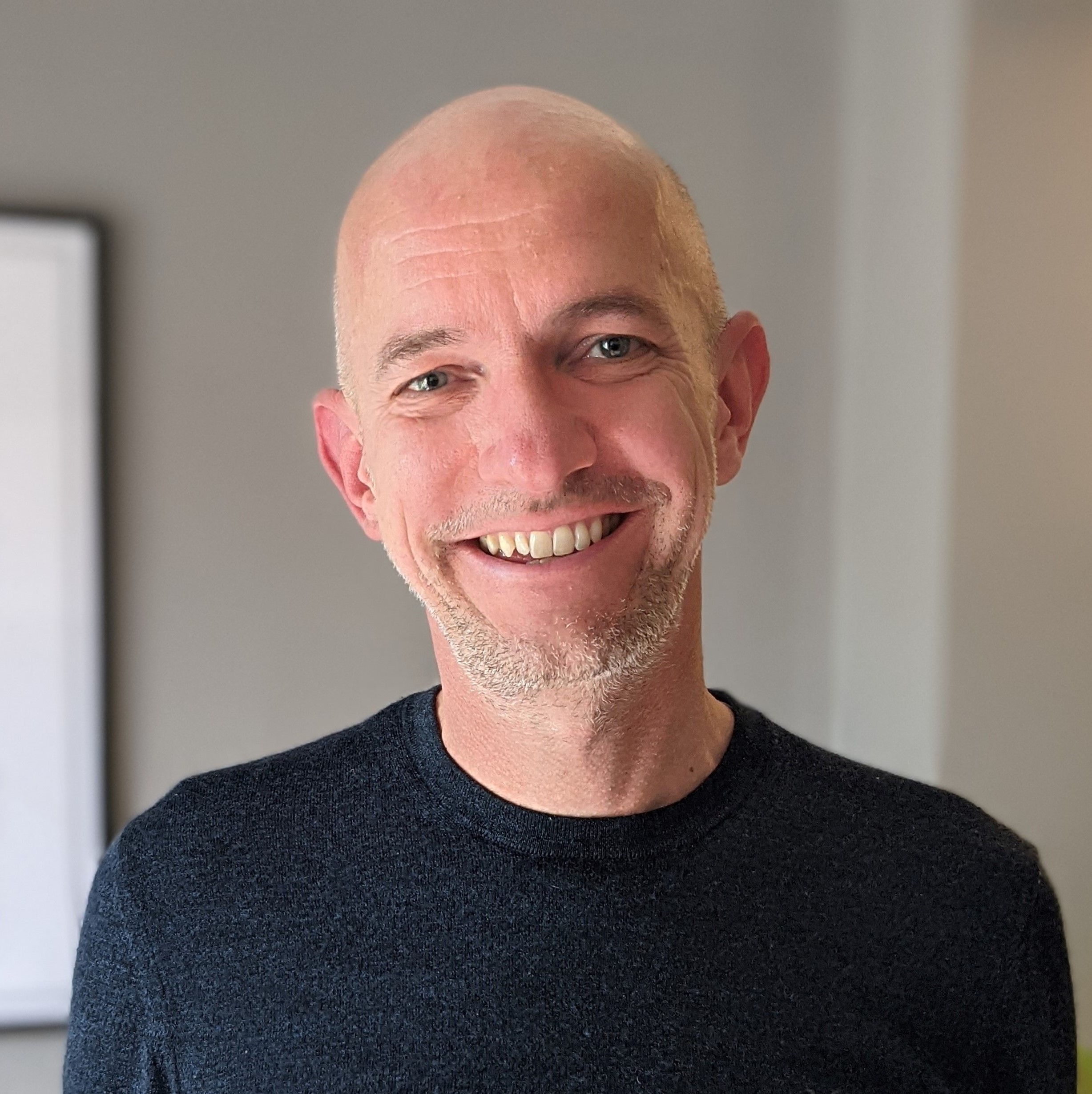 Photo of Professor Paul Grainge
Incredible histories of community organising
Nottingham has been my home for nearly 30 years and I have worked at the university as a film and TV academic for the majority of these. I have mostly lived in the east of the city, raised two children and etched memories, relationships and experiences into the place over time. Yet, I have learnt more about the city in the last three years than at any other moment by virtue of two university roles that connect research with local communities - City as Lab and the Collaboratory Research Hub. Before these roles, I didn’t realise that Nottingham is ranked the 11th most deprived district in England (of 317 districts) and has more than double the national average of school leavers who are not in education, employment or training (13.8%). At the same time, I didn’t fully appreciate the extent of Nottingham’s thriving grassroots cultures in music and performance, the diversity of its multilingual population or its incredible histories of community organising. It still blows my mind to discover that the Victoria Shopping Centre used to be the location of Nottingham’s main train station.
As Academic Director of City as Lab, I have seen over 4,300 people visit our friendly convening space at Castle Meadow Campus to explore issues ranging from food insecurity to being a ‘child friendly’ city. At the same time, I have witnessed 30 civic doctoral projects take flight as a lead for the Universities for Nottingham Collaboratory Research Hub, each PhD co-created with community partners to address real-world challenges in Nottingham and Nottinghamshire. Both programmes are deliberate in testing approaches to community-engaged research. They have facilitated conversations, projects and partnerships that have watered the soil between people and organisations who care for the local community and want to see it thrive. They are different vehicles – City as Lab is a University of Nottingham-led initiative for place-based research using digital and data innovation, Collaboratory is a Universities for Nottingham flagship focused on inclusive doctoral education – but they share the same DNA. They take seriously the principles of co-creation, active listening, equity in partnerships, researcher diversity, and creative community methods.
A meeting point for the expertise of universities and the lived experience of communities
These values are shaping funding approaches more widely. ‘Inclusive collaboration’ is one of the foundations of UKRI’s Investment Strategy for Places, for example. This is more than simply about regional economic growth. The AHRC’s Place-Based programme provides a necessary reminder that research and policymaking must be responsive to the full range of lived, felt, geographic, cultural, and economic dimensions of place to achieve better socio-economic outcomes for people. You only need to look at the range of projects that City as Lab and Collaboratory have supported to see what it means to make ‘place’ a meeting point for the expertise of universities and the lived experience of communities with its wealth of citizen knowledge. Taking a regional or local approach does not mean looking inward or ignoring challenges that are global in scope. Instead, place provides a lens for understanding issues that are complex, cross-disciplinary and lived in particular geographical and community contexts - urban heat, food systems, improving mental health, carbon reduction, child poverty, refugee belonging, air and river pollution, language heritage, young people’s rights, the meaning of ‘inclusive growth,’ to name just a few examples being tackled by projects supported by City as Lab and Collab.
Devolution has signalled a pivot to place in policymaking and funding models in the last six years. We are seeing this play out in our region with the creation of EMCCA. As a result, there is now much discussion about the social purpose of higher education and the role that universities play in civic and regional terms. In a clear-sighted reflection on the role of universities in devolution, borne from the experience of the North-East of England, Henry Kippin and Jane Robinson suggest that ‘Every region can point to projects and programmes. The real added value over the long term will come from moving beyond transactional relationships and into the realms of deep partnership that is intellectual and practical in nature, and which goes beyond specific funding opportunities.’
By this measure, City as Lab and Collaboratory are posing a common question: how do universities embed collaboration and make it normal rather than rely on habits of ‘throwing research over the fence’? The deeper question, lying behind this one, is how the higher education sector can support knowledge creation with approaches and values that are more open, inclusive and interdisciplinary.
"What excites me about City as Lab and Collaboratory is the way they have mobilised thinking in this space, most especially the conditions necessary for people-centred, place-based collaboration."
National recognition for City as Lab and Collab
Both City as Lab and Collab have received national recognition and are scaling. One of City as Lab’s key assets, developed in partnership between Dr Gary Priestnall in the School of Geography and Nottingham City Council, is a unique 3D physical model of the city that can visualise place-based data in wonder-inspiring ways. Our large-scale Projection Augmented Relief Model (PARM) won the 2024 British Cartographic Society Award for ‘map of the year’ and helped Nottingham City Council win the prestigious ‘Geography in Government’ award for innovation. The unique ability of our models to reveal insights through the projection of spatial data has led to collaborations with organisations ranging from EMCCA, Experian, E.ON, City Arts and Nottinghamshire Police and Crime Commission to schools and voluntary organisations, in the latter case using PARMs of Bulwell and The Meadows to co-produce community stories. Through other tools, such as our City Data Connector, we are helping Nottingham’s bid to become a UNICEF Child-Friendly City, one of a number of ambitious and impactful projects bringing partners together across the city.
From September, City as Lab joined forces with Connect Nottingham, a new community hub for participatory research on Castle Meadow Campus supported by a major capital grant from the Garfield Weston Foundation. Together, the two initiatives will form part of a regional innovation and knowledge exchange platform at Castle Meadow, providing new opportunities for universities, communities, policymakers and businesses to come together through convening space in the heart of Nottingham and digital and immersive tools for testing new ideas. Meanwhile, the Collaboratory Research Hub has this year scaled from Nottinghamshire to Leicestershire. Representing an overall investment of £7.4 million from the Research England Development Fund, Collab has become a pilot for inclusive doctoral practice - from community-based project-setting and recruitment to training and support. It is a tangible result of university-civic agreements in the East Midlands and UKRI is watching with interest.
Growing social connection and community fabric, not just the economy.
While Nottingham and the East Midlands often struggle to assert their identity in place terms, at least compared with metropolitan conurbations in the North, West and South of the UK, the radical energies and polycentrism of the city and region are distinct. In May this year, City as Lab hosted one of the engagement sessions for the Inclusive Growth Commission, bringing together experts from our three regional universities to provide feedback on the ‘opportunity escalator.’ The concept is something of a head-scratcher, but part of the argument is that the region’s polycentrism can be leveraged in growth and skills terms. What struck me in the report, however, was not the core escalator metaphor but the recommendation that EMCCA’s should be ‘the first ever mayoral plan to grow social connection and community fabric, not just the economy.’ What excites me about City as Lab and Collaboratory is the way they have mobilised thinking in this space, most especially the conditions necessary for people-centred, place-based collaboration.
Paul Grainge
Paul Grainge is Professor of Film and Television Studies and Academic Director of City as Lab at the University of Nottingham. He has served on the Arts and Humanities Research Council Advisory Board (2021-25) and has led a number of major initiatives involving partner collaboration in the Midlands region, including the AHRC Midlands4Cities Doctoral Training Partnership.
Further reading
East Midlands Inclusive Growth Commission 2025 report
Kippin, H. and Robinson, J. (2025) ‘Making the Most of Devolution,’ The Kerslake Collection, UPP Foundation, https://upp-foundation.org/essay/making-the-mostof-devolution/
Madgin, R. and Howcroft, M. (2024) Advancing People-Centred, Place-Based Approaches, University of Glasgow, https://eprints.gla.ac.uk/342111/1/342111.pdf
Mackenzie, P, and Ball, N. (2025) ‘Embedding Social and Civic Purpose,’ The Kerslake Collection, UPP Foundation, https://upp-foundation.org/essay/embedding-socialand-civic-purpose/