Society and communities
FOREST: Four faculties collaborate with local artist to scan, study and celebrate the Major Oak in a public exhibition
As part of the inspiring FOREST exhibition which opened this summer at Nottingham Castle, four faculties collaborated with a local artist to scan, study, and creatively tell the story of the iconic Major Oak in Sherwood forest. In this article, Maria Richards, Head of Public Engagement at the Institute, shares how curiosity sparked a cross-disciplinary journey that resulted in this compelling project.
Bringing together artists, engineers and researchers to reimagine the forest through technology and storytelling
Back in spring 2024, I met with curator Tristram Aver and Service Manager Ron Inglis at Nottingham Castle. The site had recently maintained their Arts Council National Portfolio Organisation status, and we were exploring how the university could meaningfully support its public exhibitions. Primarily, we wanted to bring new perspectives and technology into the galleries to enhance the visitor experience
One upcoming show stood out as an opportunity: FOREST, a contemporary art show featuring specially commissioned pieces celebrating the myth and magic of the forest canopy. New pieces would be shown alongside items from the museum’s permanent collection, including the large-scale painting of the Major Oak by Andrew MacCallum.
Caroline Locke, Derby based artist, was shortlisted as a potential contributor on this project. Her work is inspired by significant trees and she has a series of work related to the natural frequencies they emit. She had been attempting to capture the frequency (or vibration) of the Major Oak for some time, but the sheer girth of the trunk had her usual technics ineffective. Tristram suggested the University of Nottingham may be able to help, due to our specialist kit and associated expertise.
Our civil engineering team identified a senior technician skilled in this area, who offered to accompany Caroline to the tree in Sherwood forest and scan it using advanced 3D technology. Once that key element was in place, we began layering in more research stories, each from a different discipline.
"It’s been exciting to be involved with this project and to see how so many different strands of engineering can work together with Caroline to bring her ideas to fruition. I’ve enjoyed learning from such a fun experience and can see so many ways that we can use these techniques in other applications"
Telling the story of the Major Oak through data, sound and creativity
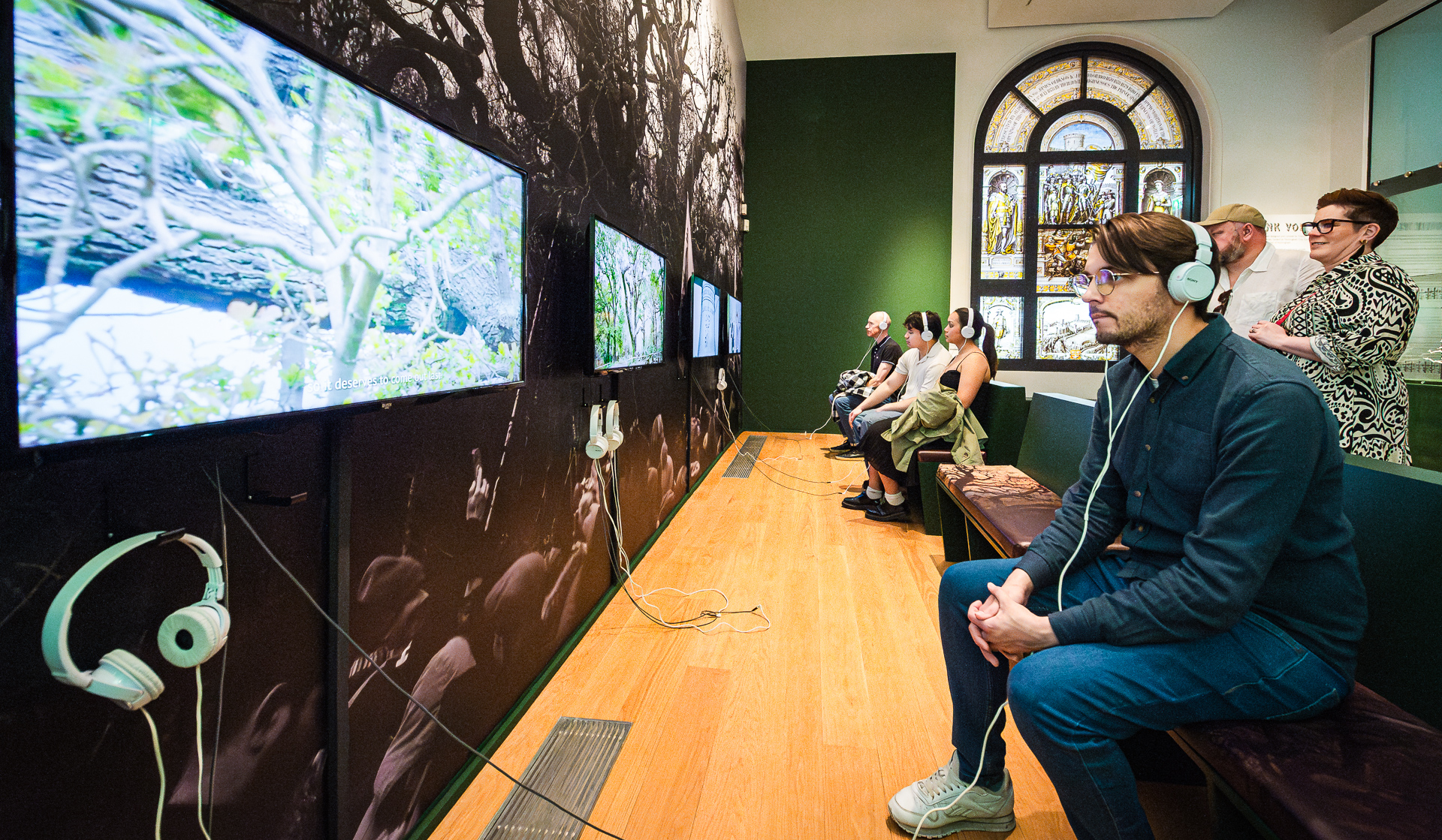
From the outset, I wanted to develop a documentary to help visitors connect with Caroline and the universities work. Through conversations with the artist, curator and independent documentary film maker Georgianna Scurfield, we storyboarded a short story, imagining the Major Oak as the main character. Over the course of a year, the artist and various university staff visited Sherwood Forest to be filmed, sharing how their work involves nature.
Back on campus, the engineering team processed the vast dataset that was generated by the scans. It took several months to model the tree and calculate its natural frequency. The initial plan was for Caroline to make a bell tuned to this, but the final calculation for the trunk came out so low it would require a 125-metre-wide bell! Instead, she took a reading of a typical Sherwood tree, which was cast by Taylor Bells and features in the display.
When we installed the exhibition in Gallery 4, I was thrilled to see contributions from four of our five university faculties. Each offered a different perspective on the same tree, helping visitors see how diverse and unexpected research can be. Sitting next door to Caroline’s installation, our film shows across four screens. Technology used by the researchers featured has been drawn upon, with animations showing the root growth of trees and a clip from the 3D modelling mesh used to show how the tree branches move in the wind. We also have a nylon 3D print of the Major Oak, that took over ten days to produce.
"Collaborating with academics from Nottingham University has been a rewarding experience, especially in using data and new technologies in creative ways. The tools we used at Sherwood Forest sparked public curiosity, inspiring conversations and stories about trees and climate change."
Carrying the story beyond the gallery
Beyond this, PhD candidate and composer Mo Zhou, created a sound walk around the castle grounds, free to download. The public was involved in this project too, as we worked with the castle education team to host sessions with Pathways School. Creative writer Matt Welton and Head of Music Elizabeth Kelly worked with secondary pupils to compose a new piece inspired by the exhibition, with lyrics written by the group. The result is powerful and playful, thanks to their teachers embracing a fresh approach to poetry lessons. This piece will form part of a performance taking place in the Robin Hood gallery on Saturday 4 October with professional musicians.
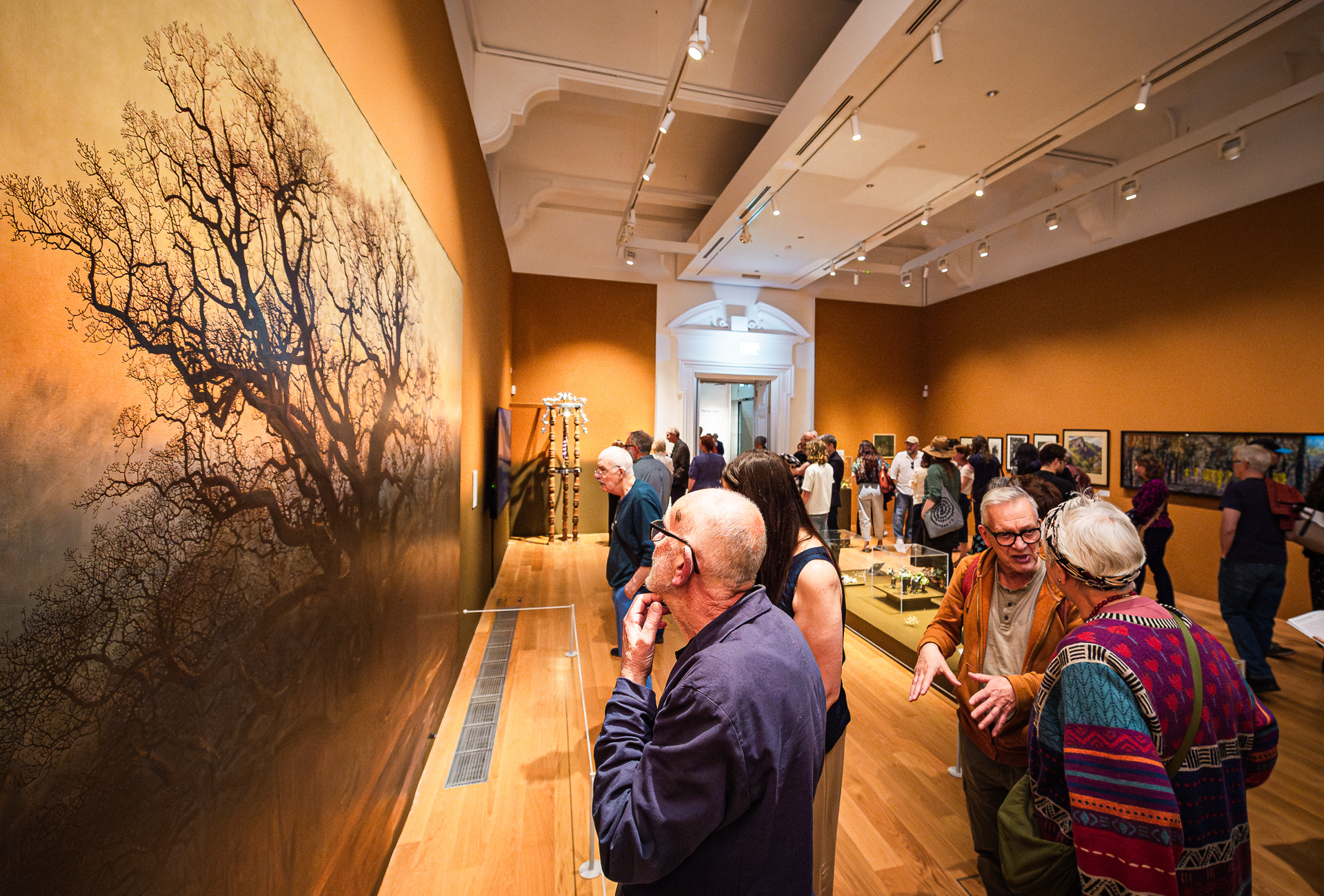
This project stands as a proud example of what’s possible when disciplines collaborate. By combining 3D printing, laser scanning, and environmental storytelling, we brought cutting-edge research into a public space, making it not only accessible, but also surprising and magical. It highlights the powerful potential of science and art working in unison to help us see the world differently. FOREST is open at Nottingham Castle until Sunday 5 October, with entry included in the standard ticket price.
This article is part of a spotlight series developed by the Institute for Policy and Engagement, highlighting how we collaborate with researchers at the University of Nottingham to make research more relevant and accessible to the public.
Maria Richards
Following a career in museums and heritage Maria joined the team in 2020. She specialises in planning for public engagement, co-production methods and understanding diverse audience needs.
Maria designs and oversees our public engagement programmes, manages our public engagement funding streams and works with external partners to bring new opportunities to our researchers.