Self-concept and self-esteem
Self-concept is a set of attributes, abilities, attitudes and values that a person believes defines who, he or she is.
Argyle suggests four factors that play an important part in the development of self-concept.
Firstly, the reactions of other people. Children incorporate reactions and opinions of others into their self-concept. This is known as introjection - but it can become a self-fulfilling prophecy. For example when a parent says...
"This is my youngest, Afraz. He's the naughty one but he is so funny - we call him the family joker."
If this is said often enough it may become the way Afraz describes and thinks of himself.
Secondly, comparing ourselves with others. Afraz says...
"My brother is cleverer than me."
Thirdly, past, present and future roles that we play. Take the example of gender roles.
Research shows that adults react to small babies who they think are boys in a different way to babies that they think of as girls. Adults used phrases like 'big' 'strong' 'clever' for boys and 'cute' 'pretty' 'good' for girls. Generally, many words used to describe boys are more positive characteristics. What's more, there are also differences in the way adults handle boy and girl babies.
Twins - look at these pictures of a twin boy and girl and jot down your thoughts.
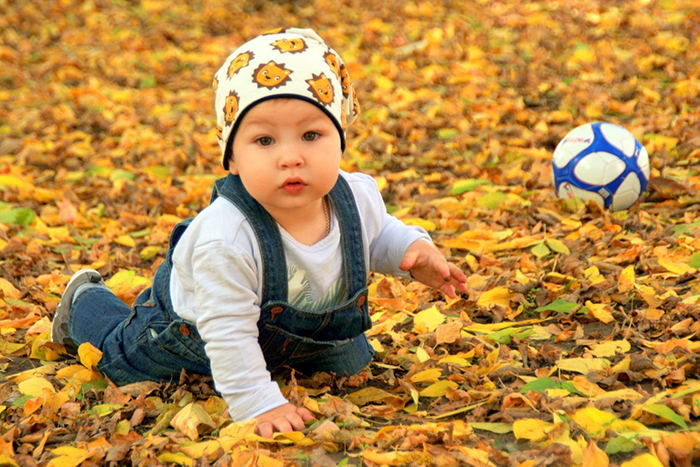
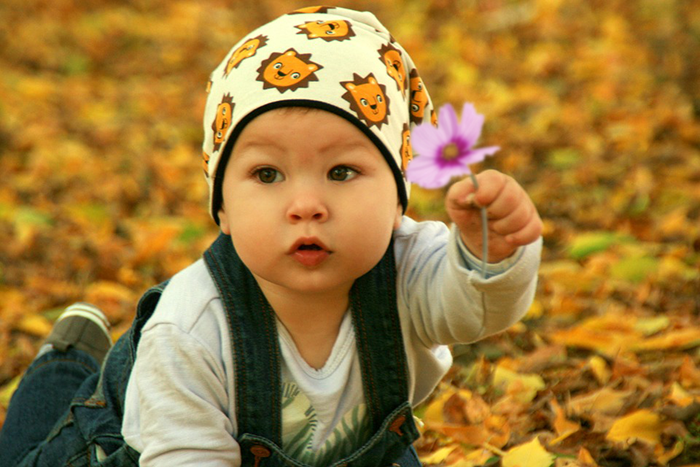
Write a few words to describe the twin boy with the blue ball.
Write a few words to describe the twin girl with the pink flower.
Words often used to describe boys.
For baby boys: big, strong, lively, full of mischief.
For toddler boys: brave, an explorer, a climber, a builder.
Words often used to describe girls.
For baby girls: cute, pretty, adorable.
For toddler girls: kind, caring, helpful, a good talker.
Generally people describe boys in more positive and active terms whereas girls are described as more passive and nurturing. Does this coform to what you have written?