From the beginning - voices, faces and smells
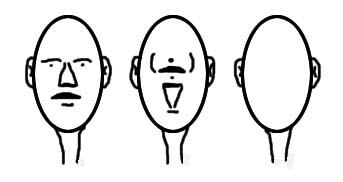
After an uncomplicated birth the new-born is wide awake, calm and very interested in their surroundings. Lynne Murray, a leading researcher in this area shows that babies have a 'social brain'. For example, new-borns show a preference for people rather than objects will turn towards a voice rather than other sounds. If they are given a choice between a face shaped pattern and a scrambled up pattern of facial features, a new-born will spend longer looking at the face pattern.
Did you know? New-borns can even put out their tongue in imitation of an adult. Incredibly, they can also pick out the distinctive smell of their own mother at just a few days old.
Babies already have the makings of being social creatures. They also shape the way we respond to them by the way they behave.
Relationships are the main source of childhood socialisation, and the kinds of relationships we have shape the temperament we are born with and so develop our personality
Facial recogniton - new born babies prefer to look at a human face.
Imitation - baby copying parent by sticking out it's tongue.

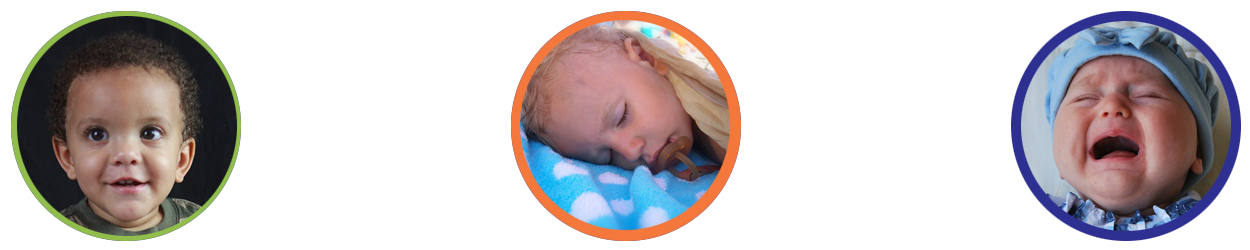
Baby behaviours - click on the circles below to learn more about baby behaviours.

Sucking - Non-nutritive sucking is sucking that does not result in getting any nutrients. Sucking in this way helps soothe some babies - so a dummy, comforter or a babies own fingers and thumb may be sometimes be helpful rather than feeding the baby.
Cuddling - Close physical contact is important for babies and small children - Harlow showed in a famous experiment with young orphaned monkeys that they prefer soft physical contact to food.
Looking - Babies make eye contact with parents and carers as a signal for a social response which they find rewarding. If there is no response the baby is disturbed. This has implications - for example if a parent has depression or is too preoccupied to respond to the baby, the baby will become distressed and may eventually give up trying to make eye contact.
Smiling - This is innate behaviour and is very rewarding for adults, who then reward the smiles with lots of attention which reinforces the behaviour. Babies who have limited vision, or no vision at all, will still smile and respond to the positive results this brings.