Muscle, fat and body shape
A young child will often use bursts of energy in playing a game, then stop to recover. From 5 years old, the child starts to develop a greater level of stamina. Activity is sustained for longer and rest periods become shorter. This is often supported by team sports activities and the expectation to carry on playing the game until the whistle is blown. The increase in stamina is also supported by changes in a number of body systems, including the heart and the lungs.
As puberty progresses, boys tend to gain muscle mass, as muscles lengthen and muscle fibres become denser. The quality of the muscles also changes as the young person develops their strength and agility. This is reinforced by ongoing participation in sports and strength based skills. It is usually assumed that a person is at their strongest and most athletic around the age of 19 to 20 years old.
Girls tend to develop more fat than boys. Lean adult women have around 25¼ body fat, whilst men have around 13¼. Through adolescence, boys usually develop a leaner physique than girls with higher levels of body water, but this is very dependent on other factors too, such as nutrition, the amount of exercise done and general health.
Boys also develop broader shoulders and upper body muscle, whilst girls develop a broader pelvis and hips.
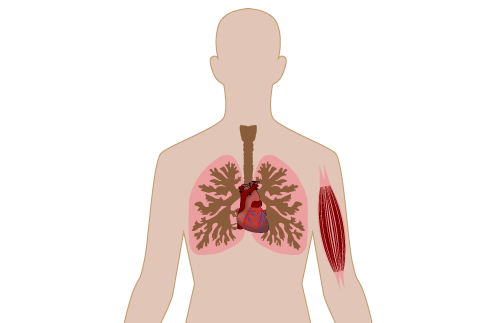
Select the heart, lungs and arm on the picture below.
Heart: The heart needs to grow to accommodate the blood flow needed to get the oxygen from the lungs to the tissues and muscles required. By the end of adolescence in boys, the heart has doubled in size (around the size of the person’s clenched fist).
Looking: Babies make eye contact with parents and carers as a signal for a social response which they find rewarding. If there is no response the baby is disturbed. This has implications - for example if a parent has depression or is too preoccupied to respond to the baby, the baby will become distressed and may eventually give up trying to make eye contact.
Lungs: In addition, the lungs expand and control of breathing becomes regulated more effectively to support the intake of oxygen and removal of carbon dioxide. Creating effective energy in the muscles requires the presence of oxygen. If not present, then the energy produced is not as effective and can cause cramps.