Kingship, Parliament and the Court: The Emergence of "High Style" in Petitions to the English Crown, c. 1350-1405
This article explores why elaborate and obsequious forms of addressing the king emerged in fourteenth-century England.
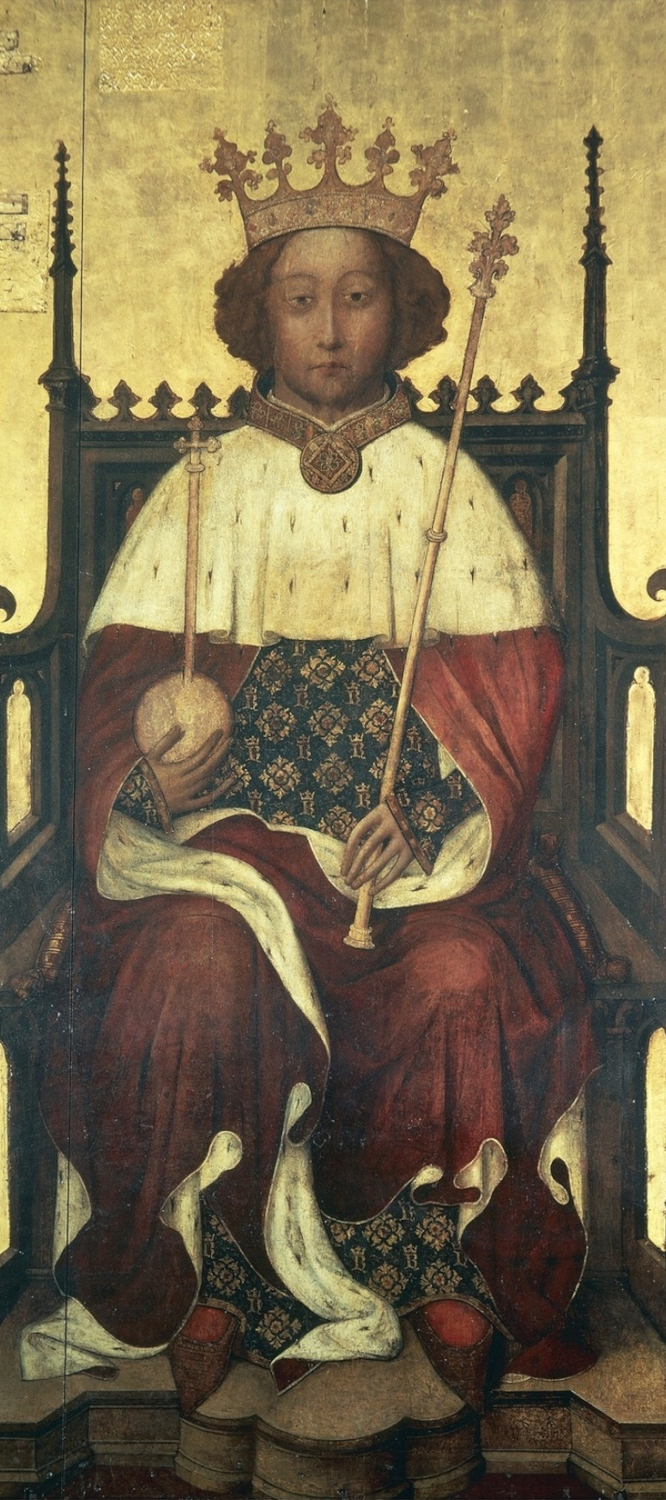
According to the website royal.uk “On presentation to The King or Queen, the correct formal address is 'Your Majesty' and subsequently 'Sir' or 'Ma'am,' pronounced with a short 'a,' as in 'jam'”. Have you ever wondered about the origins of the etiquette of addressing royals? This research explores how and why terms such as ‘Your Majesty’, and ‘Your Highness’, as well as complimentary epithets such as ‘most powerful’ and ‘most gracious’, emerged in the fourteenth century. It challenges the idea that these forms of address were inspired by the authoritarian tendencies of Richard II (1377-99) (pictured), and instead locates the origins of the new terminology within deeper cultural, sociological and institutional developments under Edward III (1327-77).
Read the article
June 2014
English Historical Review
The way language is used to project power and frame truth has never been more evident than it is today in the age of social media, but language has always served this role. This research into a handful of words and phrases opened up a fascinating window for me into the courtly etiquette, political culture and linguistic agendas of fourteenth century England.
More information about Gwilym
Back to the bookcase