Cognitive development
Cognitive development, or growth and change in knowledge and thought processes grow rapidly in the first two years. Here we look at two key researchers, Vygotsky and Piaget, whose work has influenced child care, education and healthcare practice.
Both Piaget and Vygotsky - could be described as social constructivists - suggesting that children 'construct' their knowledge from their social experiences.
Vygotsky saw human development as a result of dynamic interaction between the developing child's maturing biological processes and their surrounding social world as being of the utmost importance. Vygotsky emphasized the interaction between the developing child's maturing biological processes and their surrounding social world whilst Piaget paid less attention to the role of parents, family and culture.
Influential concepts from Vygotsky
Click on the picture pieces to complete the image and learn more about Vygotsky and his contribution to cognitive development.


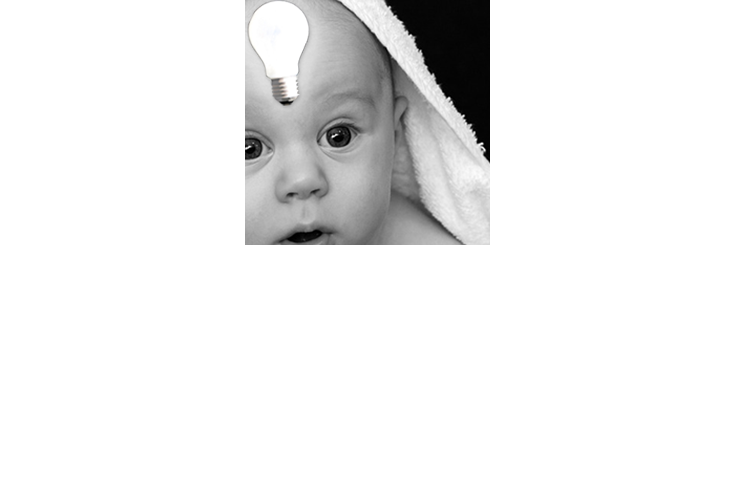










Zone of Proximal (next) Development (ZPD). Vygotsky said each child has a ZPD, which is only achievable with the help from another. This could be an adult or a child who is more competent at the task. He stressed action, reflection and co-operation. If we think about how many skills are learnt: from knitting to woodwork, learning to cook, count and read we can see the ZPD in action.
Concepts, memory and language. These are mental functions that come from the culture and begin with the interaction between the child and another. Think of songs, playground games, bedtime and festivals.
Reconstruction. Children experience the same situations time after time, but they deal with them at a higher level and reconstruct them.
Importance of play. Children benefit from play as they can do things beyond those they can do in real life, e.g. pretend to fly a plane. Play is another route through which children can reach their Zone of Proximal development or ZPD.
Cultural context. Social relationships are at the very centre of a child's learning according to Vygotsky.