Development and Learning through Play
If adults can satisfy a baby's essential needs, such as hunger, this will help them feel calm. In turn this will help them infants focus on learning about the world around them; by listening, looking and feeling.
Development is not just about growth - it is about gaining and perfecting a range of skills and abilities. Theorists such as Montessori, Piaget, Vygotsky and Winnicott all recognise play as fundamentally important for children's development.
Exploratory play is important for sensory development, hand eye coordination and fine movements. For instance three month old lying under a baby gym gains an understanding of the permanence of objects and how they move through space.
- 0-8 weeks
-
Crying
Click for more info
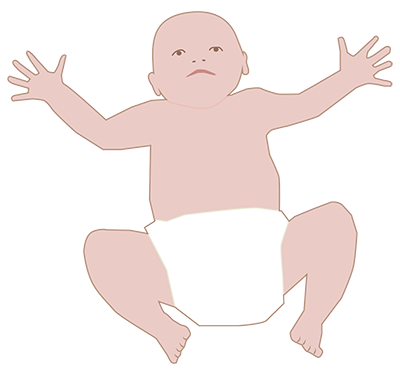
New-borns can cry a lot! Responding to them seems to help them grow up to be calmer, more secure and more receptive to learning. It's complicated though as overstimulation can be overwhelming and make them cry.
-
Touch
Click for more info
Very sensitive to touch, especially around face. Cuddling, holding, stroking will all help the brain develop.
-
Feeding
Click for more info
Feeding will quieten a crying baby and sucking will soothe a distressed baby.
-
Hearing
Click for more info
Sensitive to parents voices before birth. Talking to baby during routines, singing and 'taking turns' helps develop brain connections to understand language.
-
Vision
Click for more info
Least mature sense. Can track or follow movement 9-12 inches from face. Likes best to follow face, mobiles, drawn to contrasting colours e.g. black and white and babies gaze will often drift to hairline of face due to the contrast
- 2-6 months
-
Perception
Click for more info
The baby gains an understanding of the permanence of objects and how they move through space, e.g. kicking a blanket or holding a rattle.
-
Touch
Click for more info
Cuddles and hugs are so important. Enjoys different surface texture, soft, crinkly, noisy. Enjoys bath time, water play and massage touch.
-
Touch and Movement
Click for more info
More obvious enjoyment and pleasure from feeding will pause from milk feeds to smile and gurgle.
-
Hearing and language
Click for more info

Begins to coo and actively take turns. Begins to recognise some words parents often talk slower and in more high pitched tones. Music can be soothing, but not too loud or continuous as background noise.
-
Vision
Click for more info
Everyday objects are interesting to babies. Introduce toys one at a time.
- 6-12 months
-
Perception and Cognition
Click for more info
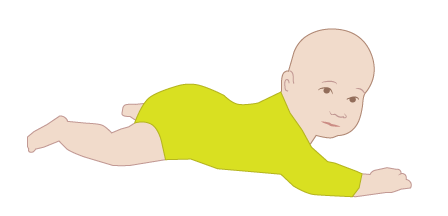
Repetition - doing something over and over again, e.g. dropping a beaker cup off the high chair. Throwing objects into the bath or out of their cot.
-
Touch
Click for more info
Give interesting things to touch, smell and put in the mouth.
Objects to put in and out of containers. Allow messy play and self-feeding which is very absorbing.
-
Hearing and language
Click for more info
Reading stories and pointing out pictures, singing and playing with movement.
- 12-18 months
-
Cognition
Click for more info
Hippocampus is developed enough for recall of actions and events 'deferred imitation' will be remembered. Object permanence is the ability of a child to understand that objects exist even if they cannot directly be sensed. They will want to hold the car keys even when they are put away in a safe place.
-
Touch
Click for more info

Process of play is important - not the end result, so toys which allow exploration are great; Stacking, building, knocking down blocks. Carers should be a secure base from which toddlers can return from solitary play and exploration.
Opportunities to colour in, turn pages, finger paint 'help' with cooking e.g. pastry.
-
Hearing and language
Click for more info
Receptive speech develops quickly and at this age they understand much more than they can say. Expand their words into a sentence.