Reflexes and imitation
According to Piaget most of babies ideas or actions are inborn reflexes, such as sucking and grasping but these enable the baby to interact with the environment though touch and taste. He thought all children moved through stages that did not vary. Throughout the first sensorimotor stage, the baby learns to imitate, and towards the end of the stage, can imitate something he/she has seen or heard quite a while before, this is called deferred imitation.



|
Step One |
Step Two |
Step Three |
Step Four |
Step Five |
Step Six |
Stage 1 (0-1month)
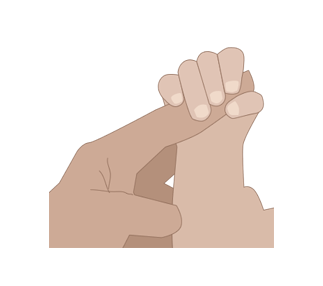
Modification of reflexes e.g. the baby could learn to modify its sucking in order to fit the contours of the nipple - this is an example of accommodation. At the same time, the baby can assimilate the sucking response to an increasing range of objects. Other examples are blinking in bright light or gripping a finger.
Stage 2 Primary Circular reactions (1-4 months)
Primary circular reactions. Repetitions of actions done for the purpose of recreating a sensory experience that feels nice e.g. thumb sucking.
Stage 3 Secondary Circular reactions (4-8 months)
Secondary circular reactions involve repeating actions e.g. dropping a toy off the high chair again, and again or as long as someone will pick it up and give it back to him. The infant begins to discover that means (actions) can lead to ends (interesting events).
Stage 4 Coordination of circular reactions (8-12months)
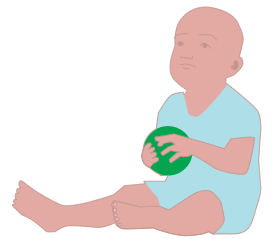
Sometime between 8-12 months the baby will begin to act intentionally to get a reaction and to demonstrate that they understand the functions of objects. They will put together actions separately to obtain a new goal. Piaget argued that to do this the baby must have a goal in mind. Babies will act intentionally to get a reaction and show they understand the function of objects.
Stage 5 Tertiary circular reactions (12-18 months)
This is a time of trial and error exploration e.g. repeatedly dropping an object in different ways to see what will happen, trying different things to make a parent laugh.
Stage 6 Early representational thought (18-24 months)
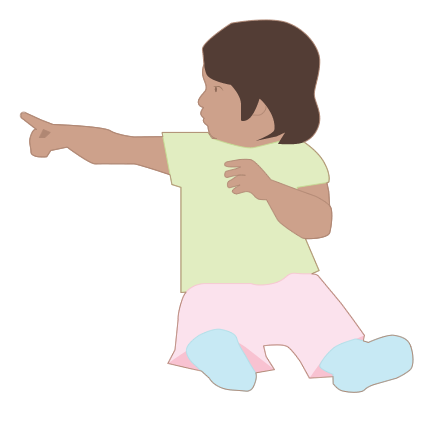
This stage seems to mark the beginning of mental processes that are independent of actions. The infant is thinking about the world internally not just externally and this marks the beginning of understanding that things can be represented as symbols. The picture of a dog is not the same as a real dog even if they are called the same name.