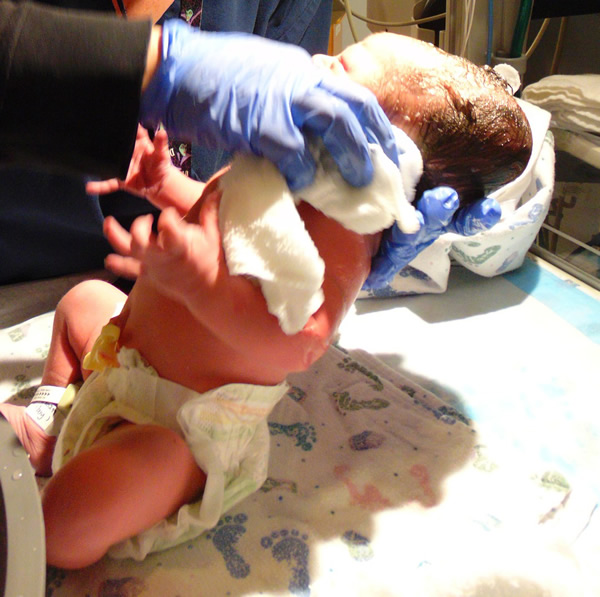
Physical changes associated with birth
Birth usually occurs between weeks 38 to 42 of pregnancy. A baby undergoes a number of physical changes around the time of birth.
At birth the lungs start to be used properly. Changes in body chemicals stimulate involuntary breathing and the brain supports the need to breathe in a regular pattern.
After the baby is born the umbilical cord is clamped and the vessels that conveyed blood to and from the placenta to enable exchange with the mother's blood are lost or take on other functions. When the baby takes their first breath, the blood vessels in the lungs fill with blood. As this oxygenated blood returns to the heart it causes changes in the heart. Connections between the left and right sides of the heart and associated vessels that are used prior to birth close, separating oxygenated and deoxygenated blood.
Newborn babies need to be kept warm. They do not have an ability to maintain their own warmth, so should be clothed and usually require a hat even in warm weather. If the baby is allowed to get cold, then they will be very sleepy and not wake for feeds. Newborn babies will gradually take increasing amounts of feed over the first few days and they will need to develop a good sucking technique. The midwife or health visitor will be able to support the new mother in developing and maintaining this process.
Be aware
The recommended method for feeding babies is to breast feed. Breast milk contains all the nutrients that the baby requires and also contains immunoglobulins, or antibodies, to help prevent infections. If the mother chooses bottle feeding the baby, formula milk's used in the UK are designed to mirror the nutrients available in breast milk. However, they will not have the immunoglobulins.