Wednesday, 03 December 2025
WiD X E.ON Next x University of Nottingham
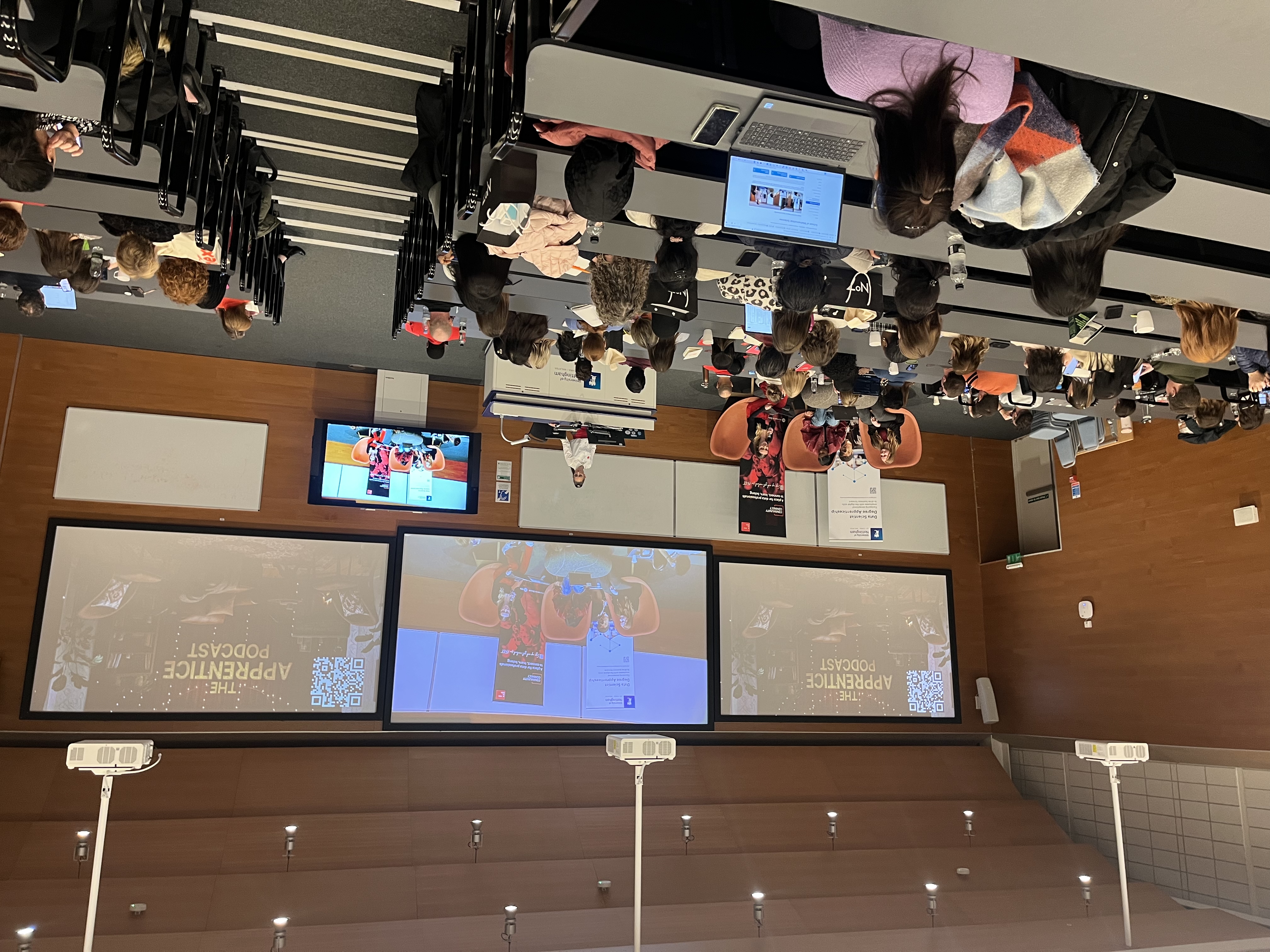
Last week the University of Nottingham welcomed representatives from businesses across the region for the second Midland’s Women in Data Takeover. The event, in collaboration with E.ON Next, focused on one powerful theme: Data for Good, exploring how data can be used efficiently, effectively, and responsibly to drive informed decisions that put customers first and transform data into a force for positive impact.
Attendees learned from real-world data transformation journeys, discovered how data supports vulnerable customers in the energy sector, and explored its role in driving the journey to net zero. The event also highlighted opportunities for learning and development to empower local data talent.
A standout part of the day was a panel featuring current third-year apprentices from GSK, Lily Robinson, Millie Court and Millie Patel, all studying on the University of Nottingham’s Data Scientist Degree Apprenticeship. They shared how the programme has accelerated their careers and demonstrated the value of apprenticeships in creating early career pathways into data-driven roles.
This blog extends that conversation, exploring the insights shared by the apprentices and why initiatives like these are critical to building an inclusive future-ready workforce.
Introduction from apprentices Lily Robinson, Millie Court and Millie Patel.
We hosted a podcast style chat and were thrilled with the engagement and curiosity that allowed us to tailor our podcast to what people wanted to know. Apprenticeships are still a hidden gem of early talent in industry, so we are always keen to spread the word for prospective apprentices and promote this route to the next generation whether that be school leavers or established professionals looking to upskill. It’s equally important to shine a spotlight on the value apprenticeships bring to businesses; by championing the impact of apprenticeships within the business community, we can inspire more employers to create, invest in, and support these pathways. Strong employer participation not only opens doors for emerging talent but also strengthens the future workforce and drives innovation across sectors.
The questions below were asked by members of the audience.
Our personal experiences and motivations:
Why did you choose data science as a career?
I’ve always been a creative person who also loves maths and for a long time I thought I’d have to choose between a STEM career and something more artistic. Discovering data science and realising it could be a bridge between the two, really appealed to me. I love that I can dig deep into the maths behind a model, use creativity and problem-solving to design the right approach and then switch into building interfaces, dashboards, presentations or written explanations to communicate those insights clearly. It’s a career that brings together every part of what I enjoy.
Another huge benefit is how versatile the field is. Data science skills can be applied to almost any industry, which gives me the flexibility to move between sectors as long as I learn the relevant business context.
How do you find doing data science without a background in computing/computer science?
Coming into data science without a GCSE or A-Level in computer science was definitely challenging at first. I learnt the basics of coding, how systems work and a lot of technical terminology entirely from scratch. The University of Nottingham recognises that students join the course with very different backgrounds and levels of experience, so they run three-month fast-track courses in computer science and maths for data scientists at the start of the programme. This meant everyone could start with a solid foundational understanding, regardless of their prior knowledge.
To me, data science can be challenging to learn, especially if you are learning new data science techniques and the work context together at the same time, but the avenues that data science can open by way of solutions and insights are limitless.
What has been your favourite part of doing your apprenticeship?
The opportunity to constantly learn from people who have years of experience behind them. Being surrounded by experts, both at work and at university, has accelerated my development immensely. At work, I've had the chance to work alongside engineers, data professionals and specialists who are incredibly knowledgeable in their fields. The insights, advice and practical skills I've picked up from them have shaped how I think and solve problems.
Favourite opportunity that you got from being an apprentice.
There are so many opportunities available to apprentices. Some of my favourites have been the privilege of being asked to speak at conferences, sharing my journey with young people and networking with industry professionals.
Being surrounded by experts, both at work and at university, has accelerated my development immensely.
Learning and workplace realities:
Do you feel well prepared for work from a technical perspective... do the things you learn on the apprenticeship apply in your workplace?
On an apprenticeship, your theoretical and wider data science understanding comes from the university. This might be how a specific technique works, the maths behind a machine learning method or data science methodologies that you would usually be exposed to in your role. Your contextual learning comes from your workplace; this is the context of your data, the selection of data science tools you use day to day and developing complementary skills such as project management, presentation and stakeholder interaction. These two spaces are knitted together by university assignments, where using work data to demonstrate learning is encouraged and impact and innovation of apprentices is recognised and highlighted.
What has been something you have learned that has surprised you the most?
People often treat AI and machine learning like big, intimidating buzzwords, but underneath it all they’re simply just maths and algorithms… nothing to be scared of. What’s truly remarkable is the sheer scale of their potential, not the concepts themselves.
What is your favourite thing about working with data? For example, your favourite tools, your favourite part of data analysis/data science?
My favourite part of working with data is the final stage of the data science pipeline: data visualisation and storytelling. After all the wrangling, cleaning and analysis, I really enjoy deciding how to present the insights. I appreciate the autonomy this stage gives me… whether to create static or interactive visuals, how to scale them and how to tailor them to different audiences, there are so many factors to consider! There are so many tools and techniques to explore in data visualisation, which makes this stage both exciting and creatively rewarding. But it also comes with an important responsibility: presenting the data impartially so it can be interpreted accurately. I really enjoy finding the balance between being accurate and being creative in how I communicate insights.
What's it like being early 20s and employed in a "post-covid workplace? Do you think there's anything you're missing that would have been different "pre-covid"?
For some of us, our teams still come into the office 5 days a week post-covid, so I still get the benefit of in-person interaction – casual conversations, quick questions, team culture and the kind of learning that happens naturally when you’re physically around more experienced colleagues. But for others of us, we can work flexibly, where we have a couple of onsite days a week where we can meet and work together, and the other days for more focussed work.
My favourite part of working with data is the final stage of the data science pipeline: data visualisation and storytelling. After all the wrangling, cleaning and analysis, I really enjoy deciding how to present the insights.
Career outlook and employer partnership:
How has it changed your view on job opportunities since you started the programme?
The biggest shift in my perspective has been realising that you don’t have to commit to one path forever. When I first started the apprenticeship, I assumed choosing a data science degree meant I was locked into that career for the long term. But having started working has shown me that there are opportunities to move around into new teams and explore different roles and adjust your direction as you go. If you’re not enjoying where you are now, it’s completely valid to change direction.
What sort of companies are you attracted to working with and why?
Companies that offer apprenticeships appeal to me since it shows they care about supporting their employees’ development, which matters even if I'm not actually looking for an apprenticeship.
What kinds of things have your employers done or could do to support your apprenticeship journey?
When onboarding, the best thing my employer did for me was arrange connections before I had even stepped foot onsite for my first day. I had spoken with my prospective manager over the phone, chatted with my apprentice buddy who was a few years ahead of me and was added to a community with my fellow onboarding apprentices. This brought an air of familiarity to the potentially daunting experience of moving 3 hours away from home to start your first full-time job.
What are the benefits of hiring apprentices?
I think we each bring a fresh perspective to our workplaces; however, apprentices’ contribution is so much more than this. The apprentices that I have met are all highly ambitious and resilient individuals who have an incredible drive for learning and development, which I think is well demonstrated just through researching and applying for the apprenticeship (which is renowned for often being a much lengthier process than UCAS). By nature, apprenticeship courses are designed to complement industry, and assignments are based around optimising processes in the workplace, promoting innovation and transformation in the apprentice’s team and beyond. For data science specifically, I believe data science is only actually 70% data science… I believe the other 30% of the role is the context – that is the people (stakeholders), industry knowledge and understanding, and tools and technology-set the business uses. So, to me, apprenticeships in data science make perfect sense.
The apprentices that I have met are all highly ambitious and resilient individuals who have an incredible drive for learning and development.
Advice for those considering an apprenticeship:
What advice would you give to someone considering a career change into data science?
As someone who didn’t start work as a data scientist, I would recommend you delve into the data aspects of your role and your team’s remit. Data is everywhere and it can be a great way to know whether data science is for you, whilst working in a familiar context. If it’s not what you had hoped, you can go back to whatever you were doing before, but if you loved it, you could continue or go for a full-time role (maybe even with an apprenticeship) and it could be the best decision you ever made for your career.
Are there any age restrictions for the degree apprenticeship programme?
Level 6 degree apprenticeships are open to anyone who meets the eligibility requirements and entry requirements of their programme. These include holding qualifications, such as A-Levels, or a preceding apprenticeship, and having a job role that aligns with the apprenticeship.* Many apprentices on our course are upskilling and have already had a long and successful career, so apprenticeships are one of the most accessible routes in data careers.
Thank you to Lily Robinson, Millie Court and Millie Patel for creating this blog and sharing their apprenticeship journeys and insight.
Find out more about the Data Scientist Degree Apprenticeship at the University of Nottingham.
*Each provider will set its own entry criteria and eligibility criteria can be found on the government website.