Play and intellectual development
Play helps all areas of development. Through play children gain skills for processing information and using it meaningfully. These skills include creativity, problem solving, abstract thought and more logical reasoning. Interacting with playmates and family helps children understand different points of view and express their opinions. They use pretend play to understand things in a more complex way.
For 2 to 3 year olds, typical play at this stage involves running and climbing. They enjoy building with construction toys. If given the chance and encouragement they enjoy helping around the house. Their role, for example in putting teddy to bed, pretending to cook, lasts for longer than that of younger children and often involves symbolic play where the drawer, or box, represents the place of a bed.
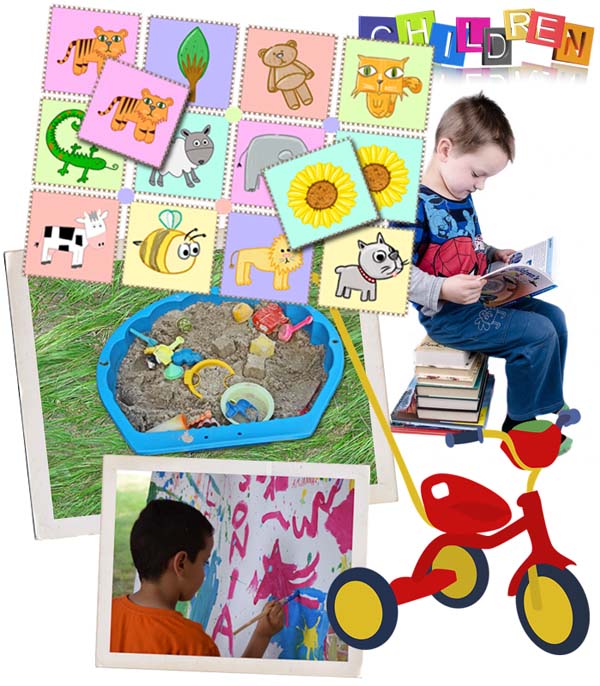
For a 3 to 4 year old typical play will involve riding wheeled toys, outdoor play and making dens. They will often get involved in craft activities, making things and jigsaws. At around 3 they begin to interact with other children, usually in a small group with a familiar adult. The demand for constant attention from an adult decreases and pretend play with other children rapidly increases. Games with rules often starts around 4 years of age with small groups of children beginning to make up their own rules in cooperative play.