Introduction
The development of cognitive skills in children involves the step by step building of skills such as attention, memory and thinking. These help children to process the sensory information from the environment and eventually learn to remember, make comparisons, evaluate and make sense of information.
Focusing attention is an important skill that the child will use throughout their learning. Children under 5 will typically have an attention span of 15 minutes or less. Researchers tell us that in order to find a child's sustained attention, in minutes, we should take their age and multiply it by 2 or 3.
Memory helps a child to retain what he has learned and experienced and therefore build a future base of knowledge.
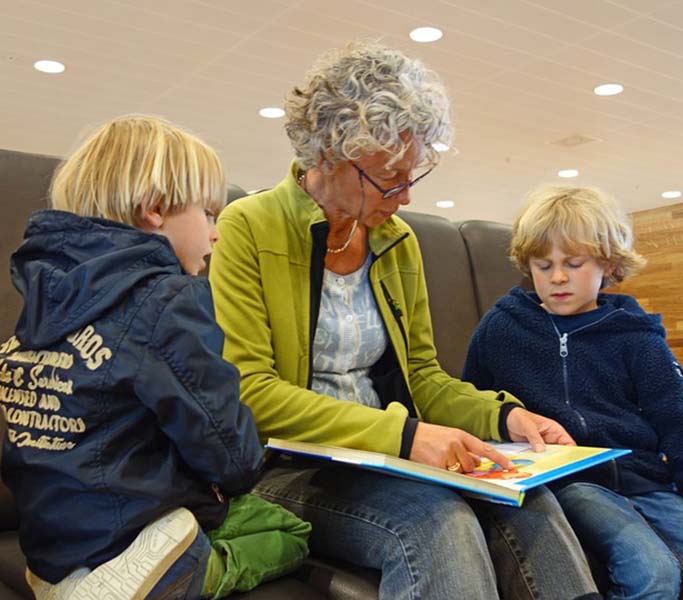
The ability to think includes being able to reason out tasks and find solutions. This cognitive skill helps a child to know whether he's accomplishing what he set out to do or whether he needs to ask for help. For example, when a child reads a story, thinking skills allow him to determine for himself whether he understands what he's reading or whether he needs to go over the passage again, look for additional clues, study the pictures or ask for help in order to understand the intended meaning.
Most cognitive skills can be learned or improved and during this age adults have an important part to play. Typically children will learn through making mistakes or by trial and error, imitation, reinforcement and rewards, social experiences, exploring, experimenting and repeating, everyday activities, through their senses and with guidance and encouragement.
Write your descriptions in the text box below.
Describe how children learn between the ages of 2 and 5, for example exploring.