Thursday, 04 December 2025
Scientists from the University of Nottingham are part of an international collaboration which has taken a step closer to understanding why bacteria can become resistant to antibiotics.
The research, which is published in Science Advances Journal, and led by experts from the Indian Institute of Technology (Mumbai, India), focuses on uncovering the mechanism of antimicrobial resistance (AMR).
Dr Aditi Borkar, Assistant Professor in Molecular Biochemistry & Biophysics in the School of Veterinary Medicine & Science at the University of Nottingham, said: “We have helped researchers at the Indian Institute of Technology, to figure out exactly when and where bacteria modify ribosomes to evade antibiotics like Erythromycin.”
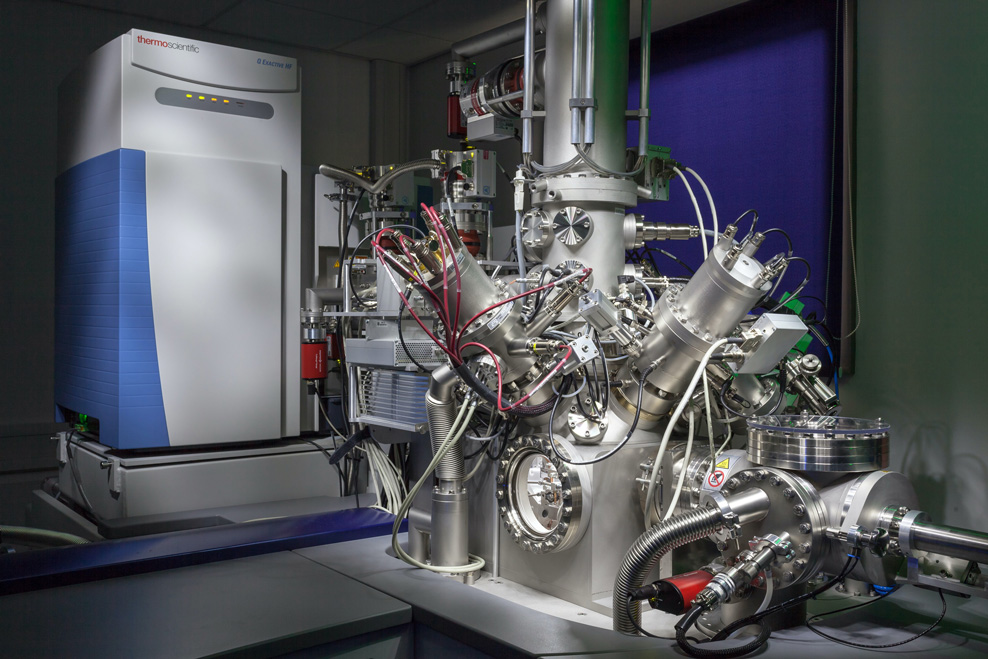 OrbiSIMS
Bacteria develop resistance to macrolide antibiotics like Erythromycin, which is used to treat chest infections, such as pneumonia, skin conditions such as acne and sexually transmitted diseases, by methylating a specific residue in the 23S ribosomal RNA.
In Europe, an estimated 40.7% of Staphylococcus bacteria are resistant to macrolides.
However, the precise stage during ribosome biogenesis and assembly at which this modification occurs was previously unknown.
By combining single-molecule techniques, high-resolution cryo-EM, and a cutting-edge mass spectrometry technology called cryogenic OrbiSIMS - a unique imaging capability of the University of Nottingham, the team has pinpointed the exact timing and mechanism of this modification. These atomic-resolution insights can now inform structure-guided development of next-generation antibiotics.
Dr Borkar explains: “One of the ways that bacteria develop resistance is by modifying their ribosomes. Ribosomes are large molecules with a mass measured in megadaltons (MDa). Ribosomes are so big that they are made up of tens of thousands of atoms. But to become resistance to antibiotics, there are only three additional atoms added into it, so the research team were looking for a three atom change in this 30/40 thousand atom molecule
We were asked to help visualise these atoms by using our OrbSIMS platform, a powerful method which can provide ultra high resolution images, and so able to see if and when these additional atoms had been added. This technology is unique to Nottingham, and we are delighted that we have been able to contribute to this important and world-changing work.”
Story credits
The full study can be found here.
More information is available from Dr Aditi Borkar in the School of Veterinary Medicine & Science at aditi.borkar@nottingham.ac.uk
Notes to editors:
About the University of Nottingham
Ranked 97 in the world and 17th in the UK by the QS World University Rankings, the University of Nottingham is a founding member of Russell Group of research-intensive universities. Studying at the University of Nottingham is a life-changing experience, and we pride ourselves on unlocking the potential of our students. We have a pioneering spirit, expressed in the vision of our founder Sir Jesse Boot, which has seen us lead the way in establishing campuses in China and Malaysia - part of a globally connected network of education, research and industrial engagement.
Nottingham was crowned Sports University of the Year by The Times and Sunday Times Good University Guide 2024 – the third time it has been given the honour since 2018 – and by the Daily Mail University Guide 2024.
The university is among the best universities in the UK for the strength of our research, positioned seventh for research power in the UK according to REF 2021. The birthplace of discoveries such as MRI and ibuprofen, our innovations transform lives and tackle global problems such as sustainable food supplies, ending modern slavery, developing greener transport, and reducing reliance on fossil fuels.
The university is a major employer and industry partner - locally and globally - and our graduates are the third most targeted by the UK's top employers, according to The Graduate Market in 2024 report by High Fliers Research. Alongside Nottingham Trent University, we lead the Universities for Nottingham initiative, a pioneering collaboration between the city’s two world-class institutions to improve levels of prosperity, opportunity, sustainability, health and wellbeing for residents in the city and region we are proud to call home. More news…