Wednesday, 09 July 2025
A new study, led by experts at the University of Nottingham, provides the strongest evidence to date that cancer is extremely rare in turtles, a finding that could offer valuable clues for preventing or fighting cancer in humans.
While previous research had hinted that cancer might be uncommon in turtles, the new analysis, published in BioScience, shows that only about 1% of individuals are affected, far less than in mammals or birds. The study was led by Dr Ylenia Chiari from the School of Life Sciences at the University of Nottingham, alongside Dr Scott Glaberman from the University of Birmingham, in collaboration with a team of researchers from zoos across the US, UK, and Europe.
The team analysed medical records and necropsies (autopsies) from hundreds of zoo turtles, including individuals from Chester Zoo in the UK.
The work was only possible thanks to a global network of zoos that have spent decades keeping detailed records and collaborating to support science, highlighting the vital role zoos can play in discovery research. The findings were striking not only for the low number of cancer cases, but also because, when tumours did appear, they almost never spread.
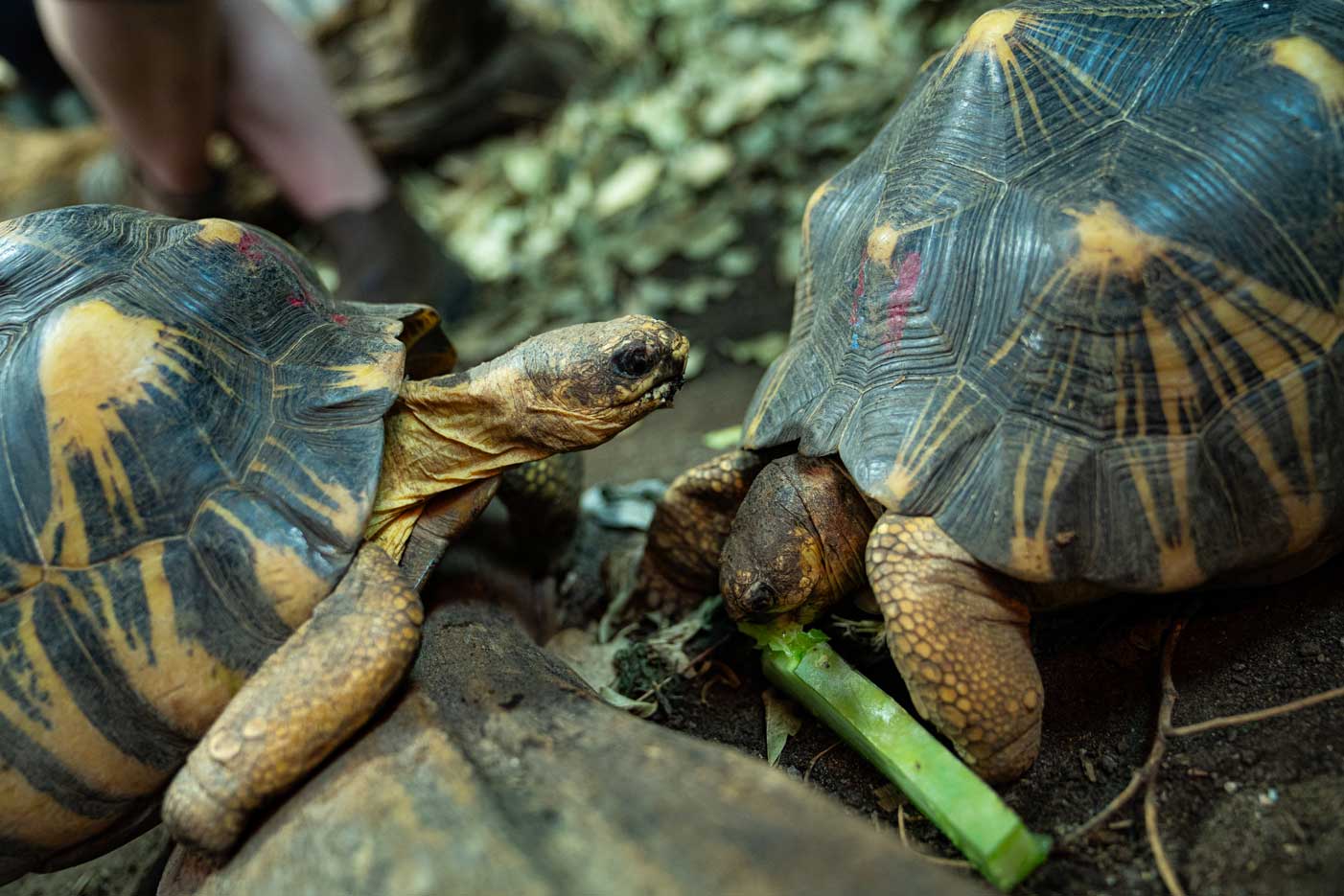
Some turtle species grow to tremendous size. Galapagos and Aldabra giant tortoises, for example, can weigh hundreds of kilograms. Turtles are also known for their long lifespans, and many are centenarians. One radiated tortoise at Chester Zoo named Burt was born in 1945 and may live to over 100, while some Galapagos and Aldabra giant tortoises have lived beyond 150 years.
Species that are both large and long-lived are expected to face higher cancer risk, since more cells mean more opportunities for something to go wrong. But turtles seem to defy this pattern.
Why are turtles so resistant to cancer? Their secret may lie in strong defences against cell damage, slow metabolism that reduces cellular stress, and unique genes that protect against cancer. Turtles could offer valuable clues for preventing or treating cancer in humans and are a promising model for studying healthy aging and cancer resistance.
Turtles, especially iconic species like Galapagos and Aldabra giant tortoises, are famous for living long lives and growing to tremendous sizes. You’d expect that to mean more cancer, but our study, which combines decades of zoo records with previous research, shows how incredibly rare cancer is in these animals. It highlights turtles as an untapped model for understanding cancer resistance and healthy aging, and it shows the vital role zoos play in advancing science through collaboration.”
Dr Scott Glaberman added: “Biodiversity has so much to teach us about how the world works. While fascinating in their own right, extreme species like giant tortoises may have already solved many of the problems humans face, including those related to aging and cancer. That makes biodiversity doubly worthy of protection.”
Dr Helena Turner, Research Officer at Chester Zoo, said: “This research underscores the immense value of zoo-based science. At Chester Zoo, we’ve long been committed to detailed health monitoring and the long-term care of our animals. It’s fantastic to see these efforts not only contribute to advancing scientific knowledge around cancer resistance but also support vital conservation work to protect these remarkable species that may hold keys to medical breakthroughs benefiting both wildlife and humans.”
Several species of turtles are classified as Endangered or Critically Endangered according to the IUCN Red List, due to different threats including pressure from climate change, habitat loss, and illegal pet trade.
Many of the zoos that contributed data to the study, including Chester Zoo, are involved in conservation breeding programmes that aim to pull species like these back from extinction.
Story credits
The full study is available here .
More information is available from Dr Ylenia Chiari at ylenia.chiari@nottingham.ac.uk
Picture credit - Chester Zoo
Notes to editors:
About the University of Nottingham
Ranked 97 in the world and 17th in the UK by the QS World University Rankings, the University of Nottingham is a founding member of Russell Group of research-intensive universities. Studying at the University of Nottingham is a life-changing experience, and we pride ourselves on unlocking the potential of our students. We have a pioneering spirit, expressed in the vision of our founder Sir Jesse Boot, which has seen us lead the way in establishing campuses in China and Malaysia - part of a globally connected network of education, research and industrial engagement.
Nottingham was crowned Sports University of the Year by The Times and Sunday Times Good University Guide 2024 – the third time it has been given the honour since 2018 – and by the Daily Mail University Guide 2024.
The university is among the best universities in the UK for the strength of our research, positioned seventh for research power in the UK according to REF 2021. The birthplace of discoveries such as MRI and ibuprofen, our innovations transform lives and tackle global problems such as sustainable food supplies, ending modern slavery, developing greener transport, and reducing reliance on fossil fuels.
The university is a major employer and industry partner - locally and globally - and our graduates are the third most targeted by the UK's top employers, according to The Graduate Market in 2024 report by High Fliers Research. Alongside Nottingham Trent University, we lead the Universities for Nottingham initiative, a pioneering collaboration between the city’s two world-class institutions to improve levels of prosperity, opportunity, sustainability, health and wellbeing for residents in the city and region we are proud to call home. More news…