Monday, 04 August 2025
A scientist from the University of Nottingham has teamed up with experts from London Zoo and Cuba to find the world’s most beautiful snail, to understand how it evolved and how it can be best conserved.
Angus Davison, a Professor of Evolutionary Genetics in the School of Life Sciences at the University visited Cuba recently along with Dave Clarke from London Zoo, to assess the conservation status of six vulnerable ‘painted’ snail species, known collectively as Polymita.
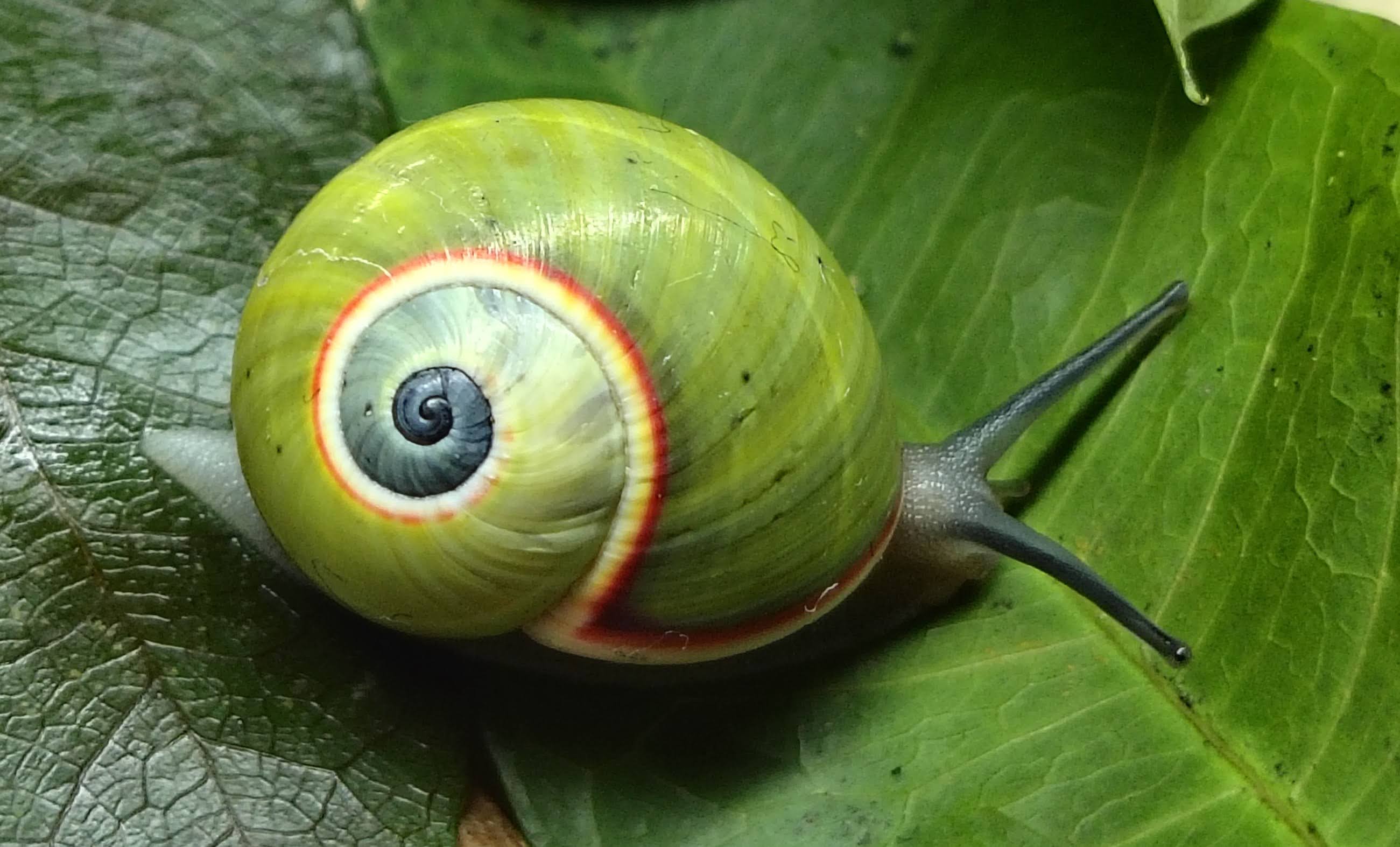
Cuba is home to perhaps the world’s greatest diversity of snails, but none except the tree snail Polymita have shells with such a range of eye-catching colours and complex patterns.
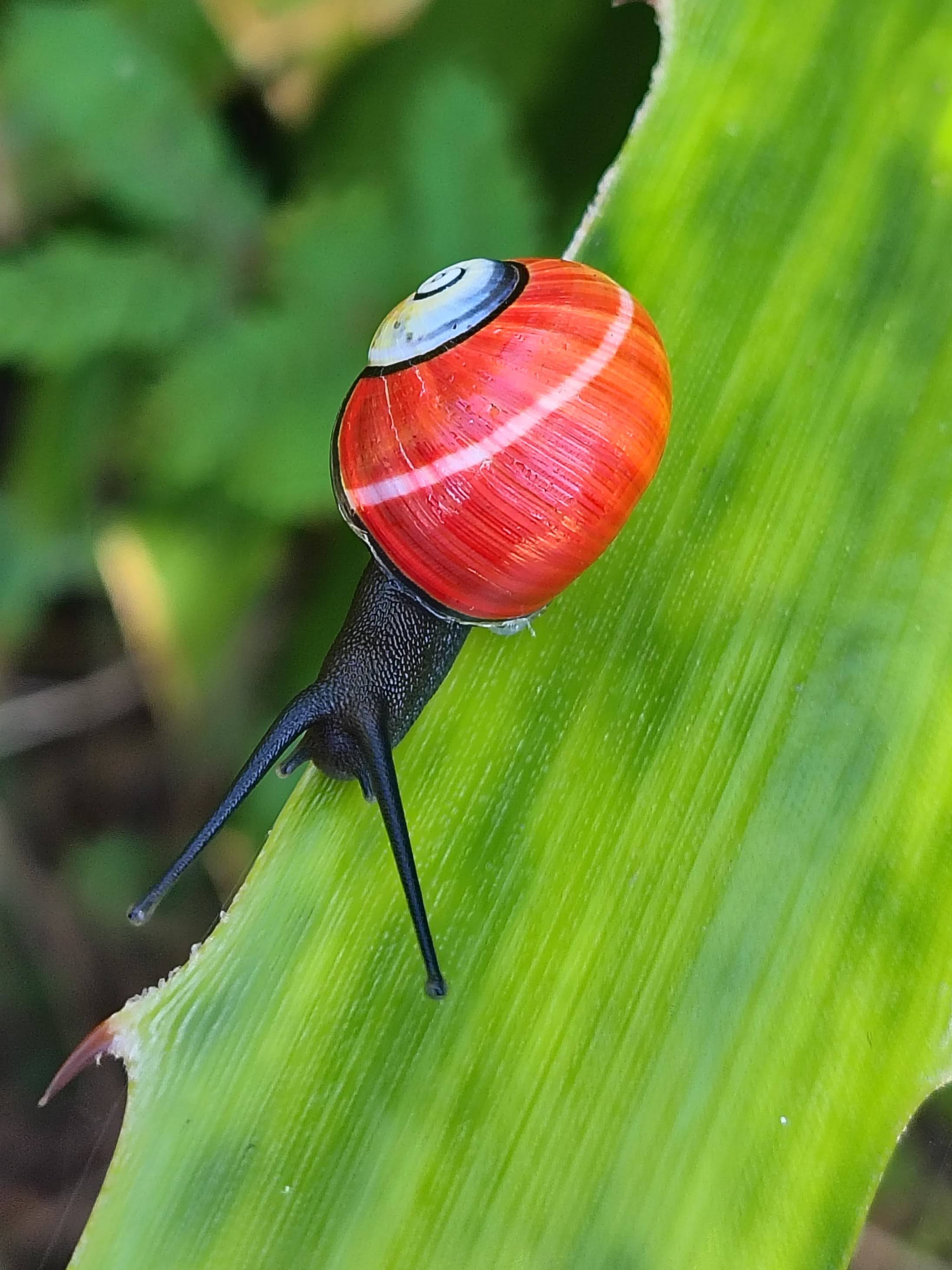 Polymita - credit Prof Angus Davison
These unusual colours and patterns unfortunately make them appealing to collectors and poachers, who sell the shells to tourists or trade them abroad. All six species are vulnerable due to overcollection and for the shell trade, but also destruction, alteration, and fragmentation of their habitats, and climate change.
The team of experts are working with Cuban scientist Dr Bernardo Reyes-Tur to put the snails on the IUCN red list, and with a view to establishing a conservation breeding programme in the future.
The main aim of the first part of the project was to find the most endangered species Polymita sulphurosa, which lives in a very restricted region of Eastern Cuba, and then use DNA methods to make a tree of the relationships between the different types. This can then be used to identify inform population conservation priorities, and understand how the colours came about.
Professor Davison said: “Initially we are supporting the in-country experts with advice and to provide materials to help them breed these beautiful snails in the lab in Cuba. Ultimately, it's all part of a global effort to be proactive about the species’ conservation. One species of painted snail is the most threatened – it was touch and go but we were very fortunate to finally find them.”
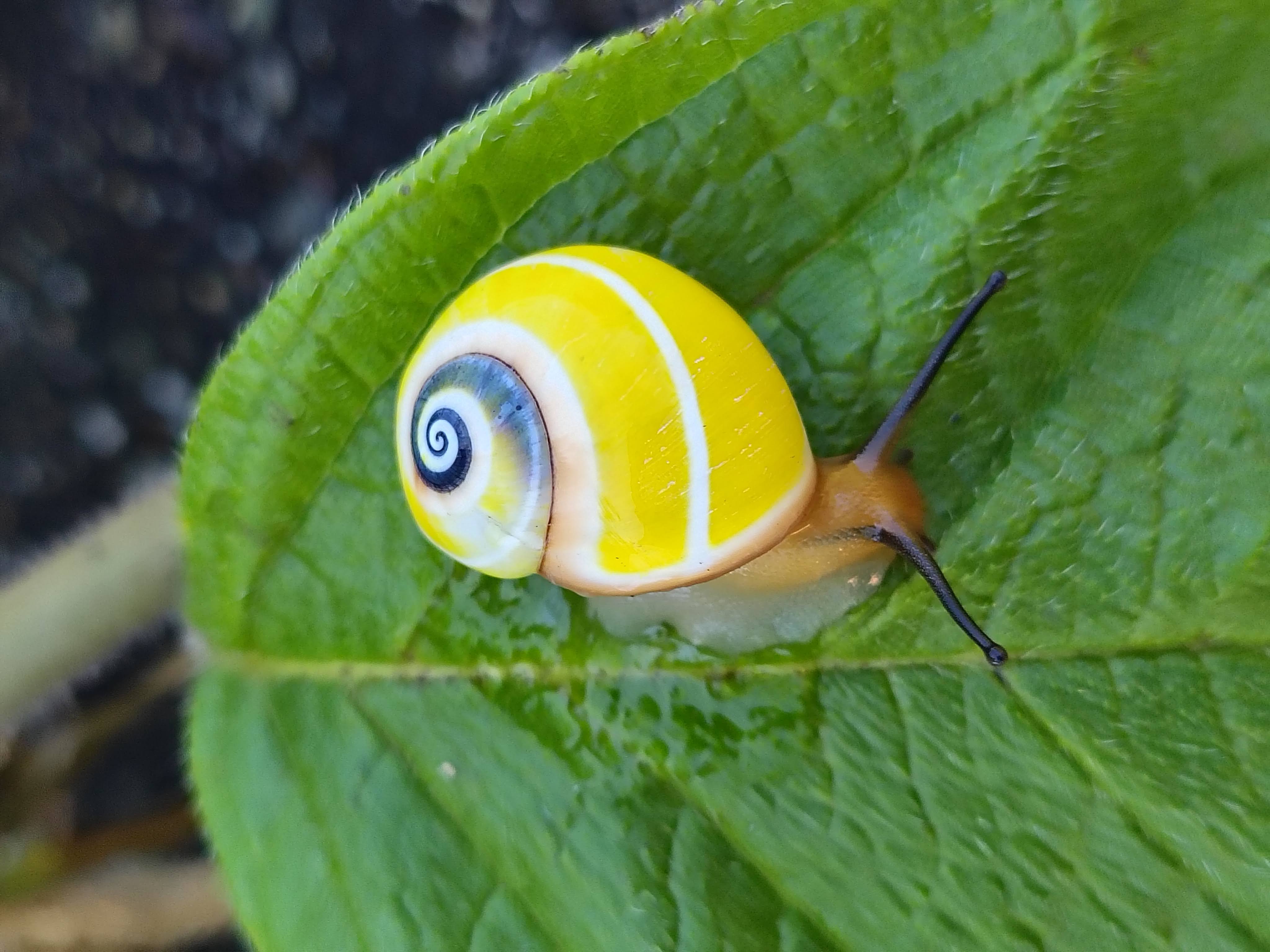 Polymita - credit Prof Angus Davison
Dave Clarke said: “London Zoo has been involved in the conservation of invertebrates for many decades, so it was an honour to provide assistance with the incredible Cuban painted snails. It was amazing to see the diversity of shell colours first hand! Finally finding a population of the rarest species in a remote location was a relief, however we also saw evidence of fresh habitat destruction. We hope these exceptional snails can be successfully reared in the lab, to learn more about them and provide a failsafe against the threats in the wild.”
Dr Bernardo Reyes-Tur from Universidad de Oriente, said: “The recent visit to Cuba by our colleagues presented a valuable opportunity to share the knowledge we have acquired regarding painted snails and to discuss the potential application of these insights toward future conservation strategies.
“This exchange underscored the significant role that international collaboration may play in advancing our understanding of these remarkable gastropods. Undoubtedly, fostering such partnerships will be indispensable for ensuring the long-term preservation of Polymita populations and their fragile ecosystems.”
Story credits
More information is available from Professor Angus Davison from the School of Life Sciences at angus.davison@nottingham.ac.uk
Notes to editors:
About the University of Nottingham
Ranked 97 in the world and 17th in the UK by the QS World University Rankings, the University of Nottingham is a founding member of Russell Group of research-intensive universities. Studying at the University of Nottingham is a life-changing experience, and we pride ourselves on unlocking the potential of our students. We have a pioneering spirit, expressed in the vision of our founder Sir Jesse Boot, which has seen us lead the way in establishing campuses in China and Malaysia - part of a globally connected network of education, research and industrial engagement.
Nottingham was crowned Sports University of the Year by The Times and Sunday Times Good University Guide 2024 – the third time it has been given the honour since 2018 – and by the Daily Mail University Guide 2024.
The university is among the best universities in the UK for the strength of our research, positioned seventh for research power in the UK according to REF 2021. The birthplace of discoveries such as MRI and ibuprofen, our innovations transform lives and tackle global problems such as sustainable food supplies, ending modern slavery, developing greener transport, and reducing reliance on fossil fuels.
The university is a major employer and industry partner - locally and globally - and our graduates are the third most targeted by the UK's top employers, according to The Graduate Market in 2024 report by High Fliers Research. Alongside Nottingham Trent University, we lead the Universities for Nottingham initiative, a pioneering collaboration between the city’s two world-class institutions to improve levels of prosperity, opportunity, sustainability, health and wellbeing for residents in the city and region we are proud to call home. More news…