Biotechnology
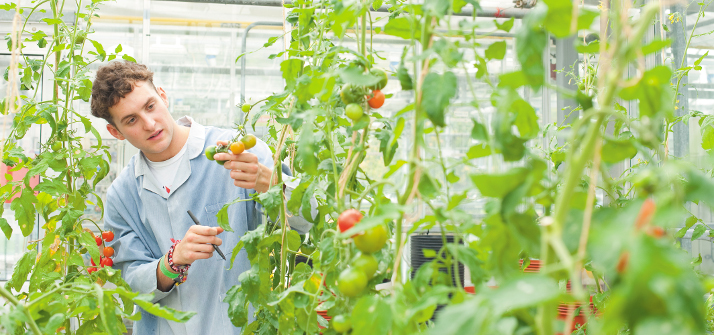
Biotechnology is a revolutionary science which involves the exploitation of biological systems with proven impact on health, medicine, food and the environment.
For more information on biotechnology as a sector visit the biotechnology careers webpage
What skills will I gain during my degree?
In addition to your subject specific knowledge, your biotechnology degree will equip you with a range of transferable skills including the ability to:
- Assess the commercial opportunities and constraints involved in the exploitation of novel technologies
- Understand and debate the ethical considerations for new technologies
- Communicate findings and results to a range of audiences
- Analyse statistical and technical data
- Take a scientific approach to problem-solving
Biosciences Core Graduate Competencies
You will also develop 12 competencies which have been divided into these four headings:
- Fundamental skills
- Interpersonal skills
- Personal aspiration and development
- Professional responsibility
Explore the Biosciences Core Graduate Competencies
How can I develop my skills and experience during my degree?
Employers often seek a range of transferable skills, such as communication, problem-solving, and teamwork, in addition to the subject-specific skills and knowledge you will gain during your degree. Below are some ideas of how to develop these transferable skills during your degree; make sure you look at the ‘What can I do?’ pages for even more ideas.
What can I do?
Take a Year in Industry
Why not take an optional industry placement, between years two and three of your degree? This will extend your degree to a four-year programme. Biotechnology students have previously secured placements at GlaxoSmithKline, Pfizer and Medimmune amongst others.
Year in Industry
As part of this, it is possible to gain accreditation from the Science Council as a Registered Scientist (RSci)
Apply for part-time jobs
The university advertises part-time, casual and temporary jobs on campus and with local businesses. Created just for you, the advertised vacancies can fit around your studies and other commitments.
Part-time jobs
Apply for summer internships
Summer internships are also a great way to gain experience, whether in science or non-science based roles. You can search for roles using the links below, but also consider making targeted speculative applications to small and medium-sized companies who may not advertise opportunities.
My Career - internships from companies targeting Nottingham students
Nottingham Internship Scheme
Royal Society of Biology - placements opportunities
For list of organisations offering work experience or internships in the lab visit - Laboratory work
Look into summer research placements
Summer research placements are available through the School of Biosciences, these depending on the research being conducted. It is worth approaching the academic staff working in the area of research that you are interested in, particularly if you are considering applying for a PhD in future.
There are also other sponsored opportunities and funding for summer research placements through organisations such as the BBRSC.
Royal Society of Biology - undergraduate studentships
Wellcome Trust - Biomedical Vacation Scholarships
Get involved in Students' Union activities
Involvement in relevant SU activities including volunteering, sports clubs and societies can help you to develop and enhance skills that employers look for such as working in multidisciplinary teams, communicating scientific information to a non-science audience and consulting with local businesses.
BiotechSoc
Full list of the Students' Union's student societies
Volunteering
Join the Nottingham Advantage Award
Through the completion of extracurricular modules, the Nottingham Advantage Award helps you develop key life and work-based skills and reflect on your experiences, allowing you to demonstrate your achievements and skills more effectively when applying for jobs.
Nottingham Advantage Award - find out more and explore the modules on offer
Keep up to date with the latest industry news
Knowing about the latest developments is important for a couple of reasons: firstly it may spark off your interest in a particular part of the sector and secondly, employers often ask questions about the factors that may be affecting their company at an interview as a way of gauging your interest in their business.
News from the Biotechnology and Biological Sciences Research Council
Latest news from BioIndustry Association
What are the range of careers I could enter?
The biotechnology course gives the option to specialise in plant, animal or microbial biotechnology. As a graduate you can choose to pursue one of these areas of interest or enter a diverse range of employment areas.
A sample of employers who have recruited our biotechnology graduates
- BDO
- Bio Products Laboratory
- Capgemini
- GlaxoSmithKline
- Institute of Cancer Research
- Major International
- Noble Foods
- Public Health England
- Quotient Science
- Regents University London
- Time Dairy
A sample of roles undertaken by our graduates
- Associate consultant
- Fermentation scientist
- Graduate buyer
- Graduate operations trainee
- Microbiology technologist
- New product development technician
- Project officer
- Quality control lab technician
- Quality control technologist
- Research and development scientist
- Trainee accountant
What do graduates from my course go on to do?
Graduate Outcomes is a national survey capturing the activities and perspectives of graduates launched in 2018 and is the biggest annual social survey in the UK.
You can view the destinations of graduates, who completed the survey, from your course by booking an appointment with an adviser. This can help you to explore your options if you are unsure what you want to do.
Find out more about the Graduate Outcomes survey
What are my further study options? What our webinar on PhD study.
A large proportion of our biotechnology graduates progress into further study. For those wanting to pursue a research-focussed career either in industry or academia, a postgraduate qualification, usually a PhD, is almost always required.
Biotechnology undergraduates have built on their undergraduate qualification by undertaking a biotechnology-related masters course or PhD, including:
- PhDs in biotechnology, plant science, molecular biology and BBSRC Doctoral Training Partnership
- MSc in biochemistry, applied biopharmaceutical biotechnology and entrepreneurship, and stem cell technology
Others opt to take a postgraduate qualification which will allow them to pursue a particular career interest such as Graduate Entry to Medicine.
A number of biotechnology graduates have also undertaken a Postgraduate Certificate in Education (PGCE) in science or biology in order to train to become a teacher, a profession for which science students are currently in high demand.
Search for courses and find out about funding
Thinking about a PhD? How to get started and how to apply
In these two videos, Dr Judith Wayte from the University of Nottingham provides clear and wide-ranging advice on:
- how to get started: what to take into account, and how to gather relevant information
- on the application process and how to prepare for interviews
Login to SharePoint to watch the webinar
- Alumni: Email us to gain access to the webinar