Play and social development
Emotional development is an ongoing process influenced by the infant’s temperament, the well-being of their own parents and the shared environment.
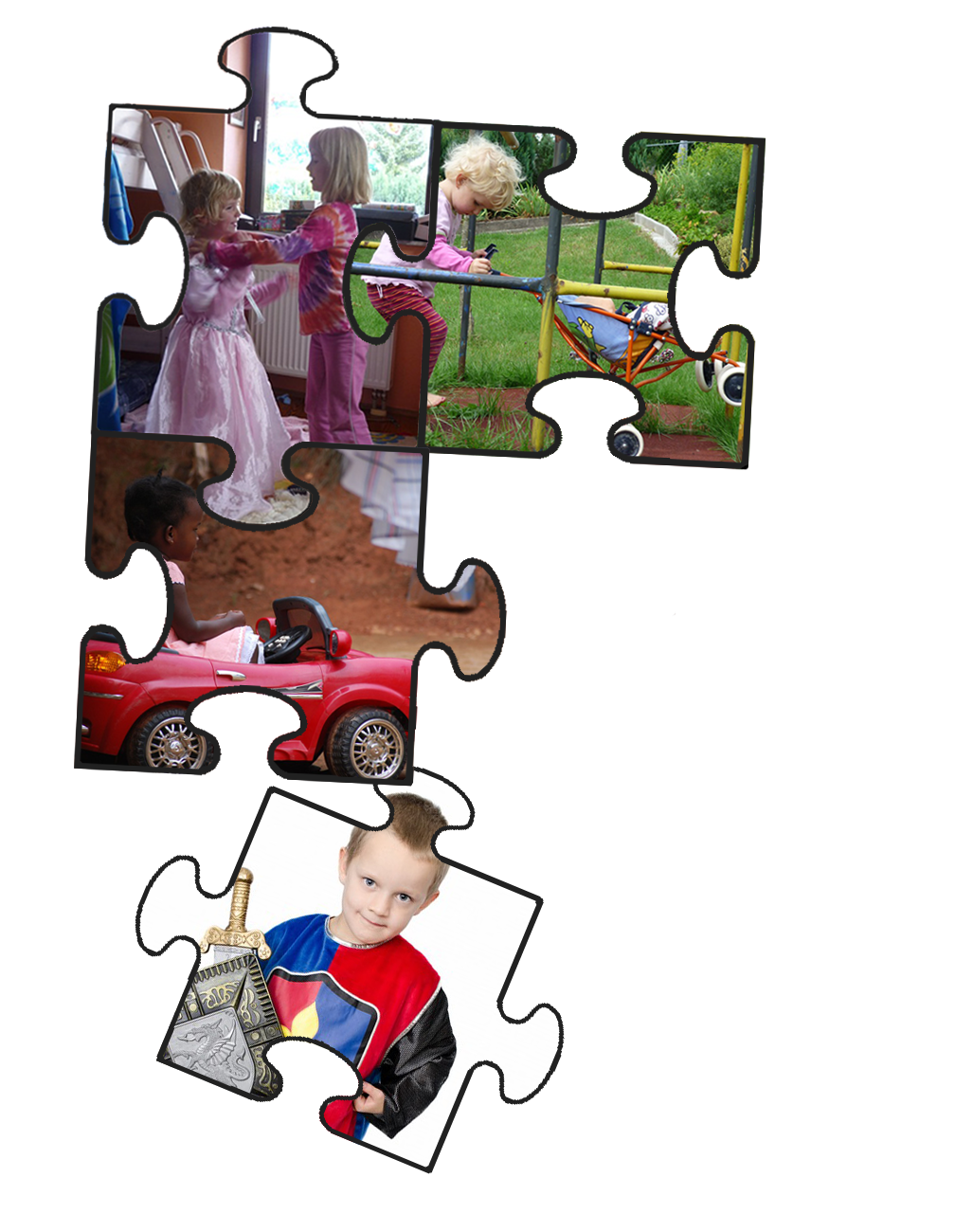
Play and the environment can help the infant learn and control the strength of emotion. The ability to think about the emotional states of others begins with the ability to recognise emotions in other people's faces. Imaginary play gives children the chance to understand other people and their beliefs and values. They can find things out and learn that they can imagine what other people feel without having to act out that same emotion or think the same as other people. Pretend play becomes important between the ages of 1 to 2 years. This has several components;
- Object substitution occurs when one object represents another. So the box can be the car that comes to collect the player from nursery.
- Object creation allows objects that are not present to be imagined, thus removing practical barriers to play. Putting Teddy to bed in the corner, without the need for a doll's cot.
- Property attribution allows concepts to be explored safely; so the rug can fly, the sister can disappear.