Complex emotions
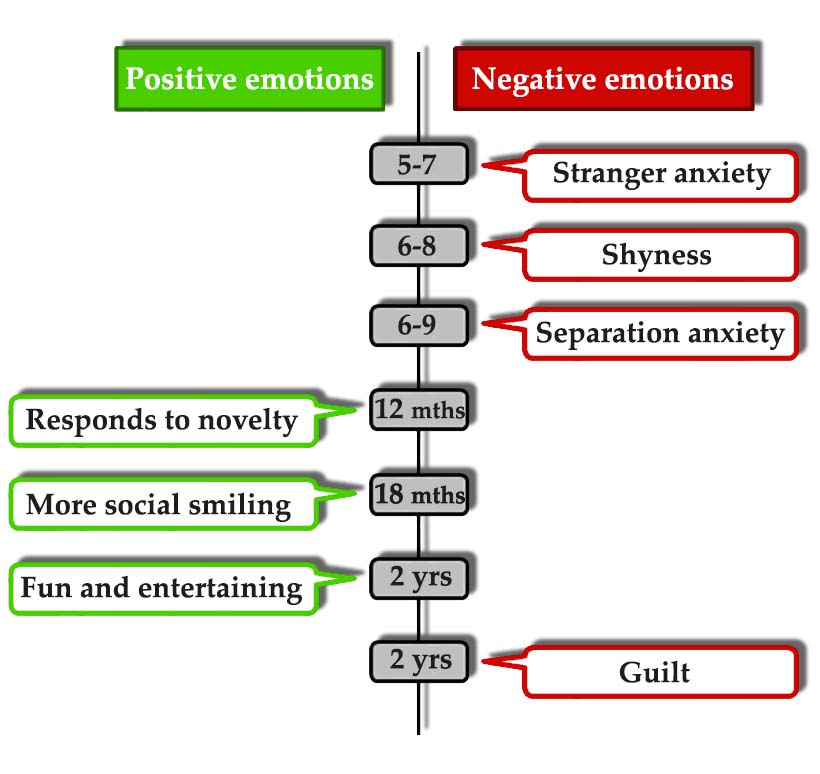
More complex emotions emerge as the infant develops. Separation anxiety is an intense fear or anxiety that occurs when a parent or carer leaves the child and is universally seen across all cultures. It emerges at around the same time as object permanence, 8 months, and peaks at around 14 months. It starts to decrease after that, but is a normal part of development. It can even happen at home in the company of the people the baby knows well.
Babies' awareness of a special attachment to their parents is also shown in stranger anxiety, also known as stranger fear or wariness. They distinguish between those with whom they are safe and secure and other unfamiliar adults. The kindly stranger in the supermarket who smiles at a baby being carried by a parent might get a delighted smile at 6 months, but at 8 months the baby might withdraw their body, clutch the parent, bury their face in their parent's neck or start to cry.
The complex emotions such as pride, guilt, shame and embarrassment develop later at 18 months to 3 years and involve feelings of success and failure. Research indicates that these emotions depend on the child being self-aware and being conscious of adult reactions.
Infants find it hard to regulate their emotions. They need help from others who can recognise their feelings, naming the emotions and talking about them. They need adults who can share their feelings, but not become overwhelmed by the intensity of the infant's own distress.
Emotional development over the first two years.