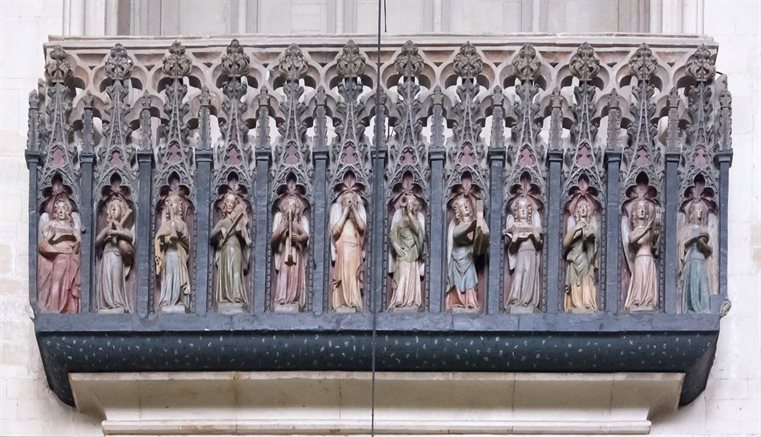
Image: Minstrels’ Gallery of Exeter Cathedral, 14th century. Photograph by DeFacto, Wikimedia Commons
Project summary
In the largest churches of medieval Europe, religious worship could involve dozens or even hundreds of active participants. Staffing needs were managed using complex weekly rotas that assigned daily chant solos, readings and leadership roles. But how did this division of labour play out in practice? What rules governed the rostering, and what were the consequences both musical and social? This project offers new answers by creating an annotated digital edition of the remarkable four-month-long 'tabula', or rota, that survives from sixteenth-century Exeter. With almost a thousand named entries across fifty Sundays and feasts, this long-ignored document provides vital information about who sang what in medieval European cathedrals, in what numbers, and on what occasions. Encoded using XML, the edition will combine diplomatic transcription with searchable 'mark-up' that unlocks its rich seams of musical and biographical insight. An intuitive web interface will ensure accessibility for scholarly and public audiences alike.
Principal Investigator
Henry Parkes
(University of Nottingham)
Funder