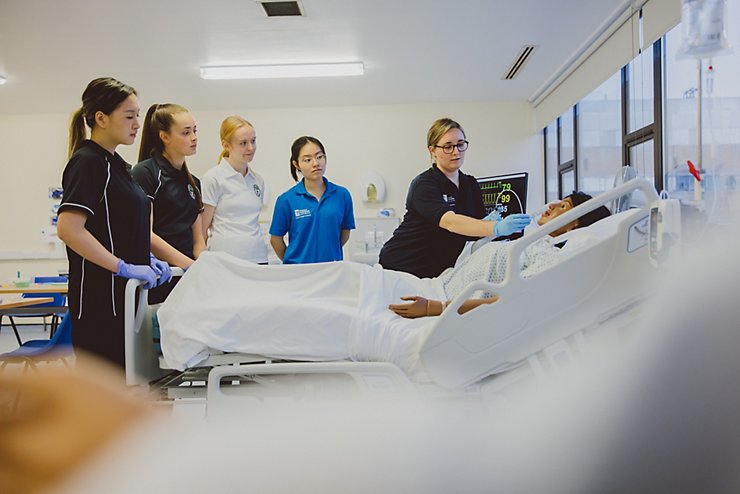
Undergraduate students interacting with internal organs tabard for health promotion group discussion

Health promotion and public health

Are you passionate about making a lasting impact on the health and well-being of populations?

Embrace the opportunity to create positive change, reduce inequalities in health and prevent disease with our health promotion and public health courses.

Why choose this course?

  • Ranked 7th in the UK for Health Professions (Guardian University Guide 2024)
  • Exciting placement opportunities
  • Accredited by the Institute of Health Promotion and Education
  • Equip yourself to improve the health provision of communities and reduce health inequalities
  • Diverse career opportunities: explore career prospects as a Health Promotion Specialist, Public Health Project Manager, Health Lifestyles Coordinator, or Tobacco Control expert
  • Curriculum mapped to the UK Public Health Practitioner standards


Associate Professor Katharine Whittingham discusses what's special about studying health promotion and public health at the University of Nottingham.

Associate Professor Katharine Whittingham discusses what's special about studying health promotion and public health at the University of Nottingham.

Play

About our courses

Hear from Dr Katharine Whittingham about the teaching and learning on our new undergraduate course in health promotion and public health

Hear from Dr Katharine Whittingham about the teaching and learning on our new undergraduate course in health promotion and public health

Play

During your years of study, you’ll learn from internationally recognised experts in the field of health promotion and public health, and experience real-life health promotion practice with placements at a range of organisations.

Our course is accredited by the Institute of Health Promotion and Education and opens the doors to careers in a range of Health Promotion and Public Health roles. 

How you'll be taught

  • Lectures
  • Discussion group
  • Seminars
  • eLearning
  • Tutorials

How you'll be assessed 

We use a variety of methods to test your knowledge and skills, varying from module to module, including:

  • Assessment methods
  • Presentation
  • Dissertation
  • Portfolio (written/digital)
  • Examinations

Hear from Dr Katharine Whittingham about the careers and employability of future graduates of our health promotion and public health course

Hear from Dr Katharine Whittingham about the careers and employability of future graduates of our health promotion and public health course

Play

Graduates of the Health Promotion and Public Health BSc will have the skills and knowledge to work autonomously and collaboratively in a diverse range of initiatives and organisations, to improve the health and wellbeing of individuals and communities, and reduce health inequalities. 

Choose from a wide range of careers. Examples include:

  • Health Promotion Specialist
  • Health Improvement Practitioner
  • Community Engagement Officer
  • Public Health Project Manager
  • Public Health Analyst
  • Health Lifestyles Coordinator
  • Tobacco Control  

Placement opportunity

On this course, subject to meeting the relevant requirements, you can apply to undertake a four-week placement in year two.

Examples of placements could include: 

  • Voluntary sector: Food banks, hygiene banks, local community groups, Women’s Centres 
  • Local government: Homelessness Housing Advice Teams, Public Health Practitioners, Health Trainers, Youth and Community Services     
  • National organisations: Health Disparities, National Cardiovascular Forum 
  • International organisations: Water Aid, Red Cross, WHO 

While it is your responsibility to organise the placement, we will guide you as to suitable options locally, nationally, and internationally and will provide relevant contacts. If travel and accommodation is required for the placement, you will be expected to fund this yourself. 

Please note: In order to undertake a placement, you will need to achieve the relevant academic requirements as set by the University and meet any requirements specified by the placement host. There is no guarantee that you will be able to undertake a placement as part of your course.

Average starting salary and career progression

98.30% of undergraduates from the School of Health Sciences secured graduate level employment or further study within 15 months of graduation. The average annual starting salary for these graduates was £25,798.*


*HESA Graduate Outcomes (2017- 2021 cohorts). The Graduate Outcomes % is calculated using The Guardian University Guide methodology. The average annual salary is based on graduates working full-time within the UK.

Careers and Employability Service

Whether you have a career in mind or are just getting started exploring your options, our Careers and Employability Service are here to help.

They're committed to helping you on your way to a career you love, and making the most of your time at Nottingham. 

Find out more about how you can use your subject to find your dream career


University wide opportunities

No matter your course, the majority of University of Nottingham students have the opportunity to have an international experience during their university career.

Nottingham has 200 university partners in 40 different countries spanning six different continents across four different exchange programmes. These include Inter-campus exchange, International exchange and International summer schools.

Please note: In order to study abroad you will need to achieve the relevant academic requirements as set by the university and meet the selection criteria of both the university and the partner institution. The partner institution is under no obligation to accept you even if you do meet the relevant criteria. 


Your personal statement

Personal statements will be assessed against the application criteria. Please read the course details before completing your application.  

Your statement is your opportunity to show us your passion, enthusiasm, and your personality.

Here's what we want to see in your personal statement: 

  • Your interest in health promotion and public health. Take time to learn about some of the big conversations happening in healthcare. We like to see that you are engaging in the world of mental health care and nursing. 
  • Understanding the role: demonstrate your understanding of health promotion and public health, recognising both the challenges and rewards of the profession 
  • Transferable skills: highlight transferable skills gained from work experience, volunteering, or hobbies. These skills may have been gained through working in a care environment, but equally may have been gained through communicating and interacting with people in a non-clinical environment (for example, working in a shop/café, volunteering at a school)  
  • Work experience: explain how your past work experiences have equipped you with the necessary skills to study at university

Check out our handy guide to writing your personal statement

Join us and be guided by our Admissions Manager, Maryam. With her expert guidance, you'll discover some common myths we hear from potential students. From your reference worries to your predicted grades, and everything in between, Maryam clears up some key points you need to know to start your university experience.

Join us and be guided by our Admissions Manager, Maryam. With her expert guidance, you'll discover some common myths we hear from potential students. From your reference worries to your predicted grades, and everything in between, Maryam clears up some key points you need to know to start your university experience.

Play
Open Day June 2022