
To take Enzymes, Biocatalysis and Bioengineering in Year 3 you must have taken Biological Chemistry in Year 2.
To take Biological Chemistry in Year 2 you must have taken Building Blocks of Life in Year 1.

University Park Campus, Nottingham, UK
| Qualification | Entry Requirements | Start Date | UCAS code | Duration | Fees |
|---|---|---|---|---|---|
| MSci Hons | AAA-AAB | September 2026 | F101 | 4 years full-time | £9,535* |
| Qualification | Entry Requirements | Start Date | UCAS code | Duration | Fees |
|---|---|---|---|---|---|
| MSci Hons | AAA-AAB | September 2026 | F101 | 4 years full-time | £9,535* |
This course is accredited by the Royal Society of Chemistry.
This course is accredited by the Royal Society of Chemistry.
34 points or HL Certificates 6,6,6 including HL 6 in Chemistry
32 points or HL Certificates 6,6,5 including HL 6 in Chemistry
Typical offers will vary depending on the HL subjects offered in addition to chemistry
6.0 (no less than 5.5 in any element) English language requirementsAs well as IELTS (listed above), we also accept other English language qualifications. This includes TOEFL iBT, Pearson PTE, GCSE, IB and O level English. Check our English language policies and equivalencies for further details. For presessional English or one-year foundation courses, you must take IELTS for UKVI to meet visa regulations. If you need support to meet the required level, you may be able to attend a Presessional English for Academic Purposes (PEAP) course. Our Centre for English Language Education is accredited by the British Council for the teaching of English in the UK. If you successfully complete your presessional course to the required level, you can then progress to your degree course. This means that you won't need to retake IELTS or equivalent. |
| Check our country-specific information for guidance on qualifications from your country |
If you do not meet the MSci grades in your offer but meet the BSc Chemistry grades then you will automatically be offered a place for the BSc F100 degree.
General Studies, Critical Thinking, Citizenship Studies, Science and Society, Leisure Studies.
AAA-AAB at including chemistry at grade A
All candidates are considered on an individual basis and we accept a broad range of qualifications. The entrance requirements below apply to 2026 entry.
Please note: Applicants whose backgrounds or personal circumstances have impacted their academic performance may receive a reduced offer. Please see our contextual admissions policy for more information.
International students must have valid UK immigration permissions for any courses or study period where teaching takes place in the UK. Student route visas can be issued for eligible students studying full-time courses. The University of Nottingham does not sponsor a student visa for students studying part-time courses. The Standard Visitor visa route is not appropriate in all cases. Please contact the university’s Visa and Immigration team if you need advice about your visa options.
If you do not meet the MSci grades in your offer but meet the BSc Chemistry grades then you will automatically be offered a place for the BSc F100 degree.
Pearson BTEC National Extended Diploma D*DD Applied Science case by case
Pearson BTEC National Diploma RQF D*D + A (A-Level Chemistry)
Pearson BTEC National Extended Certificate RQF D + AA (A-Level Chemistry)
60 credits overall with 45 credits at Level 3 D36M9P0.
*All applications are assessed on an individual basis to ensure sufficient chemistry has been studied.
If you have already achieved your EPQ at grade A you will automatically be offered one grade lower in an A level subject. If you are still studying for your EPQ you will receive the standard course offer, and also an alternate offer with a condition of one grade lower in a if you achieve an A grade in your EPQ. If you qualify for a contextual offer, your EPQ will be taken into consideration and the appropriate adjustment will be made to your offer. Please note that if you qualify for an enhanced contextual offer, your EPQ will not be taken into consideration as we are unable to make any further adjustments to your offer.
If you don't meet our entry requirements there is the option to study the science foundation programme. You may have the opportunity to progress onto the Chemistry BSc programme, subject to your performance on the foundation programme. There is a course for UK students and one for EU/international students.
At the University of Nottingham, we have a valuable community of mature students and we appreciate their contribution to the wider student population. You can find lots of useful information on the mature students webpage.
If you do not meet the MSci grades in your offer but meet the BSc Chemistry grades then you will automatically be offered a place for the BSc F100 degree.
General Studies, Critical Thinking, Citizenship Studies, Science and Society, Leisure Studies.
34 points or HL Certificates 6,6,6 including HL 6 in Chemistry
32 points or HL Certificates 6,6,5 including HL 6 in Chemistry
Typical offers will vary depending on the HL subjects offered in addition to chemistry
AAA-AAB at including chemistry at grade A
All candidates are considered on an individual basis and we accept a broad range of qualifications. The entrance requirements below apply to 2026 entry.
Please note: Applicants whose backgrounds or personal circumstances have impacted their academic performance may receive a reduced offer. Please see our contextual admissions policy for more information.
We recognise that applicants have a wealth of different experiences and follow a variety of pathways into higher education.
Consequently we treat all applicants with alternative qualifications (besides A-levels and the International Baccalaureate) on an individual basis, and we gladly accept students with a whole range of less conventional qualifications including:
This list is not exhaustive. The entry requirements for alternative qualifications can be quite specific; for example you may need to take certain modules and achieve a specified grade in those modules. Please contact us to discuss the transferability of your qualification. Please see the alternative qualifications page for more information.
Pearson BTEC National Extended Diploma D*DD Applied Science case by case
Pearson BTEC National Diploma RQF D*D + A (A-Level Chemistry)
Pearson BTEC National Extended Certificate RQF D + AA (A-Level Chemistry)
60 credits overall with 45 credits at Level 3 D36M9P0.
*All applications are assessed on an individual basis to ensure sufficient chemistry has been studied.
If you have already achieved your EPQ at grade A you will automatically be offered one grade lower in an A level subject. If you are still studying for your EPQ you will receive the standard course offer, and also an alternate offer with a condition of one grade lower in a if you achieve an A grade in your EPQ. If you qualify for a contextual offer, your EPQ will be taken into consideration and the appropriate adjustment will be made to your offer. Please note that if you qualify for an enhanced contextual offer, your EPQ will not be taken into consideration as we are unable to make any further adjustments to your offer.
We make contextual offers to students who may have experienced barriers that have restricted progress at school or college. Our standard contextual offer is usually one grade lower than the advertised entry requirements, and our enhanced contextual offer is usually two grades lower than the advertised entry requirements. To qualify for a contextual offer, you must have Home/UK fee status and meet specific criteria – check if you’re eligible.
If you do not meet the MSci grades in your offer but meet the BSc Chemistry grades then you will automatically be offered a place for the BSc F100 degree.
If you don't meet our entry requirements there is the option to study the science foundation programme. You may have the opportunity to progress onto the Chemistry BSc programme, subject to your performance on the foundation programme. There is a course for UK students and one for EU/international students.
At the University of Nottingham, we have a valuable community of mature students and we appreciate their contribution to the wider student population. You can find lots of useful information on the mature students webpage.
If your course does not have a compulsory placement, integrated year in industry or compulsory year abroad where there is already an opportunity to undertake a work placement as part of that experience, you may be able to apply to undertake an optional placement year. While it is the student’s responsibility to find and secure a placement, our Careers and Employability Service will support you throughout this process. Contact placements@nottingham.ac.uk to find out more.
Please note: In order to undertake an optional placement year, you will need to achieve the relevant academic requirements as set by the university and meet any requirements specified by the placement host. There is no guarantee that you will be able to undertake an optional placement as part of your course.
Please be aware that study abroad, compulsory year abroad, optional placements/internships and integrated year in industry opportunities may change at any time for a number of reasons, including curriculum developments, changes to arrangements with partner universities or placement/industry hosts, travel restrictions or other circumstances outside of the university’s control. Every effort will be made to update this information as quickly as possible should a change occur.
If your course does not have a compulsory placement, integrated year in industry or compulsory year abroad where there is already an opportunity to undertake a work placement as part of that experience, you may be able to apply to undertake an optional placement year. While it is the student’s responsibility to find and secure a placement, our Careers and Employability Service will support you throughout this process. Contact placements@nottingham.ac.uk to find out more.
Please note: In order to undertake an optional placement year, you will need to achieve the relevant academic requirements as set by the university and meet any requirements specified by the placement host. There is no guarantee that you will be able to undertake an optional placement as part of your course.
Please be aware that study abroad, compulsory year abroad, optional placements/internships and integrated year in industry opportunities may change at any time for a number of reasons, including curriculum developments, changes to arrangements with partner universities or placement/industry hosts, travel restrictions or other circumstances outside of the university’s control. Every effort will be made to update this information as quickly as possible should a change occur.
*For full details including fees for part-time students and reduced fees during your time studying abroad or on placement (where applicable), see our fees page.
If you are a student from the EU, EEA or Switzerland, you may be asked to complete a fee status questionnaire and your answers will be assessed using guidance issued by the UK Council for International Student Affairs (UKCISA) .
All students will need at least one device to approve security access requests via Multi-Factor Authentication (MFA). We also recommend students have a suitable laptop to work both on and off-campus. For more information, please check the equipment advice.
As a student on this course, you should factor some additional costs into your budget, alongside your tuition fees and living expenses.
Books
You should be able to access most of the books you will need through our libraries, though you may wish to purchase your own copies.
Printing
Due to our commitment to sustainability, we do not print lecture notes, but these are available digitally.
Study abroad
If you study abroad, you need to consider the travel and living costs associated with your country of choice. This may include visa costs and medical insurance.
Equipment
To support your studies, the University recommends you have a suitable laptop to work on when on or off campus. If you already have a device, it is unlikely you will need a new one in the short term. If you are looking into buying a new device, we recommend you buy a Windows laptop, as many software packages you will need are only compatible with Windows. Other equipment will include an examination approved calculator and a molecular modelling kit (optional).
Although you will not need a powerful computer, it is wise to choose one that will last. The University has prepared a set of recommended specifications to help you choose a suitable laptop.
If you are experiencing financial difficulties and you are struggling to manage your costs, the Hardship Funds may be able to assist you.
This is the UK undergraduate tuition fee for the academic year 25/26. It may increase for the academic year 26/27 and we will update our information once we have received confirmation of the fee from the UK Government.
All students will need at least one device to approve security access requests via Multi-Factor Authentication (MFA). We also recommend students have a suitable laptop to work both on and off-campus. For more information, please check the equipment advice.
As a student on this course, you should factor some additional costs into your budget, alongside your tuition fees and living expenses.
Books
You should be able to access most of the books you will need through our libraries, though you may wish to purchase your own copies.
Printing
Due to our commitment to sustainability, we do not print lecture notes, but these are available digitally.
Study abroad
If you study abroad, you need to consider the travel and living costs associated with your country of choice. This may include visa costs and medical insurance.
Equipment
To support your studies, the University recommends you have a suitable laptop to work on when on or off campus. If you already have a device, it is unlikely you will need a new one in the short term. If you are looking into buying a new device, we recommend you buy a Windows laptop, as many software packages you will need are only compatible with Windows. Other equipment will include an examination approved calculator and a molecular modelling kit (optional).
Although you will not need a powerful computer, it is wise to choose one that will last. The University has prepared a set of recommended specifications to help you choose a suitable laptop.
If you are experiencing financial difficulties and you are struggling to manage your costs, the Hardship Funds may be able to assist you.
Chemistry is central to solving the world’s most pressing challenges – from clean energy and climate change to food security and new medicines. At Nottingham, you’ll examine these global issues through the lens of sustainable chemistry, gaining the practical, digital, and professional skills needed to make a real-world impact.
This MSci Chemistry course explores real-world issues including health, energy and technology with a strong focus on sustainability. In your final year, you’ll carry out an in-depth research project and choose from specialist master’s-level modules. You’ll be taught by internationally recognised researchers, including pioneers in green chemistry and AI-driven discovery. Our curriculum is designed with industry input and student collaboration, ensuring you graduate with the confidence and adaptability to thrive in a fast-changing world.
The School of Chemistry at Nottingham is one of the largest in the UK and is ranked 9th nationally and in the top 100 globally for Chemistry (QS World University Rankings by Subject 2025). Our award-winning Carbon Neutral Laboratory enables world-leading research in sustainable chemistry, supporting our mission to develop innovative solutions for a greener future.
Taught by active researchers, you’ll develop critical thinking and apply sustainable chemistry to real problems. Our students build valuable laboratory experience, data analysis and communication skills along with an understanding of chemistry’s wider impact – all qualities that employers highly value.
The course draws on the school’s research strengths in areas such as energy, sustainability and materials discovery. Our expert teaching staff use chemistry as a method to tackle global challenges. This integrated masters gives you the opportunity to conduct your own research.
You will join one of our research groups to work on your chosen project and benefit from the active research and latest insights as well as innovative facilities and equipment. Transferable skills including communicating practical lab experiments, group study and presentations means you will graduate well-prepared with the tools used by chemists in today’s workplace.
Mandatory
Year 1
Chemistry Study Skills
Mandatory
Year 1
Exploring the Periodic Table
Mandatory
Year 1
Organic Molecules and Mechanisms
Mandatory
Year 1
Energy and Chemical Change
Mandatory
Year 1
Foundation Skills in Practical Chemistry
Mandatory
Year 1
Principles of Sustainable Chemistry and Chemical Innovation
Mandatory
Year 1
Analytical and Mathematical Methods in Chemistry
Optional
Year 1
Chemistry in Action
Optional
Year 1
Building Blocks of Life
Optional
Year 1
Mathematics for Chemistry 1
Mandatory
Year 2
Synthesis and Spectroscopy
Mandatory
Year 2
Structure, Bonding and Reactivity
Mandatory
Year 2
From Atoms to Solids
Mandatory
Year 2
Applying Skills in Practical Chemistry
Mandatory
Year 2
Sustainable Products and Processes
Optional
Year 2
Atmospheric Chemistry
Optional
Year 2
Advanced Calculus and Differential Equation Techniques
Optional
Year 2
Biological Chemistry
Optional
Year 2
Medicinal Chemistry and Biomedical Imaging
Optional
Year 2
Introduction to Python for Chemical and Pharmaceutical Sciences
Optional
Year 2
Mathematics for Chemistry 2
Mandatory
Year 3
Metal Catalysis and Supramolecular Chemistry
Mandatory
Year 3
Selectivity and Control in Synthesis
Mandatory
Year 3
Quantum Chemistry and Matter
Mandatory
Year 3
Investigate Project Skills in Practical Chemistry
Mandatory
Year 3
Frontiers of Sustainability and Innovation
Optional
Year 3
Topics in Inorganic Chemistry
Optional
Year 3
Protein Characterisation and Bioinformatics
Optional
Year 3
Enzymes, Biocatalysis and Bioengineering
Optional
Year 3
Small Molecule Drug Discovery
Optional
Year 3
Structural Analysis in Chemistry
Optional
Year 3
Communicating Science
Mandatory
Year 4
Chemistry Research Project
Optional
Year 4
Nature and Process Approaches to Medicines
Optional
Year 4
Advanced Quantum Calculations
Optional
Year 4
AI for Drug Design
Optional
Year 4
Molecular and Materials Modelling
Optional
Year 4
Functional Materials
Optional
Year 4
Nanomaterials
Optional
Year 4
Self-assembly and Non-covalent Interactions
Optional
Year 4
Contemporary Organic Synthesis
Optional
Year 4
Biosynthesis and Biotherapeutics
Optional
Year 4
Enterprise for Scientists

The above is a sample of the typical modules we offer, but is not intended to be construed or relied on as a definitive list of what might be available in any given year. This content was last updated on Monday 28 July 2025. Due to timetabling availability, there may be restrictions on some module combinations.
To take Enzymes, Biocatalysis and Bioengineering in Year 3 you must have taken Biological Chemistry in Year 2.
To take Biological Chemistry in Year 2 you must have taken Building Blocks of Life in Year 1.
You may be able to choose to study a language as part of this degree.
Learning another language can open career opportunities around the globe and enriches your CV. It could also help you in your studies by being able to access learning materials in other languages.
If you are planning to travel or work abroad it will help you to broaden your cultural understanding.
Our Language Centre offers many languages, and you may start as a beginner or at a more advanced level.
Find out more about learning a language as part of your degree
You’ll follow this introductory module right at the start of your course. It is designed to develop your study skills so that you can work effectively at University.
The module will also introduce you to first-year undergraduate laboratory chemistry.
You’ll spend around four hours in your first week in practical sessions studying this module.
In this module, you will be introduced to the periodic table and key concepts in atomic and molecular structure. You will explore molecular and ionic species in terms of their structure, bonding, and properties, as well as their practical applications. The module also includes an introduction to the coordination chemistry of metals, highlighting their roles in a variety of chemical contexts.
Through this foundation, you will develop a deeper understanding of how the periodic table informs the behaviour and interactions of elements and compounds.
This module provides a comprehensive foundation in organic chemistry, focusing on the structure, reactivity, and analysis of organic molecules. You will develop skills to name and draw molecules, understand bonding and reaction mechanisms, and predict the outcome of organic reactions. Emphasis is placed on the broader significance of molecules and chemical reactions in life and society.
Uncover the fundamental principles that drive chemistry at a molecular level. You’ll learn about key principles in energy and chemical changes, such as how atoms combine to form molecules, how energy is quantised, ho molecules store energy, the ways in which molecules interact with light and with one another, and why molecules react.
You will alsoThis module will also allow you to develop vital skills and apply basic concepts to understand chemical processes including electrochemistry, kinetic theory of gases, thermodynamics and the rates of chemical reactions.
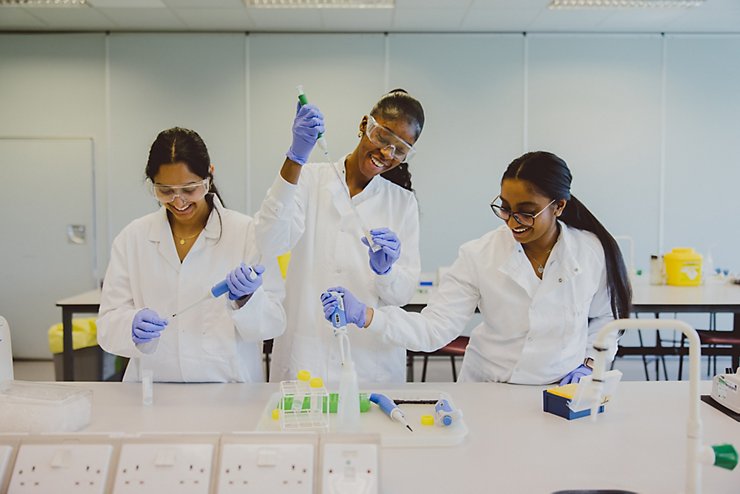
In this module, you will be introduced to key chemical techniques and gain the essential skills needed for safe and effective laboratory work. You will develop hands-on experience with fundamental synthetic, computational, and analytical procedures, and explore the use of spectroscopy in chemical analysis.
The module also focuses on building your time management, scientific report writing, and professional competencies. These foundational skills will prepare you for more advanced studies and practical work in chemistry.
In this module, you will be introduced to the core concepts of green chemistry, sustainability, and innovation. Through real-world examples, you will explore how chemistry supports the achievement of the U.N. Sustainable Development Goals and drives progress toward a more sustainable future.
You will learn how to perform chemistry in a greener, more responsible manner, understand what this entails and develop the skills to critically evaluate environmental impact. The module also examines how novel technical ideas are transformed into successful commercial ventures, highlighting the role of chemical innovation in benefiting global society.
In this module, you will learn the mathematical techniques essential for modern chemistry and develop the confidence to apply them across a wide range of chemical problems and data analyses. You will also explore modern analytical instrumentation used to separate, identify, and quantify the properties of atoms, molecules and materials.
By integrating mathematical understanding with practical analytical skills, you will be equipped to tackle complex challenges in both theoretical and experimental chemistry.
The Chemistry in Action module allows you to discover a range of topics at the forefront of modern chemical research.
By the end of the module, you will understand the importance of these key topics and gain knowledge of the fundamental concepts supporting their development, using the skills you’ve gained from other compulsory modules.
This module will allow you to explore basics of chemistry that form the building blocks necessary for life. It provides an overview of the structure and functions of cells, including the molecules that control cellular functions.
You will be given then foundational knowledge needed for the Medicinal and Biological Chemistry course. Building on fundamentals of organic chemistry such as stereochemistry, functional group reactivity, and covalent and non-covalent interactions, you will build your understanding of the chemical nature of life, bridging the gap between molecular chemistry and biological function.
To provide students with a basic knowledge of the main mathematical techniques required in following a Chemistry-based course. Topics are:
In this module, you’ll discuss the reactivity of, suggest synthetic routes for and interpret the spectroscopic characterisation of organic compounds including some natural products.
Topics studied include:
You’ll attend two lectures each week in this module and tutorials every third week.
In this module, you will explore the central role of metals in catalytic and biological processes. You will study the reactions, mechanisms and spectroscopic behaviour of a wide range of metal-containing compounds, gaining insight into their structure and reactivity. MainContentHere#10;You will delve into organometallic chemistry, metal-ligand bonding and the diverse chemical applications of metals. The module also introduces the significance of weak interactions in templating supramolecular structures, helping you understand how these subtle forces influence molecular properties and behaviour.
Discover how quantum mechanics governs the atomic and molecular building blocks of matter. You’ll learn how diffraction and spectroscopy enable chemists to study molecules and solid-state materials Explore how the relationship between matter and energy is captured by thermodynamics and kinetics, in terms of physical quantities relevant to chemical change.
Through this module, you’ll learn how to apply quantum mechanics to systems that are central to the theoretical description of chemistry. You’ll be able to explain and apply concepts of reaction dynamics to chemistry, and calculate thermodynamic properties of single-component and multi-component materials in different states.
Building on the skills developed in the Foundation Skills in Practical Chemistry module, you will further enhance your experimental techniques and learn how to integrate a range of skills to conduct laboratory work safely and effectively. You will apply theoretical knowledge to solve practical problems, deepening your understanding of chemistry through hands-on experience.
You will continue to develop key professional competencies, including accurate recording of experimental observations and communicating your findings through various formats. This module provides a solid foundation for further studies and helps you build the transferable skills needed for collaborative research and team-based mini-projects.
In this module, you will examine key challenges and opportunities related to sustainability, energy use and supply chain resilience. You will learn a broad range of chemical strategies designed to address global environmental and societal issues.
Additionally, you will explore how businesses identify and solve problems, manage projects and protect innovative ideas and products. The module will also guide you in developing and pitching successful business cases, equipping you with practical skills to drive sustainable innovation.
You’ll study topics such as the physical properties of the atmosphere, chemistry of ozone in the stratosphere, global warming, and analytical methods in atmospheric chemistry in two lectures each week.
You will be introduced to the differential calculus of functions and vector operators. You’ll consider the development of techniques for the solution of boundary and initial value problems for ordinary differential equations.
This module will introduce you to the concepts underpinning biological chemistry from a chemical perspective. It will explore basic cell biology and how this can give rise to disease. You will be introduced to molecular biology techniques and how these can be applied to understand and manipulate cells.
You will be able to confidently observe and describe the molecular workings of the cell in both healthy and diseased states. And yYou will be able to discuss how small molecules can be used to alter cell behaviour, and propose molecular biology techniques to understand and manipulate cells.
This module will explore fundamental concepts in medicinal chemistry including the use of molecules to effect biological systems. You will explore a range of different therapies, including antibiotics, antivirals and anticancer agents, and the features which impact their application, such as metabolism and bioavailability. The mechanisms of action of biopharmaceuticals including antibody-drug conjugates and vaccines will be explained. Through this module you will gain an appreciation for how small molecules interact with cells and enzymes in the treatment, monitoring, and diagnosis of disease. You will also be introduced to the chemistry behind biomedical imaging. Nottingham is the home of magnetic resonance imaging (MRI) and you will explore how chemistry can be used to enhance the images of the technique that was famously discovered here.
Content to be confirmed.
Thi module is a continuation from Mathematics for Chemistry 1 in year 1. It provides additional mathematics knowledge and skills for students majoring in chemistry-based courses.
Complex numbers are introduced and used with a study of solutions of linear second-order differential equations. Matrix algebra is developed to solve systems of equations and to study eigenvalue problems. The differential calculus of several variables is introduced. You will also discover algebra of matrices and their applications in chemistry.
Within this module, we explain the importance of metals in catalysis, with applications in industrial and biological processes. You will explore the roles that metal centres play in controlling the structure and function of supramolecular systems and metal-organic frameworks.
Completing this module will allow you to accurately explain structural and functional properties of hard and soft materials, and analyse their applications in various scientific and technological contexts, including catalysis. You will also be able to evaluate the reactivity or stability of transition metal complexes by determination of their electronic arrangements.
In this module, you will explore fundamental concepts in medicinal chemistry – the use of molecules to influence biological systems. You will examine a variety of therapeutic agents, including antibiotics, antivirals and anticancer drugs, and consider how factors such as metabolism and bioavailability affect their effectiveness.
You will also study the mechanisms of action of biopharmaceuticals, such as antibody-drug conjugates and vaccines. In addition, you will be introduced to the chemistry behind biomedical imaging. With Nottingham as the birthplace of magnetic resonance imaging (MRI), you will learn how chemistry is used to enhance the images produced by this groundbreaking technique.
Through this module, you will gain a deeper understanding of how small molecules interact with cells and enzymes in the treatment, monitoring and diagnosis of disease.
Through this module you’ll gain an understanding o how the quantum mechanical behaviour of molecules and materials determines their properties and chemical reactivity. You’ll use advanced concepts from quantum and statistical mechanics to describe molecular structure, reactivity and dynamics. The module aims to provide you with the skills and knowledge to understand key elements of quantum chemistry, including the ability to explain how the quantum nature of matter can be harnessed in a wide variety of real-world devices, and how to use photoelectric effect as a spectroscopic tool. You’ll also explore the chemistry of surfaces and interfaces that connects molecular-scale and bulk phenomena.
This module covers inorganic mechanisms and the overarching fundamental principles of greener and sustainable chemistry as applied to processes, inorganic reaction mechanisms, and discussion on the theme of greener and sustainable chemistry
In this module, you will focus on characterising proteins and enzymes to understand their roles in biochemical processes and real-world applications. You will explore physical and chemical methods for analysing protein structure and behaviour, drawing on techniques from both analytical chemistry and bioinformatics.
You will also learn how to interpret structural data and compare it across expanding datasets to uncover functional insights, gaining a deeper understanding of how proteins contribute to complex biological systems.
In this module, you will explore the structure and function of enzymes, focusing on how they can be harnessed and engineered for catalysis and the production of valuable compounds. You will learn to understand enzyme-catalysed reactions from a chemical perspective and appreciate the role of enzymes as biocatalysts in synthesis.
Building on your knowledge of protein structure and reaction mechanisms, you will be introduced to bioengineering tools that demonstrate how simple organisms can be modified to create new and useful products.
This module explores modern strategies for designing small organic molecules that target specific biological sites to treat diseases. Throughout the module you will develop an understanding of the important terminologies of drug discovery, and the different stages taken when conducting the drug discovery process.
You will learn how chemical structure influences drug-like properties, including potency, selectivity, and the ability to reach the site of action. Topics include drug-target interactions, lead optimisation, physicochemical properties, pharmacokinetics, and toxicity.
You will also have the opportunity to review case studies of successful and failed drugs to illustrate key medicinal chemistry principles. You will understand and evaluate biological data to inform small molecule design, and use medicinal chemistry insights to justify decision making.
This module aims to explai how to determine the structures of materials and surfaces.
You’ll compare and contrast methods for obtaining structural information and Summarise diffraction and microscopy-based techniques for measuring the structure of surfaces and materials. You’ll also be able to describe and explain the state-of-the-art techniques that yield structural information, including X-ray, neutron and electron-based methods.
This module provides an opportunity for you to gain first-hand experience being involved with science education and communication. You will undertake a placement alongside qualified science educators in a local classroom environment and, through involvement in a range of teaching activities, will improve your transferrable skills in addition to learning about teaching practices in science. Throughout the module, you will be required to apply reflective practice on your learning, and directly utilise this to identify, demonstrate and enhance your communication skills.
This is a classroom-based module for learning, actioning and reflecting upon key skills including communication, presentation, team-working, active-listening, time management and prioritisation. Enhanced transferrable skills can aid in confidence with strong links to employability, with the provision of classroom experience being vital if you are considering teaching as a potential future career.
Within this module you will be introduced to the field of drug design, highlighting the aspects where computational approaches, and especially AI-based techniques, can be applied.
Areas that will be covered include quantitative structure-activity relationships, molecular docking, biomolecular simulation and protein structure prediction. Wider implications, such as AI and ethics in molecular discovery applications, will be considered. You will take part in computer laboratory sessions featuring a range of applications of machine learning to drug design.
By the end of this module, you will be able to apply effective time management strategies to prioritise tasks, allocate appropriate time for each activity, and meet deadlines consistently.
This module introduces applications of computational modelling techniques to molecules and materials research. This will focus on functional materials such as semiconductors and energy materials and their structure-property relations, for which atomistic simulations can provide insight and understanding for their design, development and optimisation.
Applied techniques will include quantum chemical calculations, molecular dynamics and the use of machine-learned models, computer laboratory sessions will provide the opportunity for hands-on experience of these methods.
This module provides you with an understanding of how external stimuli can control the electronic states of materials and their functional properties, with a particular focus on how these materials will enable our transition to a sustainable society.
The module will explore a diverse range of functional properties and applications, including magnetism, photovoltaics, and photocatalysis.
Throughout this module you will learn and understand how to solve quantitative and algebraic problems for chemical situations, and confidently discuss their use in modern devices.
The purpose of our Nanomaterials module is to allow you to appreciate the variety of properties that can be created by changing the dimensions of material. The module will explore a range of nanomaterials with an emphasis on carbon-based materials including diamond, graphene, fullerenes and carbon nanotubes, and will link different physicochemical and structural properties with the modern applications of these materials.
In this module, yYou’ll learn to compare and contrast methods of production of nanomaterials, and select appropriate methods of their characterisation. You’ll also be able to understand and explain changes in the structure and bonding at the nanoscale.
In this module, you will develop the tools to understand the fundamental covalent and non-covalent interactions that govern the atomically precise assembly of supramolecular materials. You will explore a diverse range of systems, including mechanically interlocked molecules and self-assembly at interfaces.
You will also investigate cutting-edge technologies used to characterise these materials and learn how to design them with specific structural and functional properties. By the end of the module, you will be able to predict how molecular interactions drive self-assembly and contribute to the development of advanced functional materials.
Explore the synthesis of a variety of natural (and unnatural) compounds of relevance to biology and medicine, with reference to the goals and achievements of contemporary organic synthesis through a range of case studies. There is an emphasis on the use of modern synthetic methodology to address problems such as chemoselectivity, regiocontrol, stereoselectivity, atom economy and sustainability.
You will also study the application of new methodology for the rapid, efficient and highly selective construction of a range of target compounds - particularly those that display significant biological activity. There will also be an opportunity to address how a greater understanding of mechanism is important in modern organic chemistry. This module is assessed by a two hour exam.
In this module, you will explore the forefront of chemical biology, exploring the mechanisms behind the biosynthesis of a diverse range of natural products and the engineering of biological molecules to develop innovative new therapies. You will investigate cutting-edge techniques in disease treatment that leverage designer biological molecules as therapeutics.
By the end of the module, you will have a comprehensive understanding of how these advanced strategies are revolutionising therapeutics and paving the way for future medical breakthroughs.
Explore the journey from technical innovation to successful commercial enterprise. In this module you will gain insight into the key factors that drive innovation, including idea evaluation, intellectual property, market awareness, and strategic management. Emphasis is placed on understanding the pathways to market from both academic and industrial perspectives.
You will be given the opportunity to demonstrate your skills in creative thinking, persuasive communication, and selling skills by developing and pitching a new product, service, or business concept to a target audience. You’ll critically assess how large chemistry-based companies manage innovation, and explain how organisational structures and strategies are used to generate value for both the company and its customers.
The module provides you with the necessary skills and knowledge for real-world application after graduation.
Teaching methods
The majority of this course is designed to be delivered in–person. The style of teaching delivery includes:
An overall mark of 55% or above for the second year is required to progress into
the third year of the MSci degree. Students may be considered for progression
into the third year of the BSc degree depending on their credit-weighted
average at the end of the second year. Your final degree classification will be
based on marks gained for your second and subsequent years of study. Year two is worth 20% with years three and four worth 40% each.
Assessment methods
Assessment is varied and designed to reflect real-world skills. You’ll be assessed through:
The majority of modules are worth 10 or 20 credits. You will study modules for 120 credits each year. As a guide, one credit equates to approximately 10 hours of work including consolidation.
There are typically 8-10 one-hour lectures per week. In addition, you will spend 8 to 10 hours in laboratory classes per week. A typical week will also include an academic tutorial covering one of the core modules.
You will be assigned a personal tutor who will support you through your studies and help you make the most of the opportunities available at Nottingham. Your personal tutor will guide your personal and academic development, offering you help, encouragement and guidance.
Core modules are typically delivered by Assistant Professors, Associate Professors, or Professors. Lab classes will also include demonstrators and technicians.
Our graduates can find roles in the pharmaceutical, chemical, food and drink, and energy sectors. This course will develop your skills in practical and theoretical chemistry, data-analysis and problem-solving. These skills are also valuable for careers in finance, education and the media.
Recent graduate destinations include:
Many students continue their studies in chemistry or a related discipline working towards a PhD degree. Read our chemistry alumni profiles to see what careers some of our recent graduates have gone into.
The University of Nottingham is the second-most targeted university in the UK by leading employers. (High Fliers' Graduate Market in 2022).
Average starting salary and career progression
89.00% of undergraduates from the School of Chemistry secured employment or further study within 15 months of graduation. The average annual salary for these graduates was £26,216.
HESA Graduate Outcomes (2017-2021 cohorts). The Graduate Outcomes % is calculated using The Guardian University Guide methodology. The average annual salary is based on graduates working full-time within the UK.
Studying for a degree at the University of Nottingham will provide you with the type of skills and experiences that will prove invaluable in any career, whichever direction you decide to take.
Throughout your time with us, our Careers and Employability Service can work with you to improve your employability skills even further; assisting with job or course applications, searching for appropriate work experience placements and hosting events to bring you closer to a wide range of prospective employers.
Have a look at our careers page for an overview of all the employability support and opportunities that we provide to current students.
The University of Nottingham is consistently named as one of the most targeted universities by Britain’s leading graduate employers (Ranked in the top ten in The Graduate Market in 2013-2020, High Fliers Research).
This course is accredited by the Royal Society of Chemistry.
It fulfllsfulfils the academic requirements for Chartered Chem (CChem).
University Park Campus covers 300 acres, with green spaces, wildlife, period buildings and modern facilities. It is one of the UK's most beautiful and sustainable campuses, winning a national Green Flag award every year since 2003.
University Park Campus covers 300 acres, with green spaces, wildlife, period buildings and modern facilities. It is one of the UK's most beautiful and sustainable campuses, winning a national Green Flag award every year since 2003.


My decision to come to the University of Nottingham was made after coming to an open day. The lecturers were really enthusiastic, the chemistry building looked good and the atmosphere around the campus was great
Christopher Brooks-Green
MSci Chemistry

Faculty of Science
Qualification
BSc Hons
Entry requirements
AAB-ABB
UCAS code
F100
Duration
3 Years full-time
Start date
Sep 2026

Faculty of Science
Qualification
MSci Hons
Entry requirements
AAA-AAB
UCAS code
FC1R
Duration
4 years full-time
Start date
Sep 2026
Faculty of Science
Qualification
BSc Hons
Entry requirements
AAB - ABB
UCAS code
FC17
Duration
3 years full-time
Start date
Sep 2026

Faculty of Medicine and Health Sciences
Qualification
MSci Hons
Entry requirements
AAB
UCAS code
C703
Duration
4 Years full-time
Start date
Sep 2026

Faculty of Medicine and Health Sciences
Qualification
BSc Hons
Entry requirements
AAB
UCAS code
C700
Duration
3 years full-time
Start date
Sep 2026
Thinking about applying to study at the University of Nottingham? We'll send you emails about our courses, funding, accommodation and more.
Thinking about applying to study at the University of Nottingham? We'll send you emails about our courses, funding, accommodation and more.


