Explore our research areas - apply for your PhD
The Nottingham DLA Partnership will provide cohort-based training in frontier science across priority areas focussed upon three overarching themes: Sustainable Agriculture and Food (SAF), Bioscience for Human Health (BHH) and Biotechnology for Sustainable Growth (BSG).
We offer a broad programme of research opportunities. Students will be recruited to specific cluster priority areas within these three overarching BBSRC priority themes. Each cluster will focus on a key challenge or emerging research priority within its theme. All clusters will include CASE projects and will be open for additional stakeholders and non-HEI partners to develop projects.
Sustainable Agriculture and Food - Alternative and Emerging Protein sources for Sustainable food and feed
Currently recruiting
There is an urgent need to identify alternatives to animal-derived proteins for humans, in order to reduce meat consumption and associated health and environmental impacts. At the same time we also need more sustainable alternatives to soya for feeding animals (livestock, pets and aquaculture). Taking a whole food-systems approach, this cluster will develop multi-disciplinary projects spanning alternative crops and plant protein sources, insects, cultured meat, precision fermentation using bacteria and fungi, as well as hybrids. These biological innovations will be closely linked to sustainable food manufacturing, integrated with nutrition, flavour and consumer science, ensuring that resulting products are not only nutritious and environmentally responsible, but also appealing and acceptable to consumers.
Building on the University of Nottingham Food Systems Institute’s Future Protein Hub and research embedded in Nottingham Trent University’s Safety & Sustainability Research Theme, projects will link primary production (crops/plants, insects, cultured meat, single-cell proteins) with complementary disciplines such as:
- Nutritional composition analysis
- Digestibility and nutrient bioavailability
- Food processing and manufacturing
- Flavour and sensory science
- Satiety and eating behaviour
- Consumer insights and behaviour
Importantly, strong partnerships with industry and the Centre for Process Innovation, will ensure that the research leads to real-world impact—whether commercial innovations, policy development, or large-scale changes in food systems. Graduates from this cluster will be interdisciplinary specialists with expertise across sustainable protein production, fermentation technologies, and future food manufacturing. They will be well positioned to drive research, innovation, and policy in the UK’s growing alternative-protein and sustainable food sectors.
Bioscience for Human Health - RIC@N-DLA: Multiscale RNA Science from mechanisms to application
Currently recruiting
Advances in RNA biology are revolutionising our understanding of life and unlocking powerful new tools, from mRNA vaccines to RNA therapeutics.
This programme offers interdisciplinary training in RNA biology, spanning molecular mechanisms, systems-level regulation, and real-world application. Based within the RNA Interdisciplinary Cluster at Nottingham (RIC@N), an established centre of excellence in RNA research, it places students within a vibrant community bridging life sciences, biotechnology, bioinformatics, and engineering biology.
RIC@N-DLA Research Hubs
Organised through integrated Research Hubs and supported by shared technologies and collaborative platforms, PhD students will benefit from interdisciplinary supervision and partnerships spanning academia and industry. Projects will connect molecular mechanisms, RNA structure, and systems-level regulation to advance both fundamental understanding and applications in health and biotechnology.
- Hub 1: RNA Modifications, Structure & Regulation
Exploring how RNA folding, modification, and RNA-protein interactions influence the RNA lifecycle.
- Hub 2: RNA Tools & Technologies
Developing RNA-based tools such as antisense oligos, CRISPR systems and delivery platforms, and applying cellular technologies to study RNA function and regulation.
- Hub 3: RNA Systems in Health & Adaptation
Understanding how RNA mechanisms shape gene expression in development, stress, ageing, and immunity, using both cellular and in vivo models.
- Hub 4: Computational & Quantitative RNA Biology
Integrating transcriptomic, translational, and multi-omics datasets to model RNA regulatory networks and their impacts.
RIC@N unites researchers from across the University of Nottingham and Nottingham Trent University to investigate RNA biology at every scale. PhD students will integrate molecular biology, biophysics, epigenetics, tissue engineering, bioinformatics, and in vivo models, within an exceptional environment for discovery and innovation in RNA science.
Biotechnology for Sustainable Growth - Future Genomes Across Life, Engineering biology for sustainability and innovation
Currently recruiting
This cluster is focussed on engineering the genomes and enzymes of microbes and higher eukaryotes, with a goal of improved sustainability and innovation. The project cluster reflects the Engineering Biology discovery pipeline:
- Exploiting Genomes – using bioinformatics and DNA/RNA sequencing technologies to interrogate the wealth of genomic dark matter from the three domains of life – archaea, eukaryotes and bacteria – to inform on sustainability and innovation.
- Discovery Biology – using genetics, biochemistry, structural biology, and cell imaging to leverage genomic dark matter, and thereby uncover novel enzymes and biological processes.
- Engineering Biology – using synthetic biology and combinatorial biodesign to harness these novel enzymes and processes for sustainability and innovation.
PhD students enrolled in this project cluster will benefit from a wealth of training opportunities and from our extensive links to industry, which will support all stages of the Engineering Biology discovery pipeline.
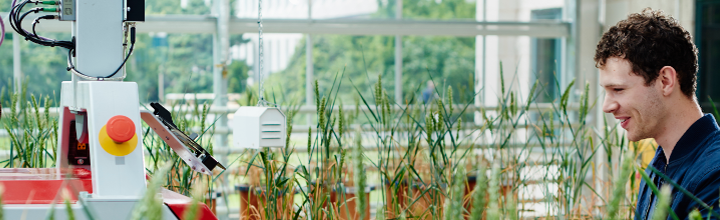
Sustainable Agriculture and Food - Heat Resilient Agriculture
Currently, over one billion people suffer from chronic malnourishment, while nearly 200 million children are severely underweight. Future environmental pressures will require farming to make further advances in resource efficiency. Beyond carbon footprint, ‘energy,’ ‘nitrogen,’ ‘phosphorus,’ and ‘water’ footprints may become the new farming and food currencies. Improved crop and soil management play a crucial role in developing heat-resilient agriculture, ensuring productivity under rising temperatures. Reducing water and resource use, enhancing food and fuel output and quality, delivering ecosystem services, and cutting greenhouse gas emissions are among the urgent challenges that must be addressed.
Sustainable farming will depend on multi-disciplinary approaches underpinned by sound science and the skills to translate novel solutions into practice. Research projects in Heat Resilient Agriculture will focus on studies ranging from the microbial, whole plant/animal, to field/farm and national scales to address these issues, incorporating techniques from plant, soil, and animal sciences to address these challenges.
Bioscience for Human Health - Biomaterials for Tissue Engineering & Drug Delivery
Within the biomaterials for tissue engineering and drug delivery cluster areas include:
- developing biomaterials that can instruct biology to support the generation of in vitro models of human tissues that can be used to investigate normal tissue homeostasis and/or to support tissue regeneration.
- biomaterials that can support the delivery of complex therapeutics or that can be used to address the rise in antimicrobial resistance.
These materials will advance our understanding of biological process or allow us to control and influence a biological response to support health. Example of a project that fits within this these is the CASE project - novel self-oxygenating and cell-instructive materials for chronic wound healing.
Biotechnology for Sustainable Growth - Technologies for Sustainable Protein Synthesis
This cluster focuses on different platforms for production of recombinant proteins of pharmaceutical interest. Different protein expression systems will be deployed to generate diverse proteins. Our established platforms include Escherichia coli, yeast, plant and mammalian cells and algae.
Embedded in all these projects is sustainability whereby ease of manufacture, low-cost production, feasibility of scale-up are all important factors for commercialisation. Students and supervisors in this cluster will meet throughout the programme for cross-fertilisation of skills and ideas and to work closely as a community. Some of the skills that will be learned in this cluster are in silico modelling, gene cloning, optimising conditions for protein production, protein purification and characterisation, and testing protein functionality in assays.
Applied projects are in the areas of:
- Engineering recombinant antibodies as therapies or for diagnostic purposes,
- Engineering Escherichia coli to make recombinant outer membrane vesicle (OMV) vaccines,
- Exploiting an Escherichia coli secretion system to release recombinant antigens out of the cell in soluble form for facile purification,
- Engineering algae to make novel oral vaccines.
Fundamental projects are in the areas of:
- Addressing the challenges of protein yield and solubility using novel tags,
- Understanding how RNA modifications influence how mRNA engages with RNA, helicases that enable mRNAs to engage with ribosomes to promote translation. This knowledge can be used to enhance expression of therapeutic proteins and vaccines,
- Engineering chimeric proteins to crosslink and provide an increased binding affinity for macrophage endocytic receptors to clear toxic or pathological proteins more effectively.
How to apply