Economics and International Economics

BSc Hons UCAS Code

Course overview

Step into the fast-paced world of international economics and discover how global forces shape the way nations trade, grow, and respond to crises. Our BSc Economics and International Economics equips you with a rigorous foundation in macroeconomics, microeconomics, mathematics and international trade, while challenging you to think critically about the policies and events that drive the global economy.

From year one, you’ll be part of a vibrant academic community with the freedom to tailor your studies. Optional modules let you explore areas such as financial economics, development, industrial economics, econometrics, political economy and behavioural economics, giving you the chance to follow your curiosity and sharpen your expertise.

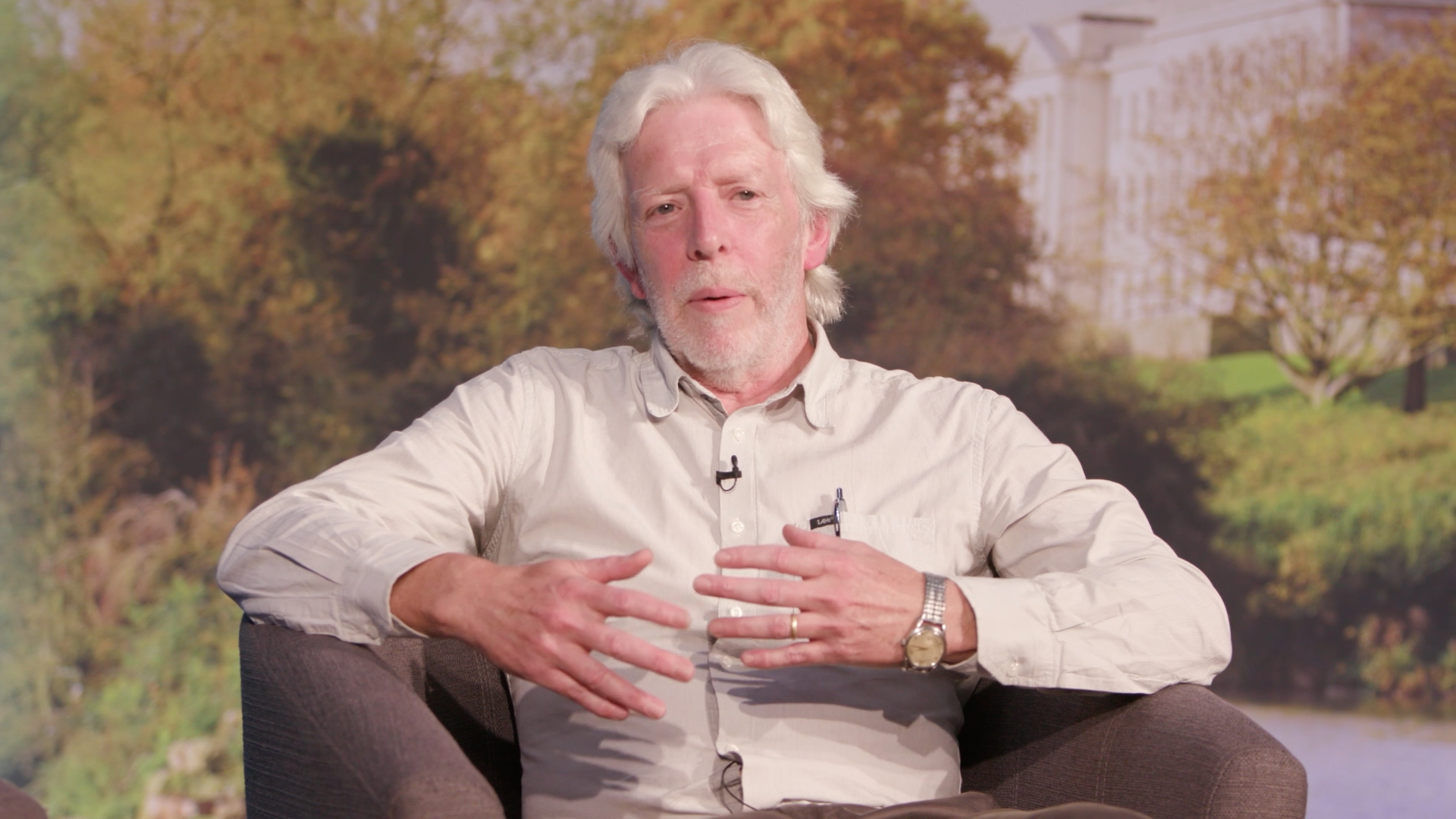
Find out more about studying economics at Nottingham.

Find out more about studying economics at Nottingham.

Why choose this course?

Teaching and learning

Modules

Core modules

9 modules

Applied Economics

In this module, you’ll explore trends in long run economic growth and globalisation. You’ll gain an understanding of how this has led to dramatic changes in the relative wealth of nations over the last 500 years. We will then ask two key questions: why have modern economic growth started in some places rather than others? And while have some countries been able to catch up, while others have not? These investigations will improve our understanding of why some countries are much richer than others and will give us some important insights on how to promote sustained growth in developing countries.

We will then turn to the economics of globalisation. This will look at the gains from trade, addressing debates regarding free trade and protectionism. You'll consider the movement of capital and migrant workers, looking at the causes of international mobility and the impact on both sending and receiving economies. Particular attention will be given to the rise of China in the world economy, to European economic integration and to potential deglobalisation.


Introduction to International Economics

Module description to be confirmed.


Introduction to Microeconomics

In this module you will learn about the behaviour of firms and households in situations of competitive and imperfectly competitive markets.


Introduction to Macroeconomics

Macroeconomics is the study of the aggregate economy, focusing on the cyclical pattern of aggregate output and co-movement of real and monetary aggregates in general equilibrium. A series of basic models used in modern macroeconomics are introduced, with a particular focus on dynamic general equilibrium modelling tools and techniques necessary to build theoretical models.


Mathematical Economics

In this module, you’ll develop a sound basis in the fundamentals of mathematical methods used in economics. You’ll learn to represent economic problems as mathematical problems and to solve them. You’ll learn to apply mathematical techniques in an appropriate manner.


Foundations of Microeconomics

This module provides you with an introduction to microeconomics; there is no assumption of any prior knowledge of economics.

You’ll begin by analysing how the economic choices of households and firms can be understood using consumer and producer theory. You’ll then examine how these individual choices are aggregated into market demand and supply to be mediated through the price mechanism. A variety of market settings are considered, ranging from the paradigm of perfect competition to the analysis of monopolistic firms. The module continues by introducing the normative evaluation of economic outcomes and market failures.

The module also introduces you to the essential skills required for study as an economist.


Foundations of Macroeconomics

This module is an introduction to macroeconomics; there is no assumption of any prior knowledge of economics.

Macroeconomics is the study of the aggregate economy. This module will focus on the determinants of aggregate output, both in the short run - addressing cyclical movements of booms and busts - and in the long run - introducing you to economic growth. A running theme will be debates over the role of the government in macroeconomic management, covering fiscal and monetary policy.

The module will introduce a series of basic models used in modern macroeconomics.


Quantitative Economics

This module helps develop your understanding of the fundamentals of mathematics most relevant to the study of economics. It will teach you to see how mathematical tools can be applied in the analysis of theoretical economic problems.


Statistical Methods

This module will introduce you to fundamental statistical concepts. You’ll be introduced to the ideas behind regression analysis through simple linear regression. You’ll learn to apply statistical and graphical techniques in an appropriate manner. You’ll also be introduced to data analysis using Excel. You’ll be expected to complete a series of tasks and solve assignments designed to familiarise you with common challenges faced by professional economists in a business environment and in academia.


Optional modules

Select student type

Entry requirements

3 years full-time

£10,050 per year

Quote marks icon

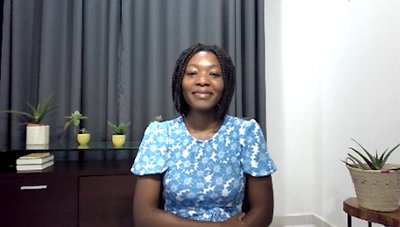
The course itself is challenging but extremely engaging because of the diversity of modules offered. I studied a wide range of theories in political economics, monetary economics, trade economics and development economics."

Esther Mpagalile

Inclusive Growth Analyst, UN Development Programme

Head and shoulders portrait of Esther

Careers

Compare this course

Discover life at Nottingham

From financial support to student life and accommodation, discover more about the Nottingham experience.

Welcome to your campus

At University Park, nature, architecture and student life come together on one unforgettable campus. Explore beautiful green spaces, unwind by the lake and enjoy a vibrant sense of community. It’s the perfect setting for an extraordinary university experience where you can learn, grow and thrive.

Ready to help

Head to our Help and Support hub for frequently asked questions and details of how to get in touch.