By Conrad Padgett
In this blog post, Conrad Padgett offers a very interesting account of our first student placement visit to the Collections Resource Centre located at Barrow upon Soar in northern Leicestershire. The Centre is one of five collections facilities comprising Leicestershire Museum Collections run by Leicestershire County Council (LCC). The visit took place on Wednesday 13 November 2024. 15 placement students from across the Faculty of Arts and 3 University of Nottingham staff participated in the visit which was generously supported by Culture Leicestershire at LCC.
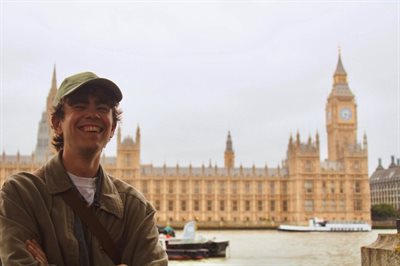 Conrad Padgett is currently a second-year English student — expected to graduate in 2026.
- Throughout his studies, Conrad has pursued modules in Middle English and Old English, which reflect his passion for connecting history with literature and art.
- This interdisciplinary approach has deepened his appreciation for the ways in which cultural narratives shape our understanding of the past and present.
- Conrad was drawn to VCCC's first student placement — Curating, Researching, Digitising, and Exihibiting Leicestershire Museum Collections in Co-production placement (October 2024 - June 2025) because he is passionate about making arts and history accessible and engaging for diverse audiences.
- In addition to his academic pursuits, Conrad brings relevant professional experience from his time working with Emirates Leisure Retail, an international company.
- This role provided him with hands-on experience in marketing, event coordination, and communications, all of which he believes are valuable for his position on this placement.
On the bus to the Collections Resource Centre, there was a palpable sense of anticipation. For many of us volunteers, it was the first time meeting in person, so it was exciting not only to interact with the people running the placement but also to get to know the other participants.
At the Centre, we were given a tour of the space and had several talks with the staff working there, all of which focused on various aspects of the centre’s operations and the broader world of museums. Much of this involved learning how to handle artefacts properly—how to hold them, when gloves are needed, and the care required to preserve them.
For instance, we were drilled to always hold an artefact over a table in case it was dropped—something that I would have never thought about the need for. The collections housed at the Centre were diverse, from grandfather clocks to human remains, Roman coins to taxidermy.
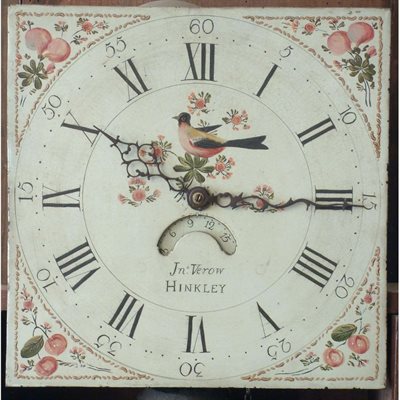 Image of a clock dating from the mid-1950s @Leicestershire Museum Collections.
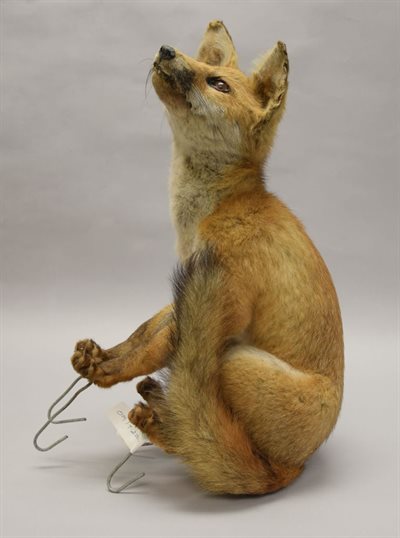 Image showing the preserved remains of a fox for display @Leicestershire Museum Collections.
Another significant part of the visit was understanding the challenges faced by a collections centre. We learned about the criteria for accepting and refusing donations, when an item would have to be discarded, and the process of donating objects on to other spaces. It soon became clear just how much time and energy are involved in maintaining and looking after these pieces.
The collection's fashion archive was my personal favourite. With the clothes kept on rails and out of boxes, it made it easy to appreciate the variety and artistry of the items. We saw a corset from the early 20th century, a campy Vivienne Westwood suit, and the strangest pair of high heels I’ve ever seen. One thing that surprised me was the vibrancy of the clothing that was a couple hundred years old. It made me realise that the past wasn't as colourless as I sometimes thought it was.
Fashion wear @Leicestershire Museum Collections.
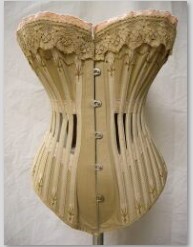
Ventilated corset circa 1890s @Leicestershire Museum Collections.

Articles of fashion clothing for people of different ages, genders, and backgrounds @Leicestershire Museum Collections.
It was interesting to also learn about how the collection tries to preserve local history. For example, the Centre occasionally archives pieces from the brand 'NEXT' to preserve a record of fashion at the time. Fashion history wasn’t something I’d previously thought too much about, but the visit sparked a new appreciation for it in me.
While all the talks shed light on unique aspects of museum work, my personal favourite focused on the impact of volunteering. We listened to an audio recording from someone who had visited one of the Leicestershire Museum Collections facilities. The recording involved a visitor speaking about their grandmother, who had since passed away, at one of the exhibits. They described how seeing a specific artefact brought back vivid memories of their grandmother’s stories and shared experiences, making the museum visit deeply personal and meaningful. It was a powerful reminder of how museums can preserve not just history, but also emotional connections and cherished moments. They spoke about their grandmother who had passed, which really resonated with me. It was a touching moment that reaffirmed the power of volunteering on a personal level for me.
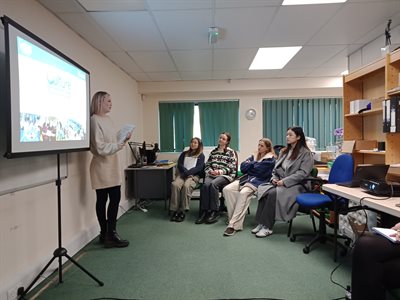
Louise Sharples (Senior Support Officer, LCC) speaking to students about the operation of Culture Leicestershire — including the multifaceted work undertaken by Leicestershire Museum Collections.
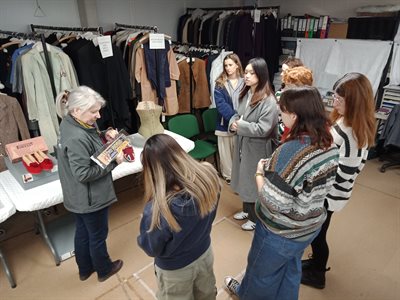
Sarah Nicol (Curator, Engaging Collections, LCC, left) introducing students to selected artefacts in the Fashion Collection.
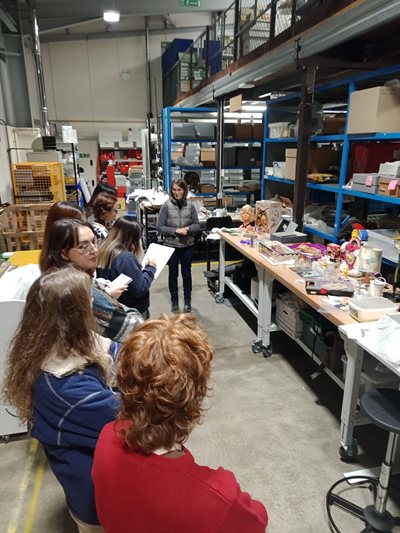
Caroline Lockwood (Collections and Conservation Manager, LCC) introduces students to object handling and care.
Towards the end of the visit, we explored potential artefacts to research as part of our volunteer project. The theme was queer artefacts, to highlight and celebrate the contributions and histories of LGBTQ+ individuals. This focus provided a unique lens through which to view the collection, encouraging us to think critically about representation and inclusivity in historical narratives. From 1980s children’s toys to Ladybird books and century-old clothing, the options were diverse. It was fascinating to see how different objects resonated with people.
For instance, some items, like the books, initially seemed unrelated to the theme but became deeply relevant upon further exploration. Choosing just one artefact to focus on was a challenge for many of us due to the breadth of options.
But, before we knew it, we were back on the bus. It had been a fast-paced, packed day, but it was also incredibly rewarding. The visit was an exciting and informative introduction to what promises to be a fulfilling experience volunteering with Leicestershire Museum Collections.