By Kate Ratcliff
In this blog post, Kate Ratcliff shares her fascinating research on the Vivienne Westwood Suit and some of the central talking points it has given rise to in relation to gender and clothing. Those talking points can be seen as responses to the following three important questions:
- How does fashion choose to interact with queerness?
- How do subcultures use fashion to express queerness?
- How does high fashion work its way into everyday dress and what might this tell us about identity, self-expression and self-representation?
This research was motivated by the Vivienne Westwood Suit that Kate photographed, researched in great depth, and digitised using 3D digitisation techniques in the context of the Curating, Researching, Digitising and Exhibiting Leicestershire Museum Collections Placement.
In addition to offering students distinctive professional development competencies and skills coveted by graduate job employers, the Placement is also providing students with first-hand experience of working on an exciting and real-world project at the intersection of the heritage sector, the digital media industries, and local government context.
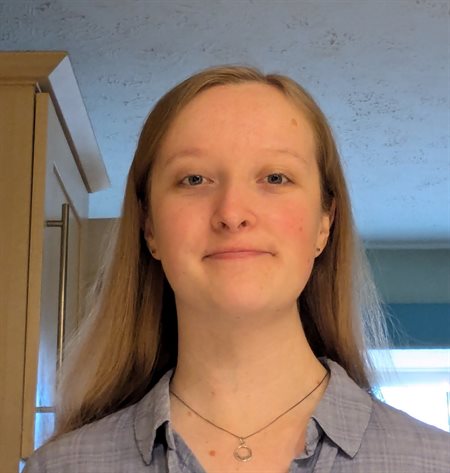 Kate Ratcliff is a second-year student studying an Ancient History BA in the Department of Classics and Archaeology within the School of Humanities. Kate expects to progress into her final year in September 2025.
- My name is Kate Ratcliff.
- I am currently in my second year of Ancient History at the University of Nottingham.
- It is quite a time shift from the courses I took at A-Level – Politics, Modern History and Law – but the fundamental skill of argumentation developed over those years put me in good stead for this degree course.
- In my first year I achieved a solid overall First, with my highest grade being 90 for an essay on women’s freedom.
- I hope to fulfil my passion for continuous learning in a Heritage, Teaching, or Academic Career after University.
- So far, I have been able to apply this zeal in volunteer work at my local National Brewery Museum, and by curating guided tours for my family on holidays, most recently involving key sites at Pompeii, Herculaneum, Paestum, and the National Archaeological Museum at Naples.
This blog post is centred on an analytical discussion of, and responses to, the Vivienne Westwood suit that stood out to me among the wide range of objects stored at the Collections Resource Centre (CRC) at Barrow upon Soar in northern Leicestershire.
This 1993 McAndreas tartan suit from Vivienne Westwood raises a number of relevant points around gender and clothing.
Not only is it immediately recognisable as camp from the unapologetically bold pattern and colour, it is also immediately recognisable as Punk.
From this suit, and its connection to one of Britain’s most influential fashion designers, it is possible to bring to light elements of queerness in clothing that are worth exploring:
- how fashion chooses to interact with queerness;
- how subcultures can express queerness;
- how high fashion works its way into everyday dress; all the way down to how the average person traverses gender expression from day-to-day.
Through taking a closer look at Vivienne Westwood’s work, we are given a better understanding of queerness in dress and culture that might aid in the acquisition of future pieces to the CRC.
History of Vivienne Westwood
Westwood is known as a disruptive figure in the fashion world often signalled to as a catalyst for Britain’s early Punk scene (Savage, 2005), and admired for challenging norms around gender and sexuality (Wellington, 2023). Her romantic and professional relationship with Malcolm McLaren in the 1970s resulted in a shop at 430 Kings Road in Chelsea where they could explore themes of politics and sex through clothing (Wilkinson, 2015, p.62). The innately provocative style on display at this shop fit into what York dubbed ‘Art Necro’ that combined pastiche, Americana, and camp in an effort to break away from the ‘boring mainstream trendiness’ and distract from the depressing economic and political reality of the 70s (York, 1980. p.116). The shop was initially called ‘Let it Rock’ and had a heavy 1950s aesthetic of Rock and Roll and Teddy Boys, but would later go on to have many names and concepts, with the most influential change coming in 1974 as the shop became ‘SEX’ (Clarke and Holt, 2016. Table 1: Westwood Chronology, p.202). SEX, with the slogan ‘rubberwear for the office’ (Ibid.) clearly aimed to shock audiences. Sadomasochism, homosexuality, fascism, and any general taboo or ‘deviancy’ was put on full display, some notable graphic T-shirts being: Siouxsie Sioux’s swastika shirt; a shirt of an active and unconvicted rapist from Cambridge; a shirt with two cowboys facing each other with their bottom halves exposed (Wilkinson, 2015, pp.63, 65.). The shop was subject to fines and prosecution during this iteration under the 1959 Obscene Publications Act for ‘exposing to public view an indecent exhibition’ (Clarke and Holt, 2016, p.202). When the shop later became ‘Seditionaries – Clothes for Heroes’ with an emphasis on Punk Rock, it was again raided by police, to which Westwood responded with her mission statement - ‘you don’t make people think unless you upset them emotionally’ (Westwood, 1978, p.3).
In the 1980s as Westwood progressed in her career however, and Punk had gone mainstream, she found a new focus in traditional tailoring (Wilcox, 2004; Clarke and Holt, 2016, p.201). Whilst Westwood framed this switch as her anger dissipating over time meaning less of a need for Punk (Morrison, 2012.), it is more likely that Punk aesthetics simply did not provide the same subversion or taboo as they had a decade before. Her new style in the 1981 Autumn/Winter Pirate Collection, backed by a new musical culture – New Romanticism – supplied a shock value now coming from the juxtaposition of underwear as outerwear; contrasting and clashing materials and patterns; abrupt and abrasive cuts, folds, and stiches (Westwood and Kelly, 2014; Negrin, 2014); with the blurring of gender lines and androgyny as models could pick clothes regardless of their gender (Wellington, 2023; González and Bovone, 2012). A number of shows that best exemplify this shift to traditionalism are: 1985 Spring/Summer Mini-Crini with English tailoring inspired by the Queen as a child; 1987 Autumn/Winter Harris Tweed that made use of British colonial uniform wools; 1994 Spring/Summer Café Society inspired by French Haute Couture, famously featuring Kate Moss topless with a Napoleonic hat and a micro-mini skirt (Vivienne Westwood, 2025).
In this way it would be easy to claim that Westwood had strayed from alternative subcultures in favour of a certain kind of aesthetic conservatism, affiliating to the establishment through titles of OBE in 1992 and Dame in 2006 (Westwood and Kelly, 2014), or her logo since 1985 resembling royal ceremonial regalia (Clarke and Holt, 2016, p.201). But to do so would be ill-informed of her style and wider cultural impact. Regardless of her own reasoning or utilisation of queer culture as shock value, the fact remains that her work making use of gender and sexual expression and transgression, and of exaggerated silhouettes drawing from historical fashions managed to represent queerness publicly in the fashion world. In the later end of her career, Westwood took an interest in consumerism and environmentalism, inspired by Lovelock to act as a voice against fast fashion (Vivienne Westwood, 2025). In 2015 her show: Unisex – Time to Act of Autumn/Winter, embodied ‘Bisexual’ looks (Ibid.). It is apparent therefore, that regardless of whether it is viewed as veneer, provocation, or passion, politics and sex remained key influences throughout her career.
The Anglomania Collection
The suit in CRC collections in particular – a 1993 Autumn/Winter Anglomania – provides the opportunity to look a little closer at Westwood’s Punk fashion. Although way beyond the 1970s SEX era of Westwood, the 1993 Anglomania collection still clearly retained Punk influence. The 1993 show is still accessible to modern audiences, either as the whole show – albeit in low resolution – on YouTube, or in the lookbook on Vogue’s website (Soued, 2013; Borrelli-Persson, 2021). In Anglomania, clear Punk staples such as the crude destruction and construction or layering of materials are on full display, as well as the Punk emblem of the safety pin and evidence of both androgyny and hypersexuality (Suterwalla, 2012, pp.270-273.). In Look 35, Susie Bick models frayed stockings sheer enough to look like ripped skin.
In Looks 26 (Figure 2), 31 (Figure 3), 33 (Figure 4), 34 (Figure 5), and 49 (Figure 6), tartans are clashing or put at contrasting angles adding a certain element of disruption to each composition.
Throughout the show the safety pin remains prominent, seen in excess in model Yasmin Le Bon’s hair, and as piercings as with model Simonetta Gianfelici in Look 1 (Figure 7).
There is an effort towards androgyny with the masculine fashions in Looks 4 (Figure 8) and 5 (Figure 9) that obscure the models’ forms with wide slacks and layers of heavy suits and overcoats.
There is even room for the overtly sexual aspects in Looks 25 (Figure 10), 36 (Figure 11), and 42 (Figure 12) that involved a reveal to shockingly sheer layers – Look 25 especially so, as a sheer body suit underneath a cape of fur with a small red feather detail highlighting the model’s genitalia.
Given the later date of 1993, Westwood’s more traditional sensibilities are also prominent – the Anglomania Collection taking clear inspiration from French couture, as well as English and Scottish tailoring, with certain looks as voluminous as Queen Elizabeth’s – Looks 37 (Figure 13), 47 (Figure 14), and most notably model Christy Turlington Burns’ hair.
The resulting image is one of unmistakable homage to historical European courts but done so in the Punk sensibility of violent ‘cut-ups’ (Hebdige, 1979, p.106.). The MacAndreas tartan of the suit in the CRC collections, it is worth noting, was created especially for the Anglomania collection in 1993, and is visible in both Looks 34 (Figure 5) and 49 (Figure 6). It was added to the Scottish Register of Tartans (Vivienne Westwood, 2022), and works well to embody Westwood’s desire to experiment with history and modernity by combining a centuries-old textile tradition with a vibrant colourway that is undeniably 80s inspired as it would not feel out of place in a shell suit. Westwood’s keen use of tartan should not go overlooked either, as its strong connotations of rebellion – aided by the myth of its wholesale ban following the defeat of the Jacobites at Culloden (The Newsroom, 2017) – helped it become both a staple in Westwood style and Punk fashion.
Contemporary Responses to the Vivienne Westwood Suit
This finally provides us with the context of the suit from the collections.
To better inform suggestions for further acquisitions to the collection of gender and clothing, I thought it best to include personal responses from queer people surrounding themes of queer dress, style, and fashion.
To do so, I asked for the help of some friends around my own age – 20 to 23 – and used a questionnaire prompted by the Vivienne Westwood Suit.
As may become apparent, these friends – henceforth respondents – are all queer people.
At the time of the questionnaire, each respondent confirmed their identities as follows:
- Respondent 1 – Non-Binary, Lesbian;
- Respondent 2 – Cisgender Man, Pansexual; and
- Respondent 3 – Non-Binary, Asexual.
All Respondents had experienced higher-education – Respondents 2 and 3 now in employment and Respondent 1 still in higher-education.
Whilst Respondents 1 and 2 are located in the Scottish Highlands, Respondent 3 is located in the (English) Midlands.
None of the respondents live in a city. All respondents identify as working-class and were asked the following eight questions:
- What do you think / know about Vivienne Westwood?
- What is your response to the Vivienne Westwood Suit?
- Would you wear it and in what contexts?
- How do you / do you consider gender expression in the way you dress?
- In what way does your location / setting impact how you dress?
- How do you think your fashion is perceived by others?
- Where do you tend to shop for clothes?
- What is your understanding of queerness in fashion?
In what follows below, respondents' accounts are presented in full – followed by an analytical discussion situating those accounts in a broader context both historical and contemporary. This discussion is then followed by the conclusion to this blog post – including suggestions for acquisitions to the CRC.
Question 1: What do you think/know about Vivienne Westwood?
Respondent 1
Didn’t know anything about her before being asked. I took the chance to look her up and see some of her stuff, and it’s clear to me that her fashions have had an influence on what I’ve seen other queer people wear and how they style themselves.
Respondent 2
My knowledge of Vivienne Westwood is rather limited, but it is my understanding that she was a very influential designer in the 70s and 80s. She had a large impact on the punk scene and fashion.
Respondent 3
I have been aware of Vivienne Westwood my entire life as I grew up with a mother who was a member of the punk subculture in the 1980s and a dad who saw the Sex Pistols in my hometown. Her style has always appealed to me as I had a tendency to be drawn to absurd and alternative styles, even as a child. I was aware of how this also entwined with the socially progressive movements that she supported such as CND. Although I am not a particularly dedicated follower of fashion, after her death I – like many others – was saddened to have lost another British visionary.
Question 2: What is your response to this suit?
Respondent 1
I think it looks cool. Can very much see Vivienne’s ties to the Sex Pistols in the colour and tartan design, it screams punk.
Respondent 2
I really like this suit, it’s well fitted and fashionable. It has lovely patterning and texture. The suit pockets wouldn’t be my first choice, but I like how they break up the space. The colours chosen for the pattern really compliment each other and the brass(?) buttons add points of interest without being gaudy.
Respondent 3
I love this suit. I like the tailoring on the jacket and the loose tailoring of the trousers. It plays with body proportions and the shape of the human body. The tartan pattern only adds to this.
Question 3: Would you wear it and in what contexts?
Respondent 1
No I don’t think I would, but that purely comes down to my choice in style, I don’t think I’d be able to rock it. It feels very much like a statement piece – definitely not for casual wear out and about, at least in my opinion.
Respondent 2
I would absolutely wear this suit. I could see myself wearing it to a cocktail party or a dinner date.
Respondent 3
I would absolutely wear this suit, in many contexts. I find joy in overdressing for an occasion, so I would consider wearing it to any event. Ideally, I would wear this suit to a semi-formal event, like going to the theatre.
Question 4: How do you / do you consider gender expression in the way you dress?
Respondent 1
I suppose my expression depends largely on what I feel comfortable in; I don’t tend to feel dysphoric often, but it does lead me to avoid some articles of clothing or clothes that fit a certain way if it brings on feelings of dysphoria.
Respondent 2
I often consider gender expression when I pick clothes. Typically I lean towards more androgynous clothing choices like more open topped shirts. I see it as a way of pushing the boundary of what I’m comfortable with but also finding clothing that I really actually like as opposed to the jeans and hoodies that other men my age wear.
Respondent 3
I consider gender expression in the way I dress every day. Whether this is with creating a body shape that I am comfortable in (etc. with the use of binders/chest compressors) or coopting masculine and androgynous clothing styles. I take a lot of inspiration from men’s fashion in the 1990s like Britpop frontmen Jarvis Cocker and Damon Albarn.
Question 5: In what way does your location / setting impact how you dress?
Respondent 1
I suppose it depends on whether I’m going places that are known to be or have a prejudiced atmosphere against queerness. For example with the amount of right-wing nazi protests in the latter half of last year, I felt like I had to make a conscious effort to “not look queer” to try and keep myself safe. Outside of those sorts of environments, I don’t think it impacts it much, but I do feel like I have the privilege of being a AFAB in the sense that dressing more neutrally or masculinely is frowned on a lot less than if a AMAB individual decided to dress more femininely.
Respondent 2
Setting has a large impact on what I wear. If I’m not doing anything social then I don’t put as much effort in and wear more simple styles of clothing. This is typically when in the countryside where I live. When in the city / heading out to a social event I put a lot more effort in and think about layering, colour matching and overall aesthetic.
Respondent 3
This is something I have considered often and have complicated feelings about. At my workplace I tend to dress in a slightly more feminine manner, thereby sidelining my gender expression. Geographically, my clothing style changes to where I feel it will be more accepted. When I visit my friends in London, I feel freer to dress in a way I find most comfortable, compared to when I am in my hometown. Rationally, I imagine this is also because the unfamiliarity of the population of London allows for me to attempt to pass better, whereas the imminence of seeing someone familiar in my hometown will hinder this.
Question 6: How do you think your fashion is perceived by others?
Respondent 1
Not anything special I don’t think. I tend to dress for my own comfort when out and about, I’m not the most fashionable person. As I said previously, I feel fortunate that the way I dress will likely be scrutinized much less due to the favourability of presenting masculinely.
Respondent 2
I’d imagine my fashion is perceived as rather basic and a bit boring. I think it would be clear that I at least put in effort, but it’s not like I know what I’m doing.
Respondent 3
I have been told by my peers that I have a good fashion sense, which I think this is skewed by the fact that many of these peers are also queer-identifying. Even so, my style has been perceived differently over the years, despite the lack of change on my end. Years ago, I was often ‘othered’ for my style, and viewed as visibly queer, if there is such a thing. In the current era of microtrends and seasonal fashion, much of my style has become accepted and worn by the same individuals who had previously ‘othered’ me. Therefore, the perception of my fashion is something that evades me and is seemingly transient.
Question 7: Where do you tend to shop for clothes?
Respondent 1
Preferably in person and at big brand shops. I like the opportunity to see, feel and try stuff on. I’ll occasionally buy something online if it catches my eye, but that’s usually very rare, and I’m not the largest fan of fast fashion.
Respondent 2
I shop for basic items like plain tees or simple trousers in chain clothing stores like Primark of H&M. I typically am looking for simple, decent quality cheap clothes that I’ll wear until they fall apart. When looking for more important pieces like coats, cardigans or accessories I take to charity shops, as you find so many amazing pieces of clothing in there. I find I can visualise potential outfits when looking at the random selection of items in charity stores far more easily than I can in the large shops.
Respondent 3
I try to avoid fast fashion as much as possible and rely heavily on charity shops and second-hand stores. I will occasionally purchase high-end items, but many of my more expensive items are hand-me-downs from my siblings.
Question 8: What is your understanding of queerness in fashion?
Respondent 1
Queerness in fashion feels akin to queerness in general – the breaking down of gender roles and perceived societal norms and standards. The best example I can think of this is like in drag.
Respondent 2
My understanding of queerness in fashion is that there are a couple of different facets to queer fashion. There’s the sort of challenging gender identity / stereotypes. An example of that could be women wearing clothes typically associated with men, such as a well fitted suit as opposed to a dress when attending a formal event. Another form of queer clothing is items and aesthetic choices that are often worn by members of a queer group. An example of this could be gay men choosing floral patterns and brighter colours, as well as wearing makeup. The key idea of queer fashion to me is challenging tradition and societal norms.
Respondent 3
My understanding of queerness in fashion is that it is an essential form of self-expression for expressing one’s personality, but also as a coded performance to recognise queerness within the community. Clothes can be used to communicate ideas and challenge a system that aims to subjugate individuals who refuse to comply. It allows for a greater understanding of gender ambiguity and fluidity, particularly as it now bleeds heavily into mainstream fashion. Despite this, I also have some concerns about the execution of queerness as a fashionable outfit. Pushing the boundaries of the gender binary is important, but we must also ask ourselves if we can truly call our current climate boundary-pushing. Queer fashion is only truly accepted when it is erring towards androgyny, a concept that still denies transfeminine expression.
Interpretation of Respondents' Accounts
I now make sense of the personal accounts above provided by my three respondents.
Connecting the Vivienne Westwood Suit to Punk Fashion and Queer/Progressive Subcultures
Although both Vivienne Westwood and the suit might not have been fully known to all the respondents, their Punk influence was an undeniable factor; Respondents 1 and 3 even drew connections between this Punk fashion and queer or progressive subcultures. The suit was liked by all, notably by its striking tartan colouration, and was interpreted as more of a formal statement, with Respondent 2 suggesting they would wear it to a cocktail party and Respondent 3 a theatre. Respondent 1 felt particularly disimpassioned by the perceived importance of the suit. It is hard to say whether such reactions are led primarily by the nature of it being a trouser-jacket suit combo, or as its introduction as a Vivienne Westwood. I am convinced that if the trousers were presented separately, they would be received as a far less fancier choice, owing to the inherent versatility of a trouser as it can be paired with more casual tops, and the previous notion of punk fashion being disseminated into the mainstream fashion of queer culture. This initial glimpse at the notion of fashion being something inaccessible or higher-up imbued with more importance than simple clothing or dress is brought up intermittently throughout the questionnaire. There is an assumption of fashion as the difference between ‘effort’ and ‘comfort’, that because the latter inherently lacks intention it is assumed to also lack fashion, thus the fashion is in the planning.
Masculine Neutrality, Androgyny and the Notion of Safety
Respondent 2 in Question 4 highlights this diametric thinking, stating that it is in the effort of ‘pushing the boundary of what they’re comfortable with’ that they recognise conscious choices in gender expression in their dress, ‘as opposed to the jeans and hoodies that other men my age wear’. Placing this conscious effort towards androgyny in opposition to the simple dress of typical men carries with it the implication of a normative fashion that is masculine. Such masculine neutrality in dress is again expressed by Respondent 1 in Question 5 as containing within it an element of safety – that non-binary people engaging with the masculine is perceived as acceptable whilst engaging with femininity could be frowned upon at best or a safety and wellbeing risk at worst with consideration to the recent cultural far-right resurgence. Respondent 3 in Question 8 goes further to suggest that although queer fashion has become more accepted into the mainstream, it favours androgyny and ‘denies transfeminine expression’. That masculinity and androgyny in this way embody less ‘effort’ and are thus afforded safety, whilst ‘fashion’ we are led to believe embodies a femininity and an inherent disruption to this neutral position invokes a hegemonic heteronormative masculinity within fashion. As a society, we have a tendency to place fashion in opposition to masculinity and overlook how men communicate their own gender as different to both women and other men (Barry, 2018, p.638).
Hegemony: Masculinity and its Dominance within the Hierarchy of Genders
As a result, masculine expression is often treated as neutral or default. Whether it is engaged with consciously or unconsciously, clothing is an unmistakable component to our self-expression (Wilson, 1990, p.67), thus it is important to challenge this masculine neutrality in fashion. Clothing has worked to naturalise gender (Ibid, p.68), in the way that we can immediately understand or identify a masculine fashion from a feminine fashion. Herein lies the aforementioned ‘boundary’ of what is ‘comfortable’ or expected expression. Without this heteronormative system, Vivienne Westwood would not have managed to be so provocative and transgress gender norms with androgyny and hypersexuality. What makes this heteronormative dress a hegemonic system is the pervasive notion of safety in expected gender roles, the power that is afforded people who adhere to these rules, and the power that is adversely taken away from those that choose to go against them (Barry, 2018, p.638-639, 658.). Masculinity in dress is as masculinity is in patriarchal society, in possession of both the normative and dominant position in a hierarchy of genders. With this further context of gender and clothing it is all the much easier to place Westwood’s work – alongside the Punk and New-Romantic subcultures she simultaneously drew from and influenced – firmly in the sphere of queer fashion as they routinely sought to disrupt or at least play with this hegemony, placing it on clear display.
Gender Roles, Societal Norms and the 'Coded Performance'
The resulting attention it brought to gender and fashion is something that has undoubtedly bled into queer fashion today. Returning to the responses, there is the suggestion that each respondent traverses this hegemony. In the contrast of compromise of their gender expression and dress in their hometowns or workplace to their freedom of expression in a city that provides them anonymity, there is again an implied safety or lack of safety in these settings when it comes to dress. When asked what their understanding of queerness in fashion meant all three respondents listed a challenging of gender roles and societal norms, which would provide us with more evidence of the ability to find queerness in Westwood or broader counter-cultural communities. This ‘challenge’ is understood as a ‘coded performance’ recognisable by members of the community that can range from subtle aesthetic choices as listed by Respondent 2, or the over-performance of drag as mentioned by Respondent 1. An issue arises however from the nature of modern fashion, as Respondent 3 points out in Question 6, ‘microtrends’ and ‘seasonal fashion’ has seen people outside the queer community assimilate to queer fashion (Bridges, 2014). In much the same way we can understand Westwood’s pivot in the 1980s as a response to similar assimilations of counter-cultural dress to the mainstream (Wilson, 1990, p.73).
The Transience of Queer Fashion and the Emotional Connection it Engenders
Such blurred lines on queer dress led Wilson to state in 1990 that ‘it’s so hard to look deviant these days’ (Ibid.), a sentiment echoed by Respondent 3 30 years later who when asked how their fashion is perceived by others answered that despite being acknowledged as queer by their peers they felt it to be ‘transient’ due to its adoption by those who had previously ‘othered’ them for it. If the style is open to such use as mere aesthetic or veneer by the mainstream it seeks to challenge, there must therefore be another aspect to what makes queer fashion queer. I believe that there were hints of this in the code-switching alluded to in Question 5, as it indicates not only a conscious recognition of the hegemonic nature of fashion more broadly but also a personal compromise to forgo one’s self or freedom of expression. A queer persons’ relationship to gender expression through clothing or dress is personal yet also universalising within the community, with one example appearing in Question 4 as each respondent details their own navigation of gender euphoria and/or dysphoria. This aspect of queer fashion as experiential or emotional is surely what bridges the gap between the respondents’ acquisition of new or used clothes and their utilisation as queer dress by the respondents under their new ownership. Each Respondent to Question 7 stated a distaste for fast fashion or online fashion – it would be hard to tell to what extent this was another overlay from Westwood or simply a generational trend. Additionally, there is room for this preference to be down to finding a better fit in-store or not, leaving room for the presumption of a more realised personal style that is not dictated by trends but curated by pieces in person, which would imply a more emotional connection to the clothing that would compel a person to wear them ‘until they fall apart’ outside of pure economical motivations.
Conclusions and Suggestions
With all this under consideration it is possible to offer a few suggestions for acquisitions to the CRC. Through using the Vivienne Westwood suit already in the county’s collection as a case study hopefully some elements of queer fashion have come to light that would be relatively accessible. Firstly, the acquisition of further counter-culture or sub-cultural fashions. Westwood has exemplified how pivotal Punk and New Romanticism was to gender expression and queer culture as they provided a disruption or challenge to the status quo. From the work I have already done with Leicestershire Museum Collections I am already aware of a few other items, the Vivienne Westwood suit of course, but also the union-jack brothel creepers, and the Ladybird Police book that could help shape a collection of anti-establishment and counter-culture in a time of political turmoil for Britain that I believe would be more than relevant to display today with relation to recent political climates.
A second suggestion, provided from the Respondents, is that of a binder or compressor as an item that provides more control over gender expression to the wearer, however I am aware that due to cost, location, or difficulty of finding the correct fit, they may be something hard to part with. A third and final suggestion is less concerning an item of clothing itself and more concerning the emotional relationship a queer person might have had with an item of clothing. For example, if it were possible to ask for donations from the community of items of clothing that made them consider their own gender alongside their own personal stories of this, then a more holistic image of gender and clothing could be gathered. These clothes would not have to be outlandishly fashionable or overtly queer, they could be mundane or ordinary, as the accounts would imbue the clothes with connotations of gender identity and expression.
References
- Barry, B. (2018). (Re)fashioning Masculinity: Social Identity and Context in Men’s Hybrid Masculinities through Dress. Gender and Society 32(5), pp.638-662.
- Borrelli-Persson, L. (2021). Vivienne Westwood, Fall 1993 Ready-to-wear. Vogue Runway. Available at: https://www.vogue.com/fashion-shows/fall-1993-ready-to-wear/vivienne-westwood?_sp=bc4b3e6a-f19e-4a76-8c55-bbcd841ae116.1738767940449#review
- Bridges, T. (2014). A VERY “GAY” STRAIGHT?: Hybrid Masculinities, Sexual Aesthetics, and the Changing Relationship between Masculinity and Homophobia. Gender and Society 28(1), pp.58-82.
- Clark, J. S. and Holt, R. (2016). Vivienne Westwood and the Ethics of Consuming Fashion. Journal of Management Inquiry 25(5), pp.119-231.
- González, A. M. and Bovone, L. (2012). Identities through Fashion: A Multidisciplinary Approach. Oxford: Black Publishers.
- Hebdige, D. (1979). Subculture: the Meaning of Style. London: Methuen.
- Morrison, S. (2012). Vivienne Westwood: ‘I’d like to be the last person alive … just to know what happens!’. The Independent. Available at: https://www.independent.co.uk/news/people/profiles/vivienne-westwood-i-d-like-to-be-the-last-person-alive-just-to-know-what-happens-7856671.html
- Negrin, L. (2014). The Contemporary Significance of the ‘Pauperist’ Style. Theory, Culture & Society 32(7-8), pp.197-213.
- Savage, J., 2nd ed. (2005). England’s Dreaming: Sex Pistols and Punk Rock. London: Faber and Faber.
- Soued, (2013). Vivienne Westwood | Autumn/Winter 1993-1994: “Anglomania”. YouTube. Available at: https://www.youtube.com/watch?v=r8I3559mEOY&t=103s
- Suterwalla, S. (2012). Cut, Layer, Break, Fold: Fashioning Gendered Difference, 1970s to the Present. Women’s Studies Quarterly 41(1), pp.267-284.
- The Newsroom. (2017). Myth buster: Was tartan really banned after Culloden? The Scotsman. Available at: https://www.scotsman.com/whats-on/arts-and-entertainment/myth-buster-was-tartan-really-banned-after-culloden-597252
- Vivienne Westwood. (2022). Westwood Heritage: Tartan. Available at: https://www.viviennewestwood.com/en-gb/westwood-world/heritage/westwood-heritage--tartan/
- Vivienne Westwood. (2025). The Story so Far. Available at: https://www.viviennewestwood.com/en-gb/westwood-world/the-story-so-far/
- Wellington, R. (2023). Fashion, Sex and Drag: Vivienne Westwood’s queer legacy. The Conversation. Available at: https://theconversation.com/fashion-sex-and-drag-vivienne-westwoods-queer-legacy-197403
- Westwood, V. (1978). Seditionaries T-Shirt Raid. New Musical Express 18th November.
- Westwood, V. and Kelly, I. (2014). Vivienne Westwood. London: Picador.
- Wilcox, C. (2004). Vivienne Westwood. London: Victoria and Alber Museum.
- Wilkinson, D. (2015). Ever Fallen In Love (With Someone You Shouldn’t Have?): Punk, Politics and Same-Sex Passion. Key Words: A Journal of Cultural Materialism 13, pp.57-76.
- Wilson, E. (1990). Deviant Dress. Feminist Review 35, pp.67-74.
- York, P. (1980). Style Wars. London: Sidgwick & Jackson.